The short answer
For most homeowners, the choice comes down to convenience versus experience. A gas fireplace lights with a switch or remote, gives steady heat and leaves no ash. A wood-burning fireplace takes more work: you split, store and carry wood, tend the fire, clean out ash and keep the chimney swept. In return, you get the sound, smell and look of a real fire.
Your house also limits the choice. A wood fireplace needs a properly built and lined chimney. A gas unit can often vent through an exterior wall, so a gas fireplace may fit where a wood one won't. Gas also needs a fuel supply at the fireplace, from natural gas or propane.
If you smell gas
Leave first, then call
If you smell gas, get everyone out of the building now. Don't flip light switches, use phones, unplug anything or light a flame inside. Once you're outside and away from the house, call your gas utility or 911.
How gas and wood fireplaces compare
| Feature | Gas | Wood |
|---|---|---|
| Starting a fire | Switch, wall control or remote | Kindling, paper and time to build the fire |
| Fuel | Natural gas line or propane supply | Firewood you buy or cut, then store dry |
| Venting | Direct-vent through a wall or roof, or a lined existing chimney | A full chimney with a suitable flue and liner |
| Cleanup | No ash or soot to haul out | Regular ash removal and glass or firebox cleaning |
| Chimney upkeep | Periodic inspection of vent, burner and controls | Sweeping to remove creosote buildup, plus inspection |
| Heat control | Adjustable flame, steady output | Depends on wood, airflow and how you tend the fire |
| Atmosphere | Realistic flames, no crackle or wood smoke | The sound, smell and look of a true wood fire |
Starting a fire
- Gas
- Switch, wall control or remote
- Wood
- Kindling, paper and time to build the fire
Fuel
- Gas
- Natural gas line or propane supply
- Wood
- Firewood you buy or cut, then store dry
Venting
- Gas
- Direct-vent through a wall or roof, or a lined existing chimney
- Wood
- A full chimney with a suitable flue and liner
Cleanup
- Gas
- No ash or soot to haul out
- Wood
- Regular ash removal and glass or firebox cleaning
Chimney upkeep
- Gas
- Periodic inspection of vent, burner and controls
- Wood
- Sweeping to remove creosote buildup, plus inspection
Heat control
- Gas
- Adjustable flame, steady output
- Wood
- Depends on wood, airflow and how you tend the fire
Atmosphere
- Gas
- Realistic flames, no crackle or wood smoke
- Wood
- The sound, smell and look of a true wood fire
What a gas installation involves
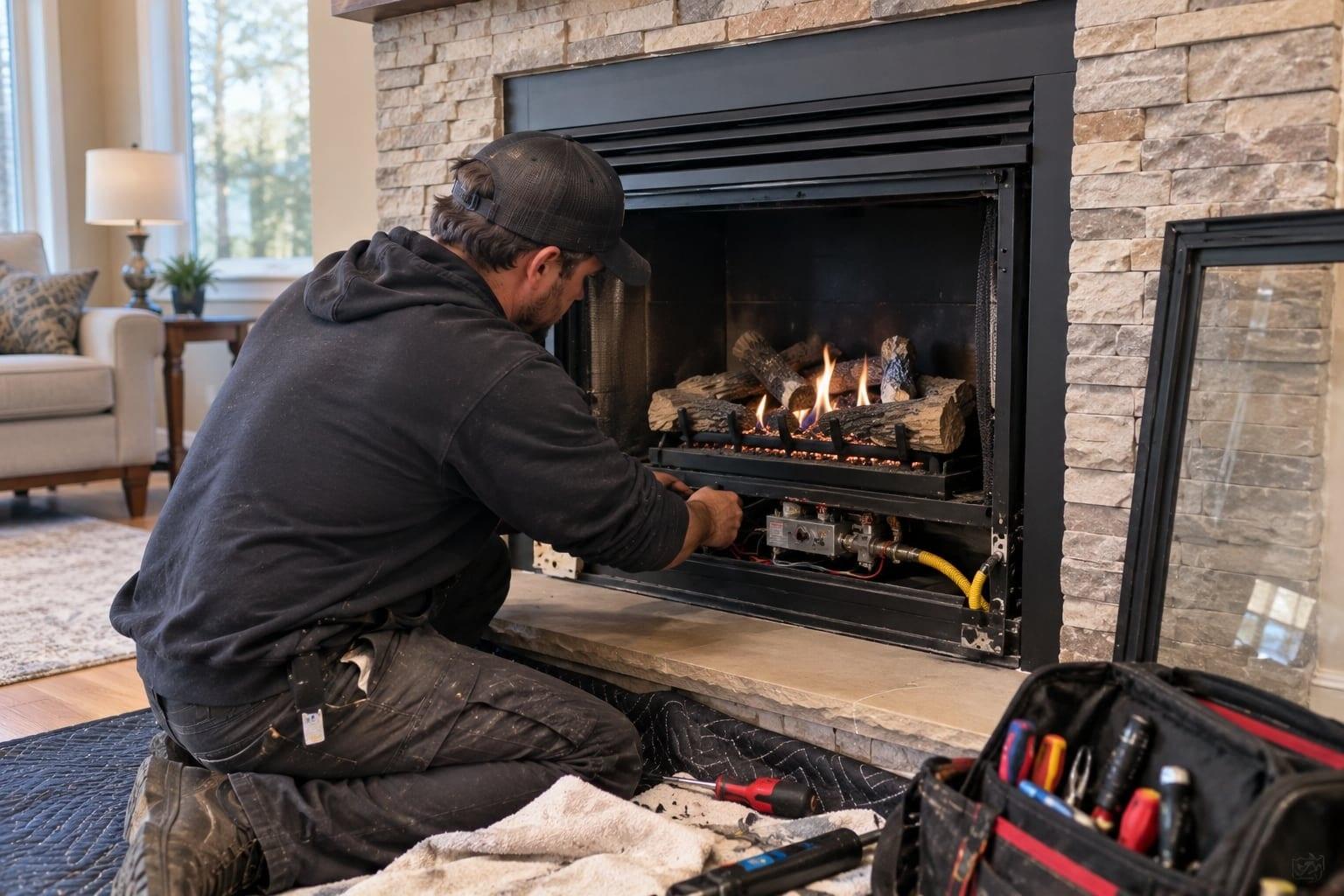
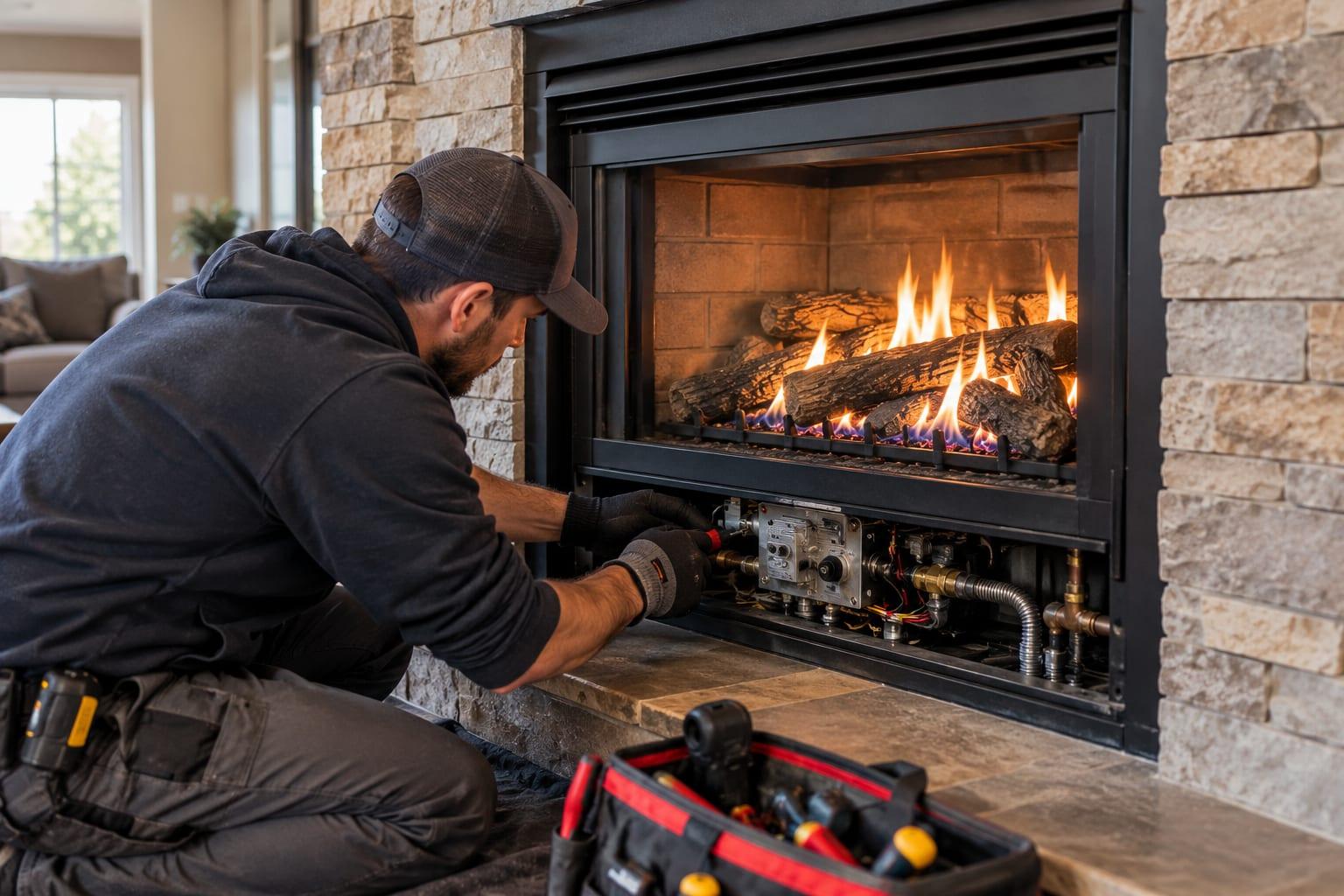
A gas fireplace installation usually means choosing between a built-in unit, an insert that fits an existing masonry firebox, or a set of logs for an open fireplace. Most units are direct-vent: they draw combustion air from outdoors and send exhaust back out through a sealed pipe. That's why they can go on an exterior wall without a traditional chimney. You can read more about how a gas fireplace installation is planned and completed.
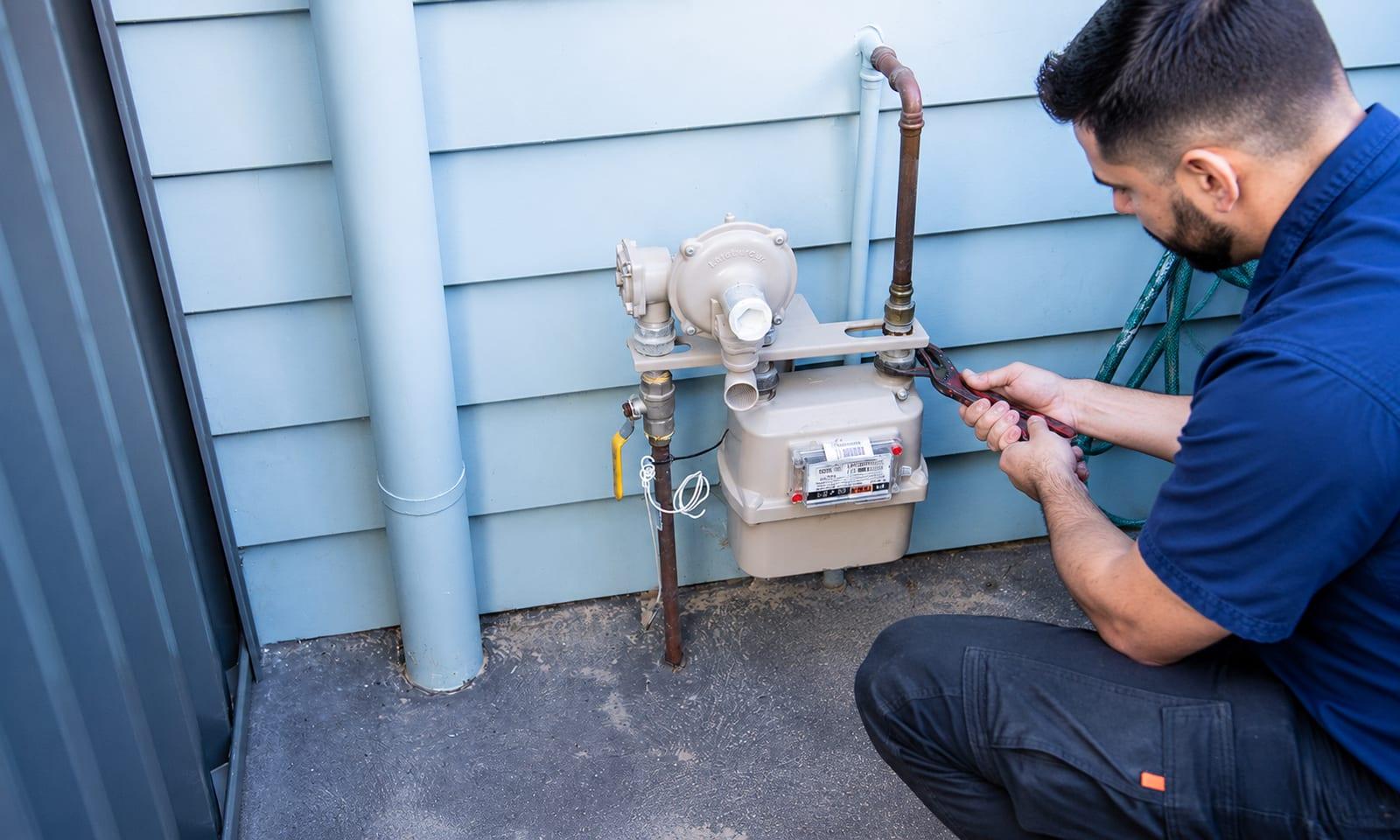
The unit needs fuel at the fireplace. If you don't have a gas supply there now, running a new gas line to the fireplace is part of the job. Homes without natural gas service can use a propane fireplace setup instead.
What a wood installation involves
A wood-burning fireplace or stove needs a chimney that can safely carry smoke and hot gases up and out. That means the right flue size, a sound liner, proper clearances from framing, and a cap to keep out rain and animals. With an existing masonry chimney, the chimney has to be inspected first, and some homes need liner or masonry repairs before a new wood unit goes in. Without a chimney, a prefab or metal chimney system is installed along with the fireplace or stove.
Converting an existing wood fireplace to gas
Many people come to this question with an old wood fireplace they rarely use. Two common routes are a gas insert, which sits inside the firebox and works like a sealed appliance, or gas logs set into the existing fireplace. Either way, the chimney and firebox are checked first, because cracks, a damaged liner or a stuck damper affect how safely the gas unit will vent.
What helps you decide
Questions to answer before choosing
- How often will you actually use the fireplace: a few special evenings or most cold nights?
- Do you have a working chimney, and has it been inspected recently?
- Is there a gas supply near the fireplace location, or would you need propane or a new line?
- Do you have dry, covered space to store firewood?
- Will you keep up with ash removal and chimney sweeping?
- Does anyone in the household mind wood smoke?
- Is the fireplace mainly for ambiance or for heat?
If you answered "rarely," "no chimney" or "no wood storage" to several of these, gas is usually the easier fit. If you want a true fire and already have a sound masonry chimney, wood may be worth the extra work.
Upkeep after installation
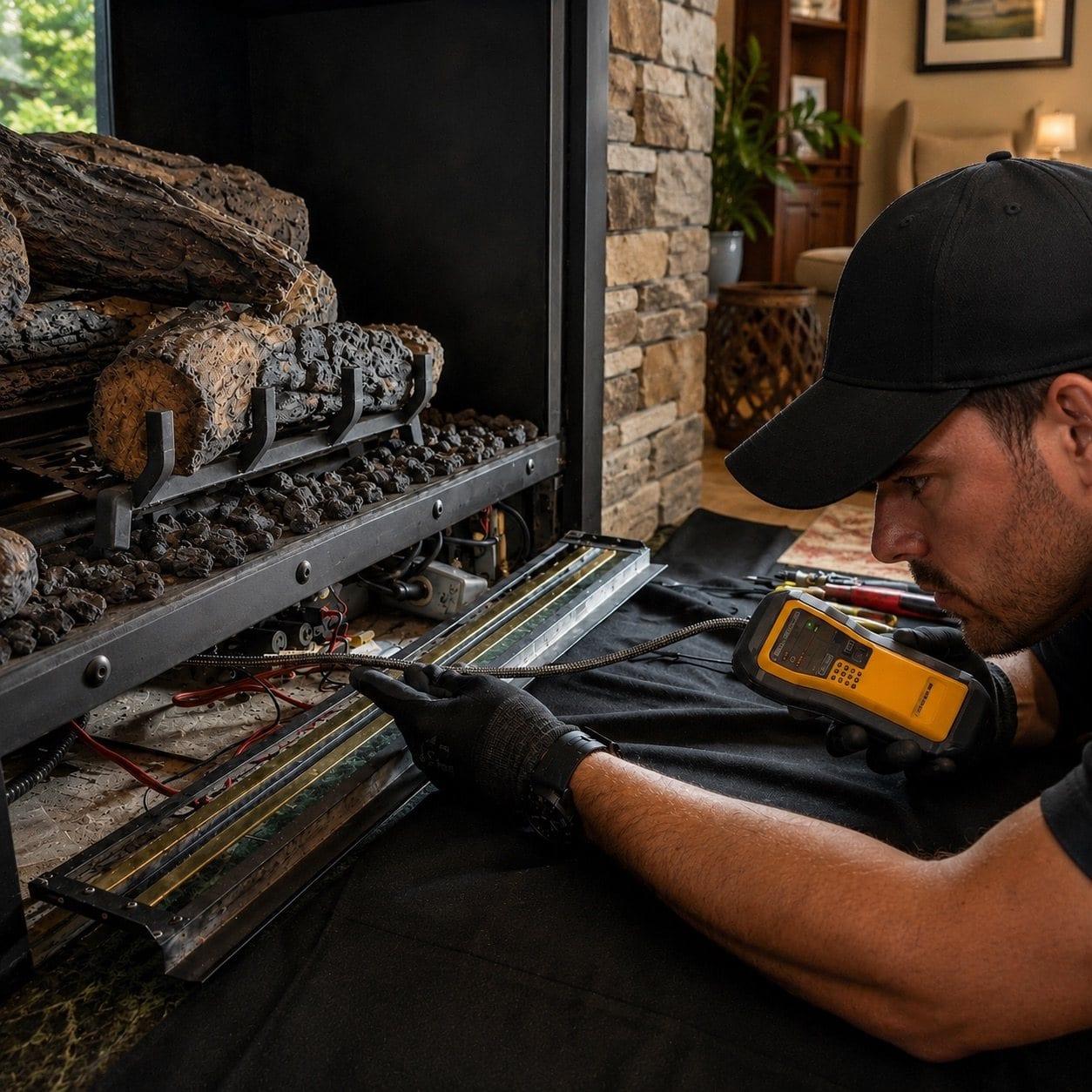
Neither type is maintenance-free. A wood fireplace builds up creosote in the flue, and too much of it is a fire risk, so it needs regular sweeping. A gas fireplace has no creosote, but it does have burners, a pilot or igniter, valves and a vent that should be checked periodically. If an installed unit starts acting up later, common reasons a gas fireplace won't light is a good place to start.
We install gas, propane and wood-burning fireplaces, run gas lines, handle conversions, and service most major brands. Estimates are free if you'd like help weighing the options for your home.