On this page
What wood fireplace installation is and what it involves
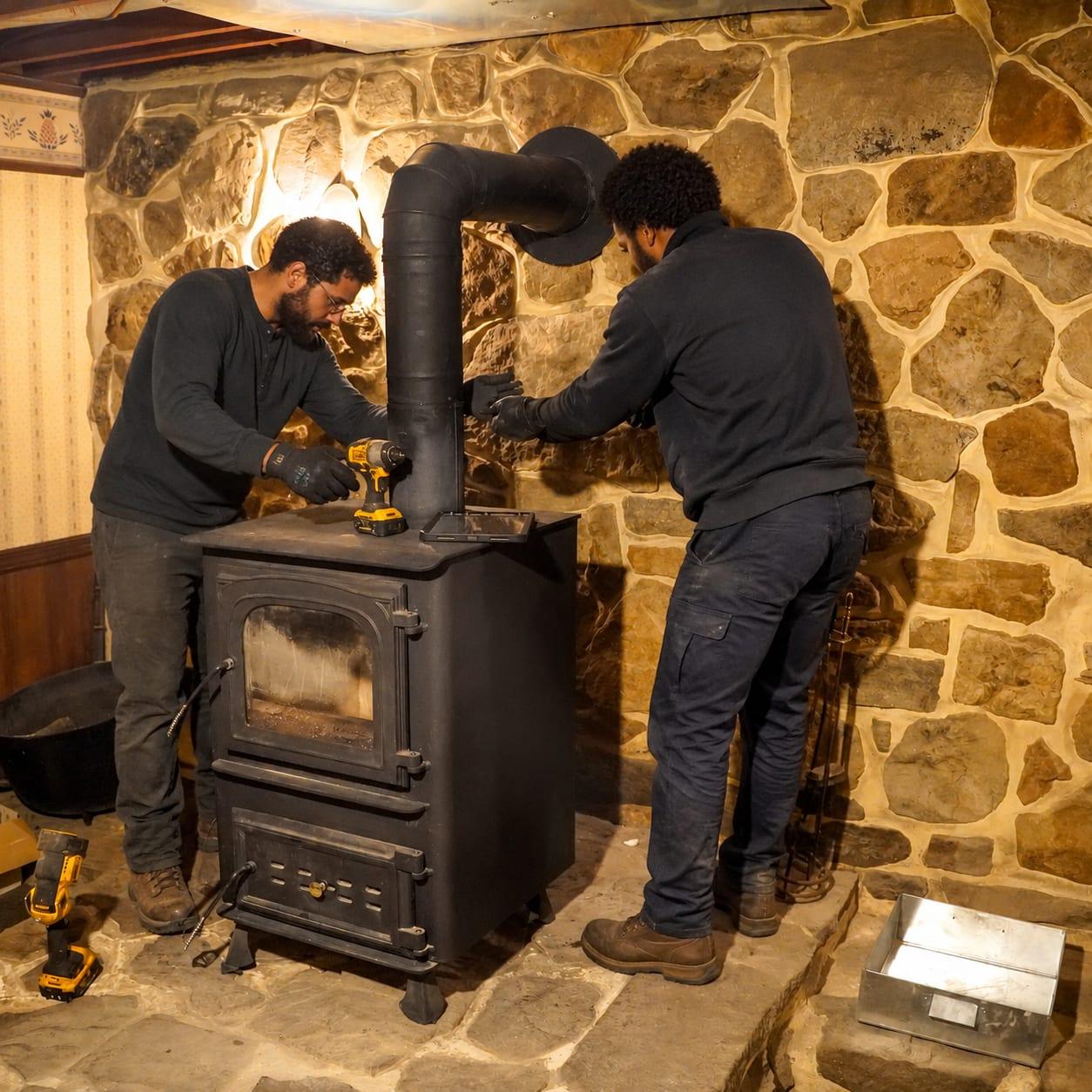
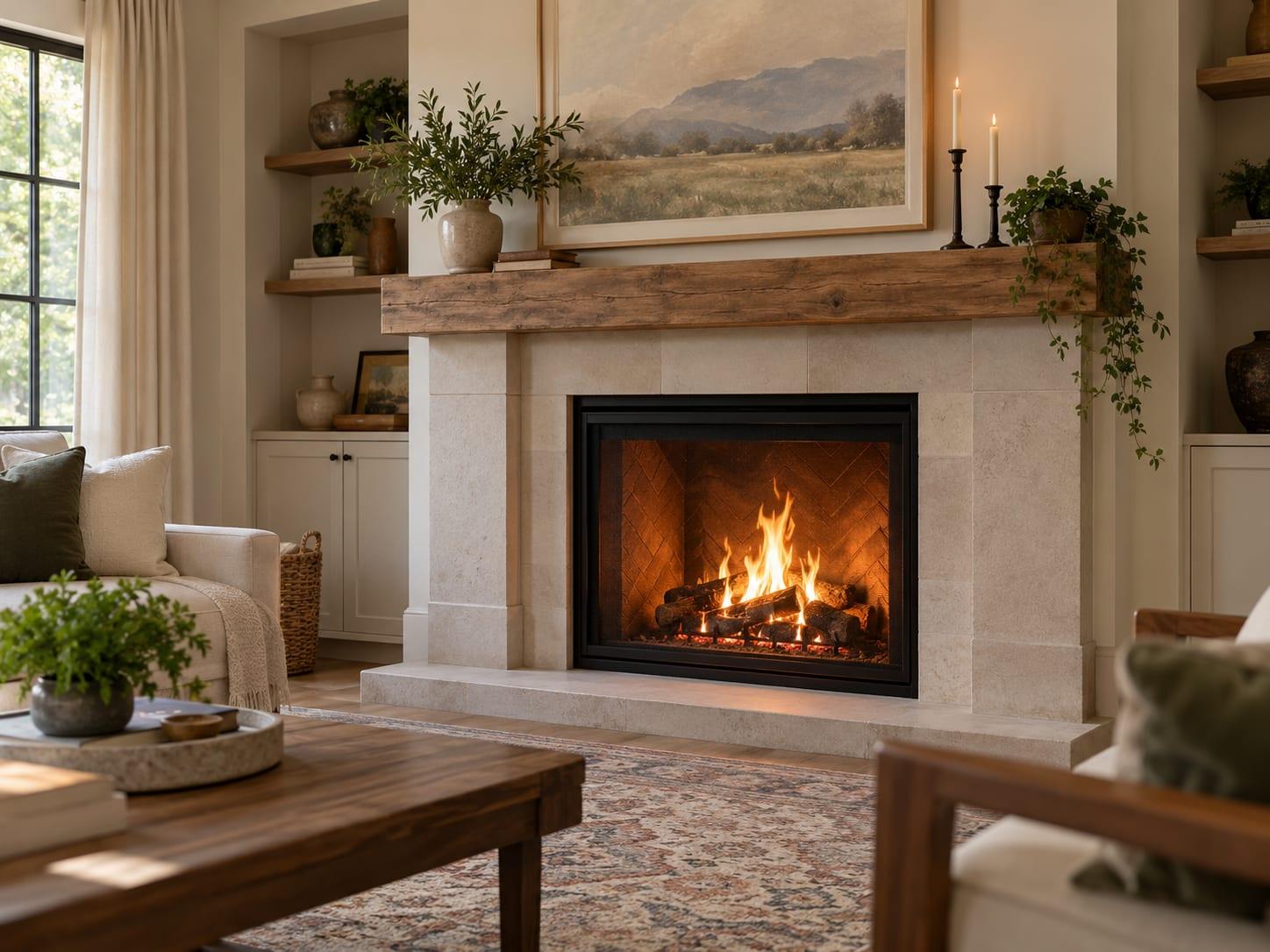
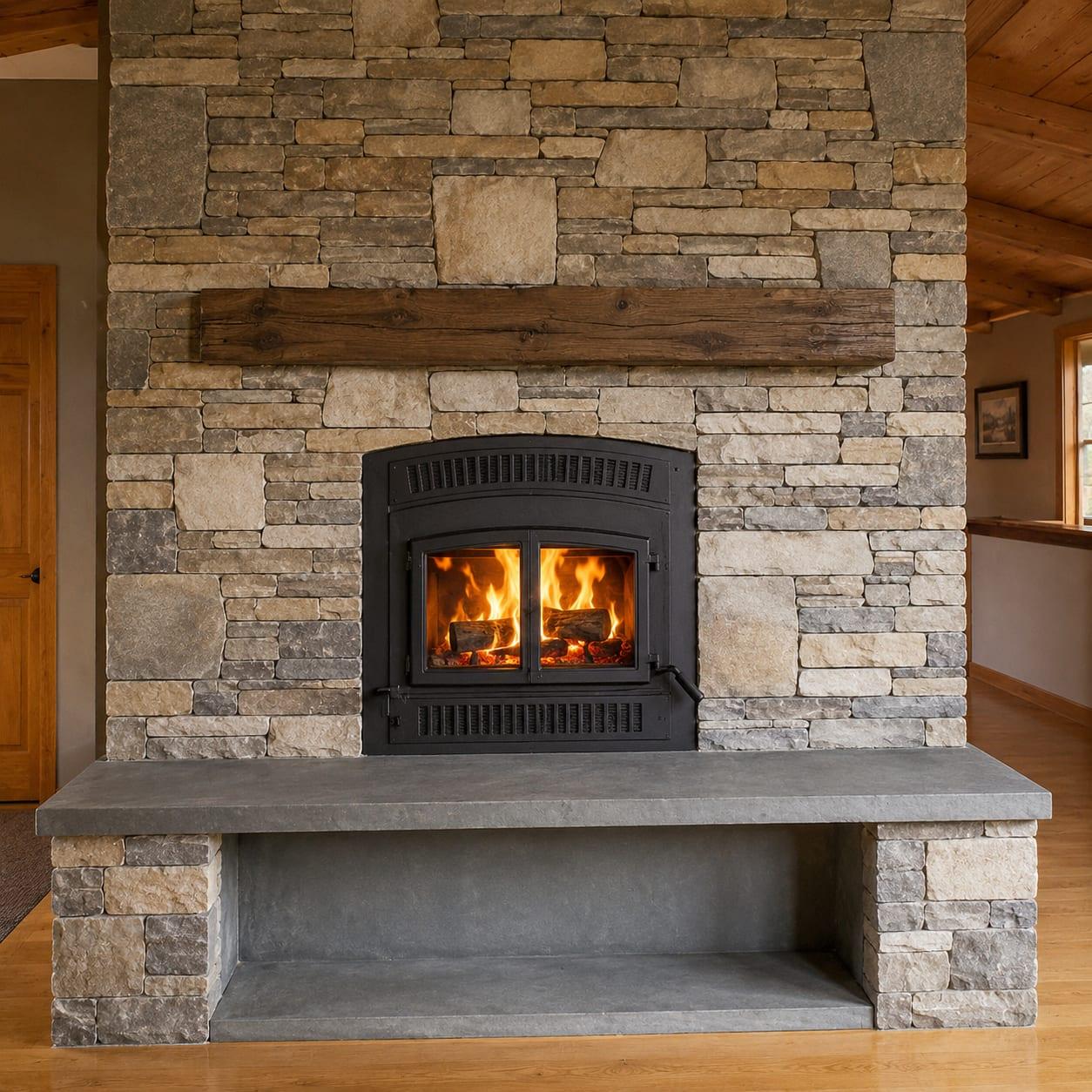
A wood-burning fireplace is more than a firebox in a wall. Installing one means planning the whole system: the firebox, the hearth in front of it, clearances to nearby walls and framing, a damper, and a chimney tall and well-sealed enough to draw smoke out of the house. The chimney is finished with a cap to keep out rain and animals.
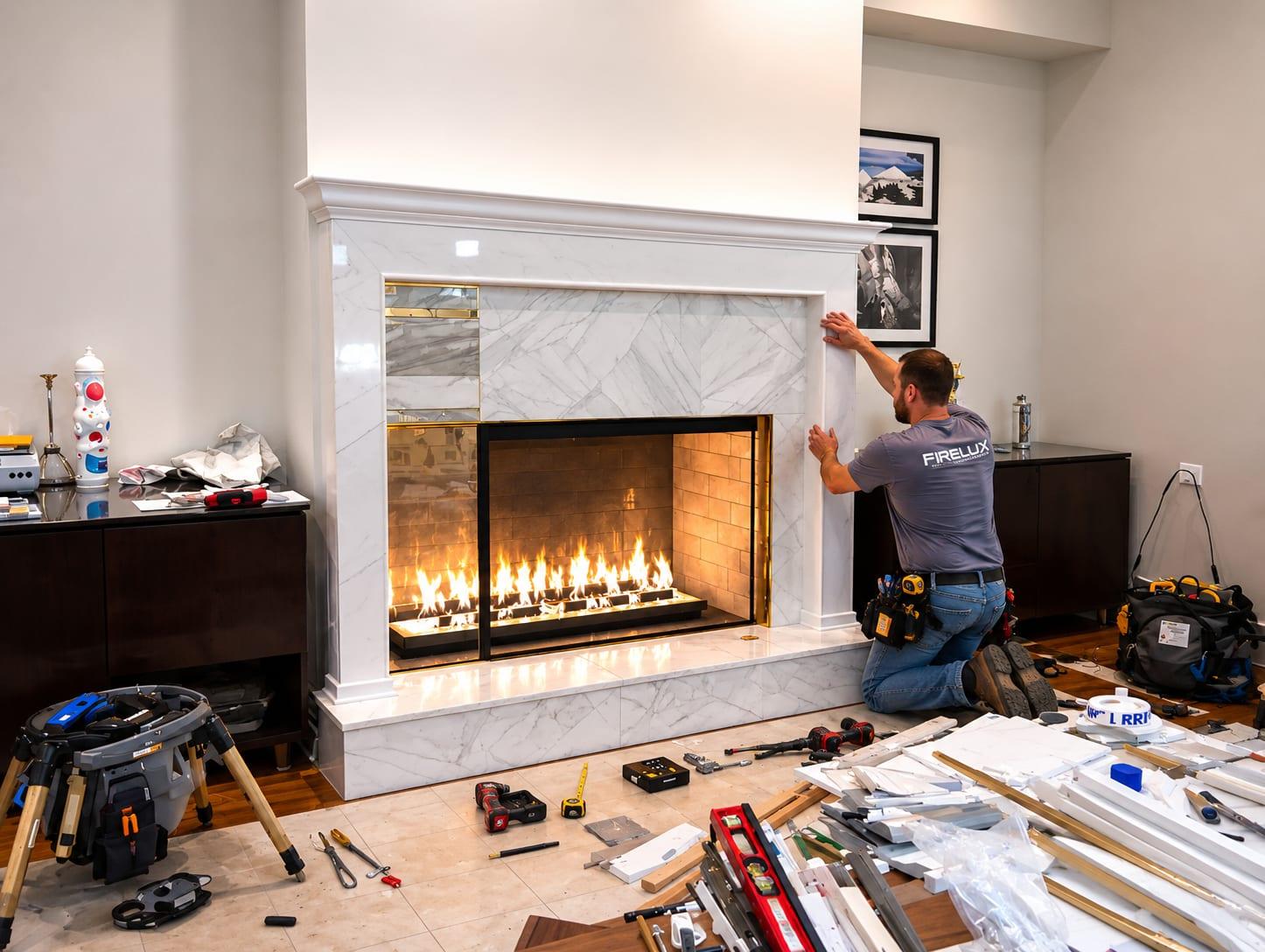
There are two main routes. A masonry fireplace is built from brick or stone with a masonry chimney. A factory-built wood fireplace is a manufactured unit installed with its matching metal chimney, often enclosed in a framed chase. Which suits your home depends on the room, the structure and how you plan to use it. Our guide to each type of fireplace lays out the differences.
When homeowners choose wood fireplace installation
- The home has no fireplace and you want a real wood fire in a living space.
- An old prefab wood unit is rusted, cracked or past its useful life.
- You are remodeling or adding a room and want a fireplace built in.
- You want a wood-burning outdoor living area or a second fireplace elsewhere in the house.
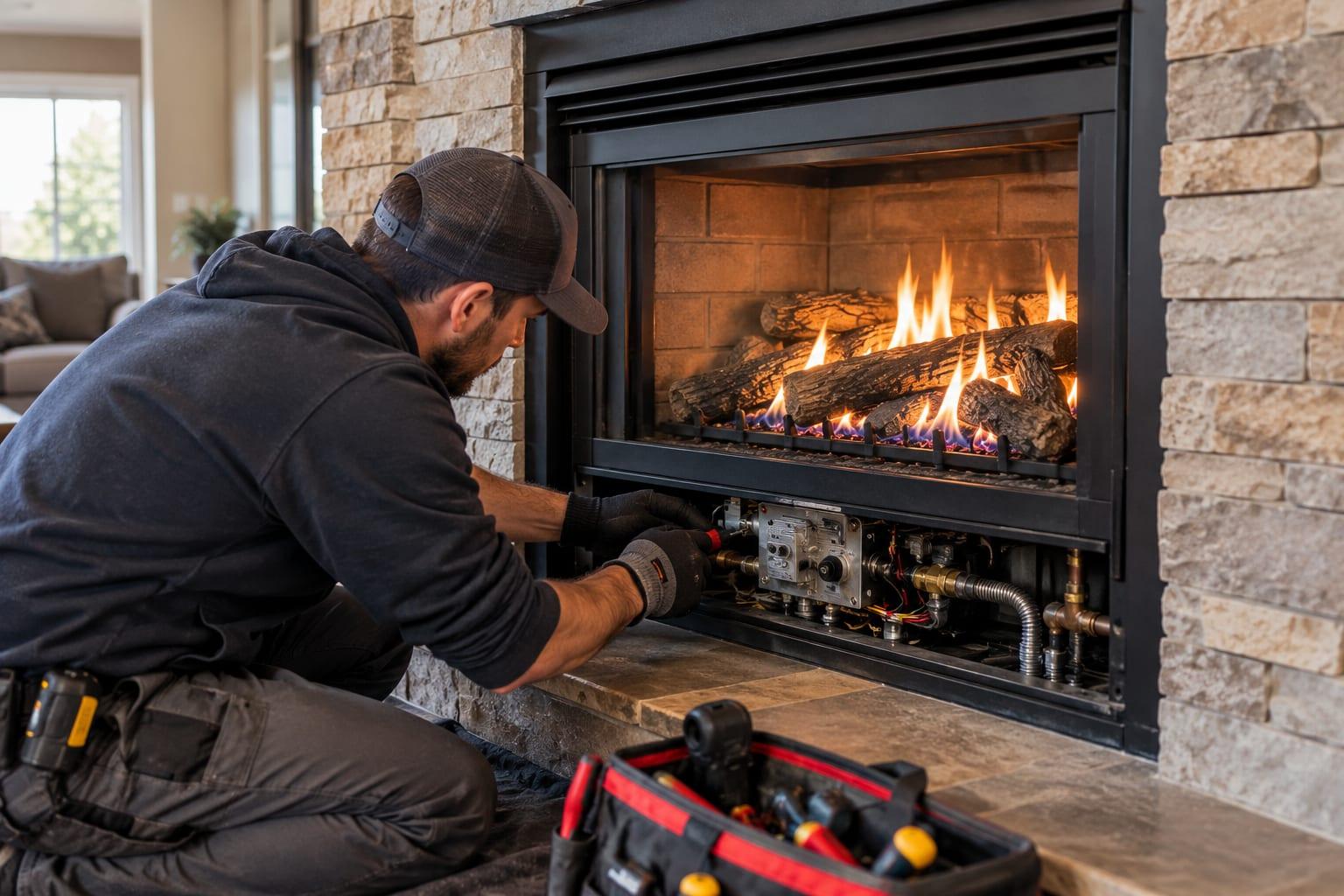
Wood isn't the only option, and it shouldn't be chosen by default. If you want heat at the flip of a switch, the comparison of gas vs wood fireplace installation is worth reading first. If heating output matters more than an open fire, a wood stove installation may serve you better, and the trade-offs of a free-standing wood stove vs a fireplace insert are worth understanding. For a flame effect with no venting at all, there is electric fireplace installation.
What the project involves, step by step
From first visit to first fire
Site visit
The technician looks at the room, the wall or corner you have in mind, the framing and the route a chimney would take.
Choose the system
You decide between masonry and factory-built, plus finishes, hearth material and doors, and receive a free estimate.
Plan venting and clearances
Chimney height, flue size and clearances to combustible materials are set to suit the unit and the house.
Install
The firebox, hearth, chimney, damper and cap go in, along with the surround and finish work.
Walkthrough
Before the first fire, you are shown how to operate the damper, build a fire and care for the system. Only try this once the flue has been checked clear of blockages and creosote; if smoke comes into the room, stop adding fuel and don't relight.
The same steps apply to any fireplace installation service here; what is specific to wood is the emphasis on draft, flue sizing and protecting the floor in front of an open fire.
Safety and maintenance
Burn only dry, seasoned hardwood; wet or green wood smolders and leaves heavy creosote in the flue. Have the chimney swept and inspected once a year. Keep a screen or doors in front of the fire, and keep rugs and furniture back from the hearth.
Booking wood fireplace installation
Installations are scheduled after the site visit, and site visits can sometimes be set the same day where the schedule allows. Builders, property managers and commercial clients can also arrange projects. Call or request an estimate to start planning.
Getting ready for the visit
- Keep pets in another room while the work area is open.
- Let the fireplace or stove cool completely — ideally no fire for 24 hours before the visit.
- Make sure the technician can reach the roof or attic access if it's needed.
- Move rugs, photos and anything fragile away from the work area.
Signs to watch for
- Visible damage to the chimney
- A fireplace that's hard to use
- Smoke, smells or stains near the fireplace
What the technician checks
- Flashing
- Damper
- Crown and cap
- Flue and liner
- Firebox
Carbon monoxide
A blocked or damaged flue can push carbon monoxide into the home. If an alarm sounds or anyone feels dizzy or sick near the fireplace, get everyone outside and call 911.