On this page
What chimney flashing repair is and what it involves
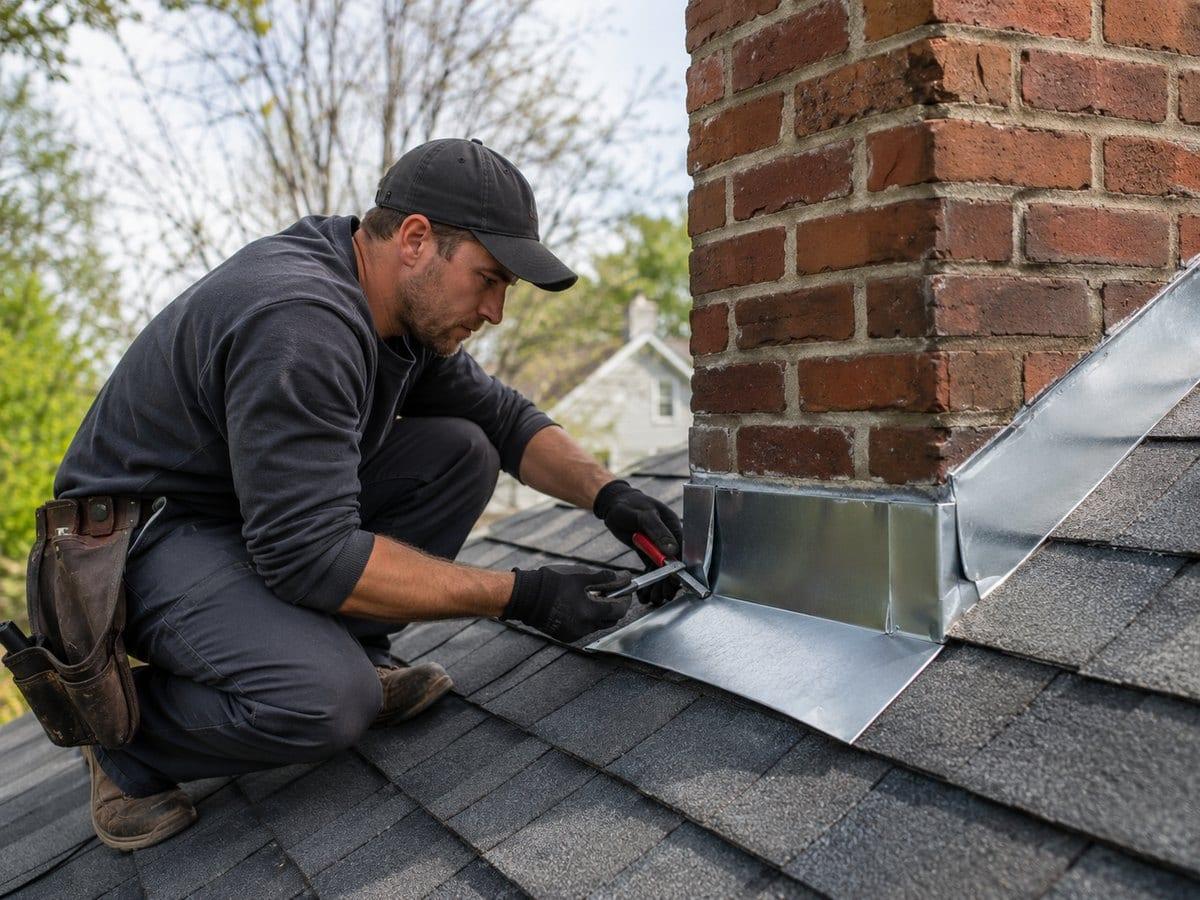
Flashing is a set of overlapping metal pieces, each with its own job:
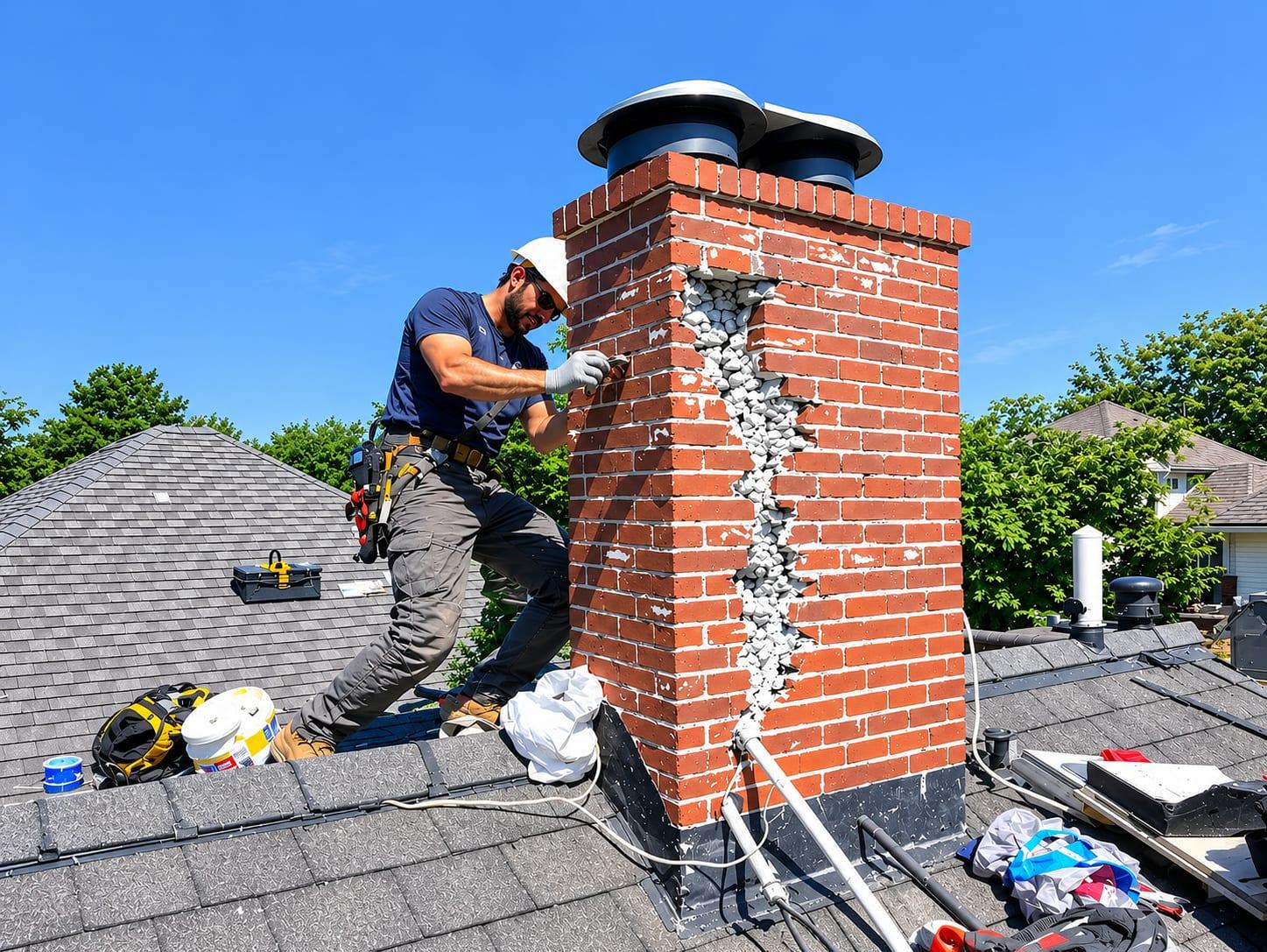
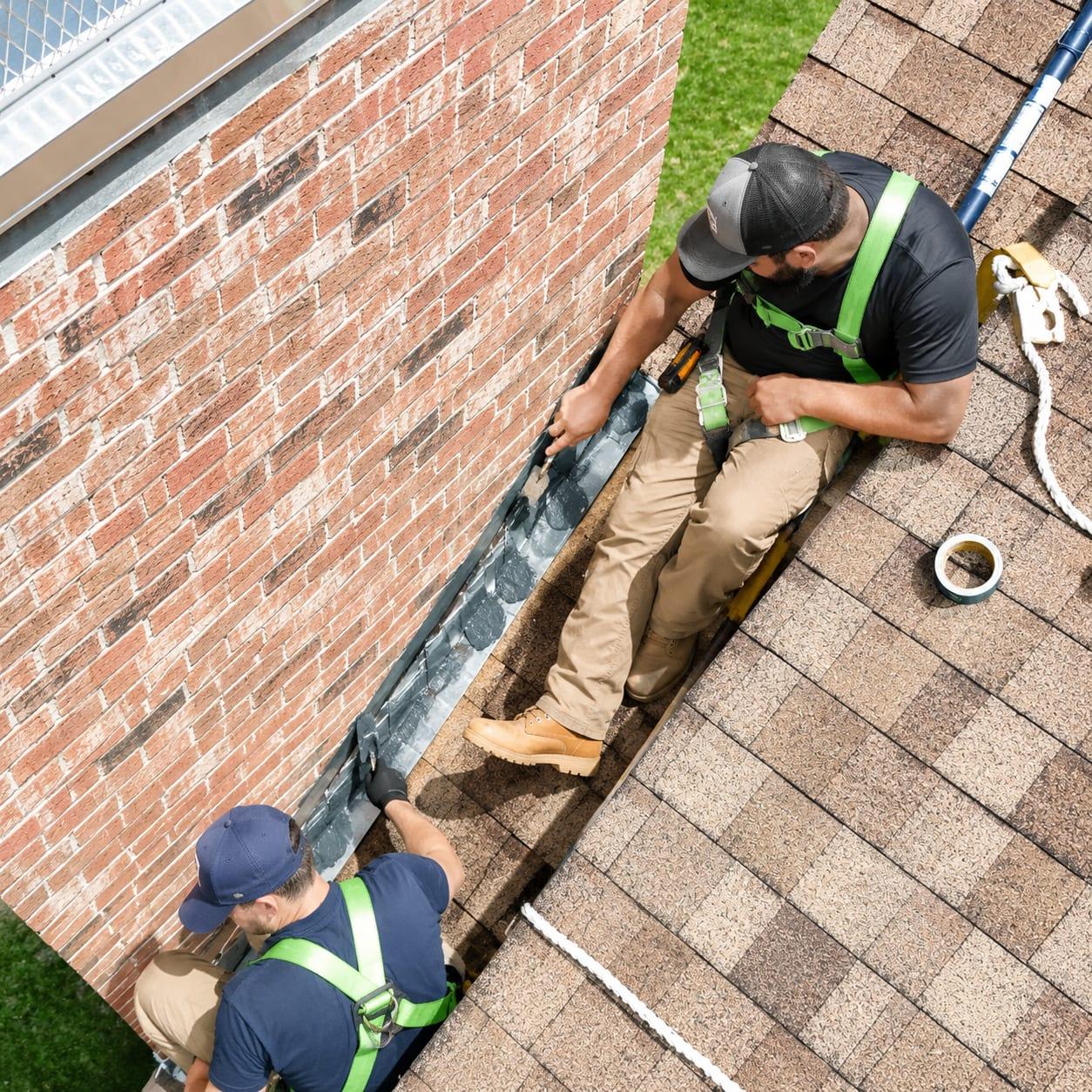
- Step flashing is woven in with the shingles along the sides of the chimney
- Counter flashing is set into the mortar joints and laps down over the step flashing
- The front apron sits across the downhill face
- A back pan or cricket on wider chimneys steers water around the uphill side so it doesn't pool
Repair can mean resetting counter flashing that has pulled out of its joint, replacing bent or rusted sections, or reflashing the whole chimney when the metal is worn out. A bead of caulk smeared over the joint looks like a fix but usually fails within a season or two, because the caulk shrinks and cracks while the metal underneath is still loose.
When to book chimney flashing repair
- A musty smell from the fireplace in wet weather
- Rust on the damper or firebox
- Dripping or damp in the firebox after rain
- Water stains on the ceiling or wall beside the chimney
Before the technician arrives
- Make sure the attic access can be reached if there is one.
- Take photos of the stains.
- Note when the leak shows up — every rain, or only wind-driven rain or snow melt.
Water near wiring or a sagging ceiling
If water is reaching light fixtures or wiring, or a ceiling is sagging, keep clear of that area and switch off its power at the breaker if you can do it safely. Call 911 if there's an immediate danger.
What we look at
- Mortar joints and brick faces
- Attic and ceiling around the chimney
- Flashing and counter-flashing
- Crown cracks
- Damper and firebox for rust
- Cap and chase cover
When homeowners need chimney flashing repair
- Water stains on a ceiling or wall next to the chimney
- Damp or darkened rafters, sheathing or insulation around the chimney in the attic
- Flashing that is lifted, bent or pulling away from the brick
- Dried-out, cracked caulk along the joint
- Rust on the metal, or white staining on the brick just above the roofline
- Leaks that show up after wind-driven rain or a storm
Water in the firebox can come from somewhere else. A missing cap, a cracked crown or porous brick all let rain in, so the whole chimney gets checked. Missing caps are fixed with chimney cap installation, and porous brick is a job for chimney waterproofing. Note that sealing the brick won't stop a flashing leak, and new flashing won't stop water soaking through the brick.
What the visit involves, step by step
Fixing chimney flashing
Trace the leak
Stains inside and the attic around the chimney show where water is getting in.
Inspect from the roof
Every flashing piece, its sealant and the mortar joints it sits in are checked.
Explain the fix
You get a free estimate that separates flashing problems from any other water sources.
Repair or reflash
Loose pieces are reset into the mortar, damaged sections replaced, and joints sealed properly.
Check the result
The finished flashing is checked so water sheds over each overlap and off the roof.
Booking flashing repair in Atlanta
Same-day visits are offered when the schedule allows, and emergency calls are accepted for active leaks. Homeowners, landlords and commercial property managers can book. If the inspection turns up cracked brick or a damaged crown, repairs to the rest of the chimney can be handled at the same time. Rain can also come down the flue itself, which the guide to chimney caps and dampers covers.