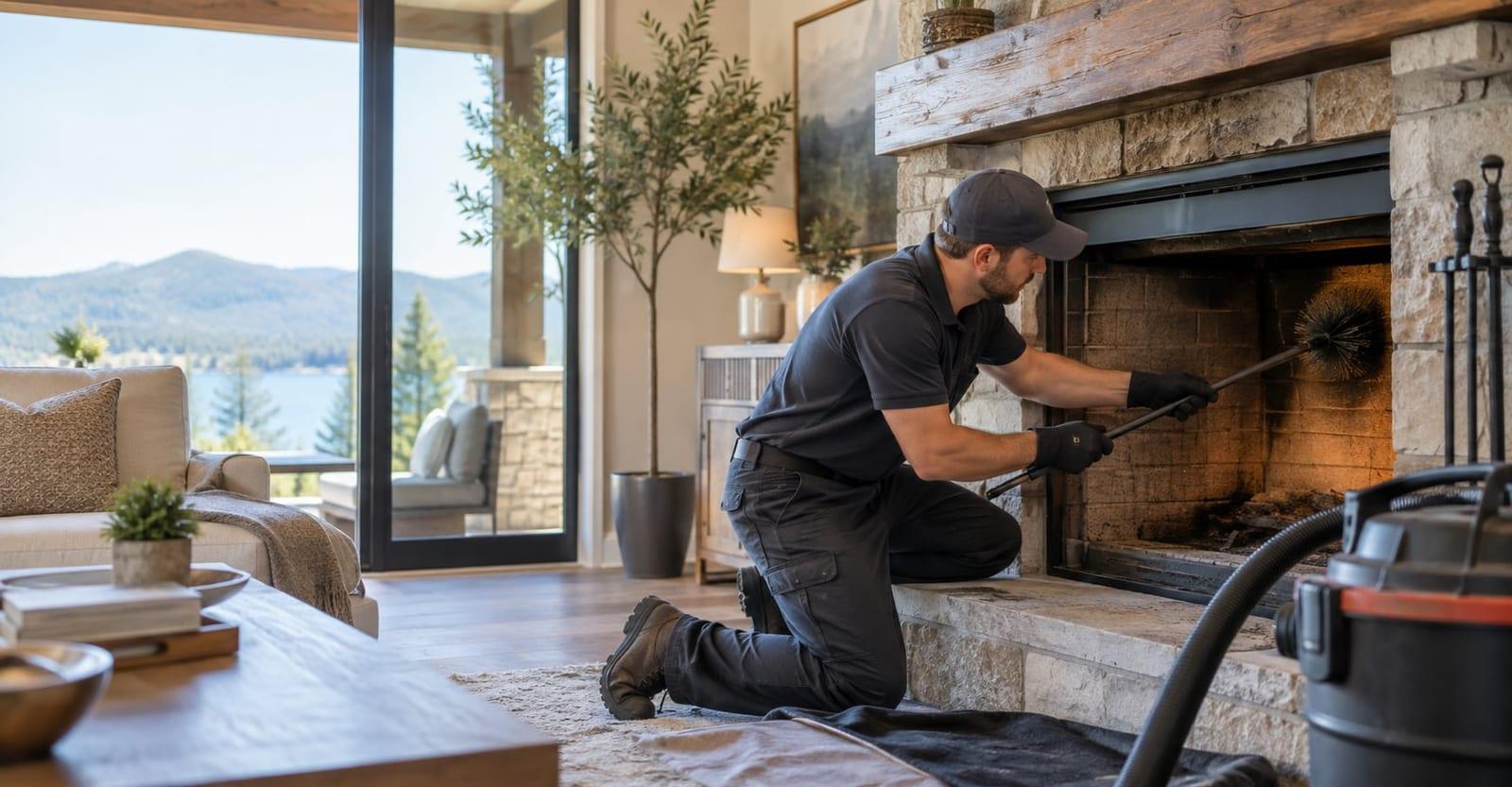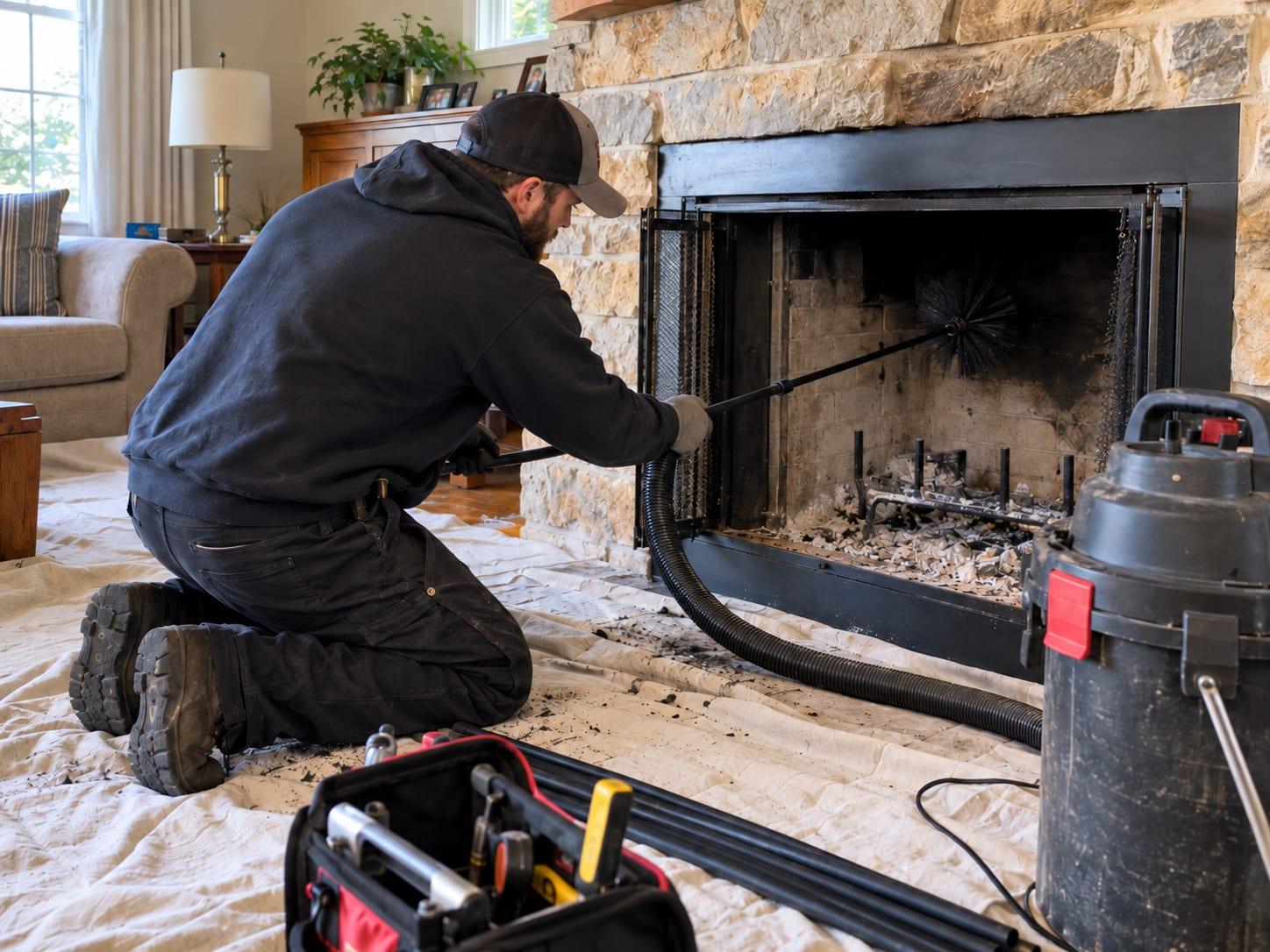
This page covers two parts of the job: how we handle creosote, and what happens when a nest or debris is sitting in the flue. It also covers when an inspection makes sense first.
When the sweep turns to creosote
Once the flue is brushed, the deposit that comes down shows what kind of creosote was in the chimney. Light, sooty material usually clears in a normal cleaning. Flaky or crusty layers take more work. A shiny, tar-like coating on the flue walls often won't come off with brushing alone.
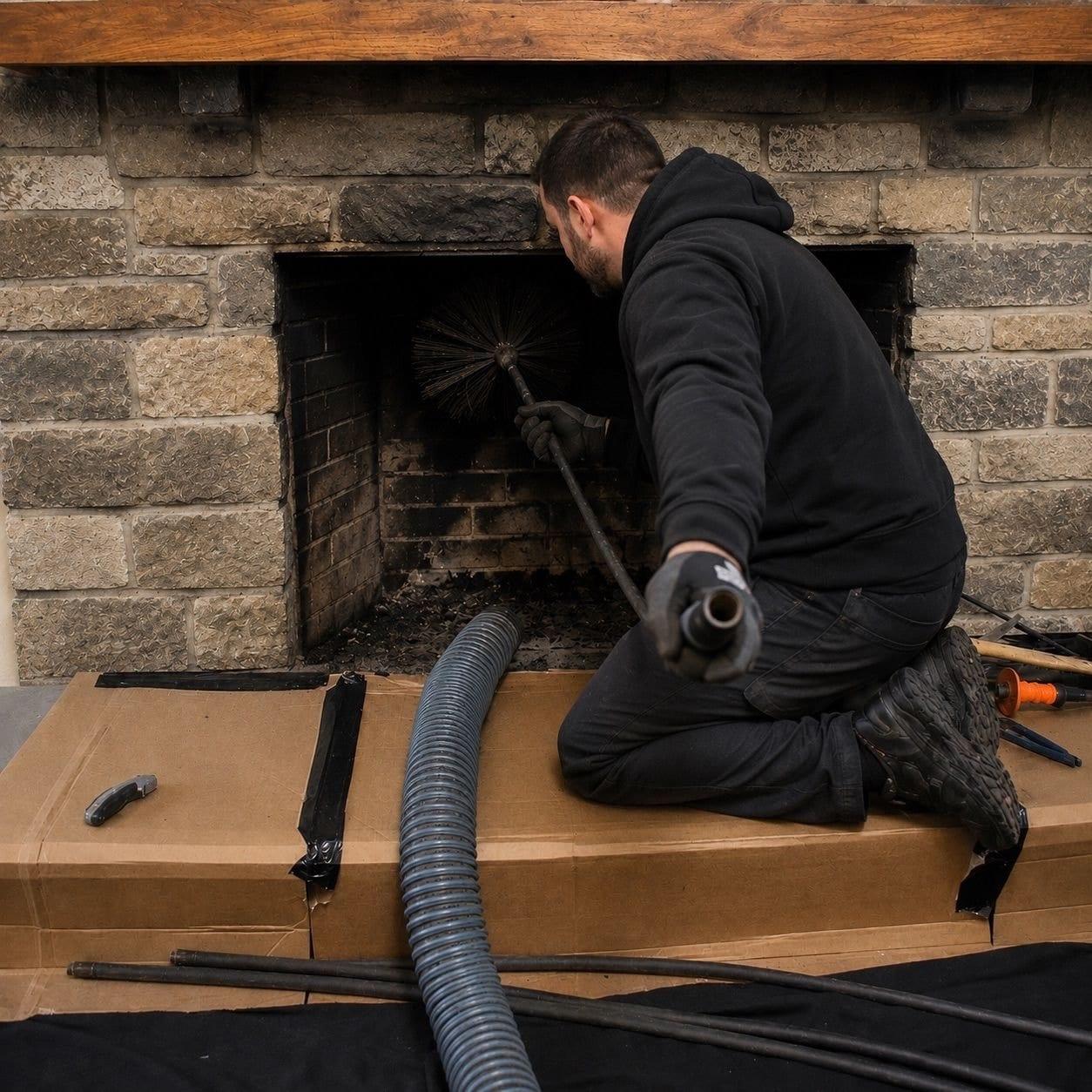
What we find helps you decide three things: whether you can keep using the fireplace as you have been, whether more removal should be scheduled, and whether your firewood or burning habits are part of the cause. For background on what drives creosote buildup and how it's fixed, the problem page goes into more detail.
Nests and debris found in the flue
Sometimes the sweep runs into something solid: twigs, leaves, a bird or animal nest, or fallen mortar. These blockages are cleared so smoke and gases can move up and out again. A blocked flue is one reason a fireplace smokes into the room or a chimney smells, even when it hasn't been used much.
What we pull out also points to how it got in. An open or damaged top suggests the chimney needs a better cover. Crumbled masonry suggests a closer look at the structure. That helps you decide whether a cleaning alone is enough, or whether a small fix should follow so the same debris doesn't come back.
What the housing data bears on
About 6% of the housing units in Sandy Springs were built before 1960, according to the U.S. Census Bureau's American Community Survey 2019–2023 5-year estimates (table B25034, Year Structure Built). If your home is one of that smaller, older group, mention its age when you call so we can plan for an older flue. For most homes, the condition we find inside the chimney guides the work more than the year it was built.
When the buildup is heavy
Heavy creosote can turn a routine sweeping into a bigger job. The work can involve extra passes with stiffer tools, or a treatment that loosens glazed deposits so they can be brushed off. Sometimes it takes more than one visit. After a buildup that thick, the flue is checked for damage, especially if there are signs a chimney fire may have happened. If the firebox or other fireplace parts turn out damaged, fireplace repair for homes in Sandy Springs is the next step.
Related work a sweep can lead to
- Chimney spark arrestor installation: the right job when you're concerned about embers escaping the top of the chimney, or the opening needs a mesh screen.
- Chimney damper repair: the right job when the damper sticks, won't close fully or lets drafts and odors through after the flue is clean.
We also handle chimney sweeping in nearby Dunwoody, Brookhaven and Chamblee.
For the complete overview of the service, including its types, process and components, go to our chimney sweep service guide. Everything else we do locally is on the Sandy Springs area page.
Booking a sweep for your home
Call or request an estimate. Same-day visits are available where the schedule allows (never guaranteed), and emergency calls are accepted. We also take commercial and property-manager work. If your fireplace runs on gas, gas fireplace and gas appliance work is offered too.
Sources (1)
The sources of the Sandy Springs facts on this page.
- 1U.S. Census Bureau, American Community Survey 2019–2023 5-year estimates, table B25034 (Year Structure Built)