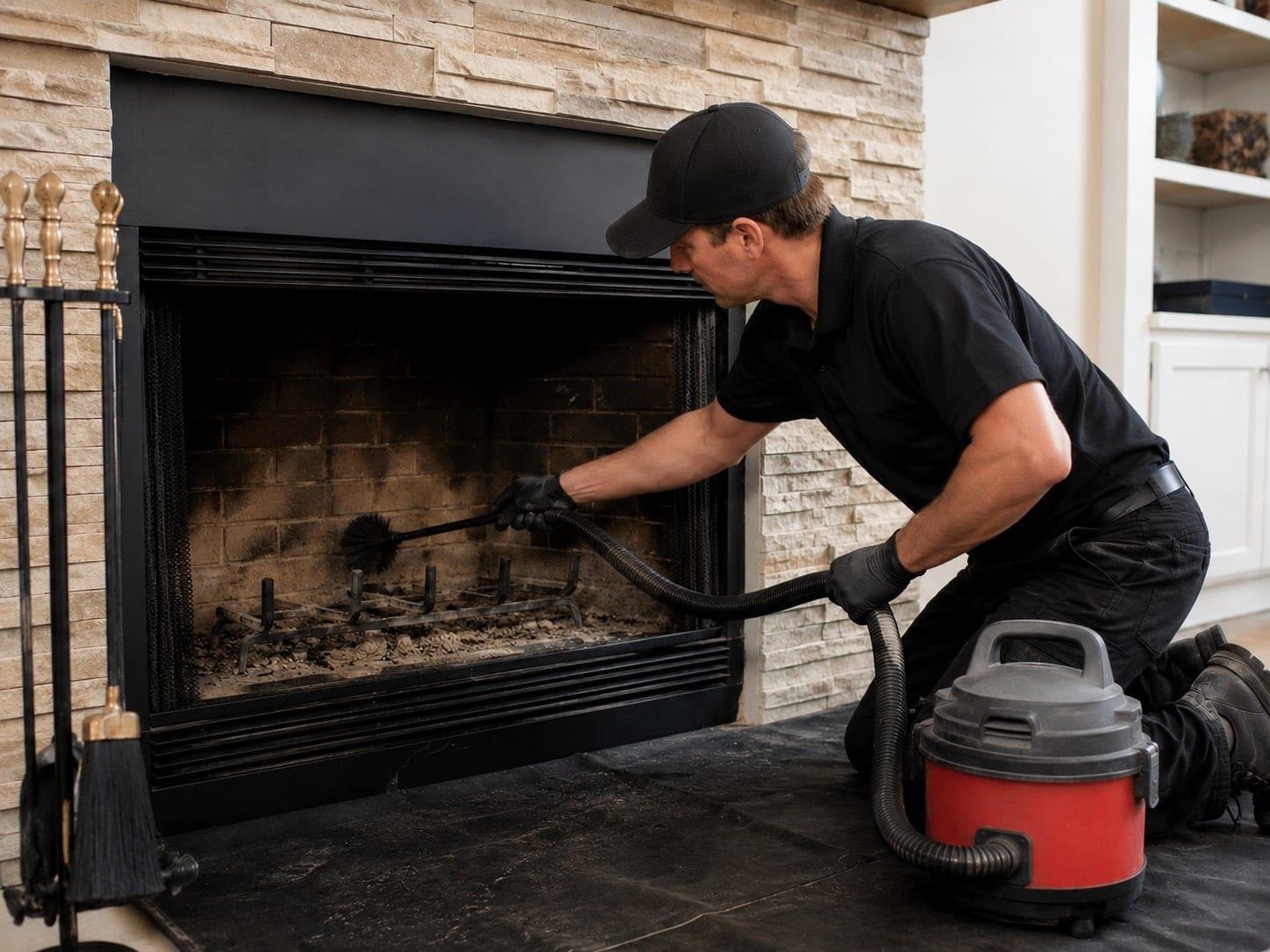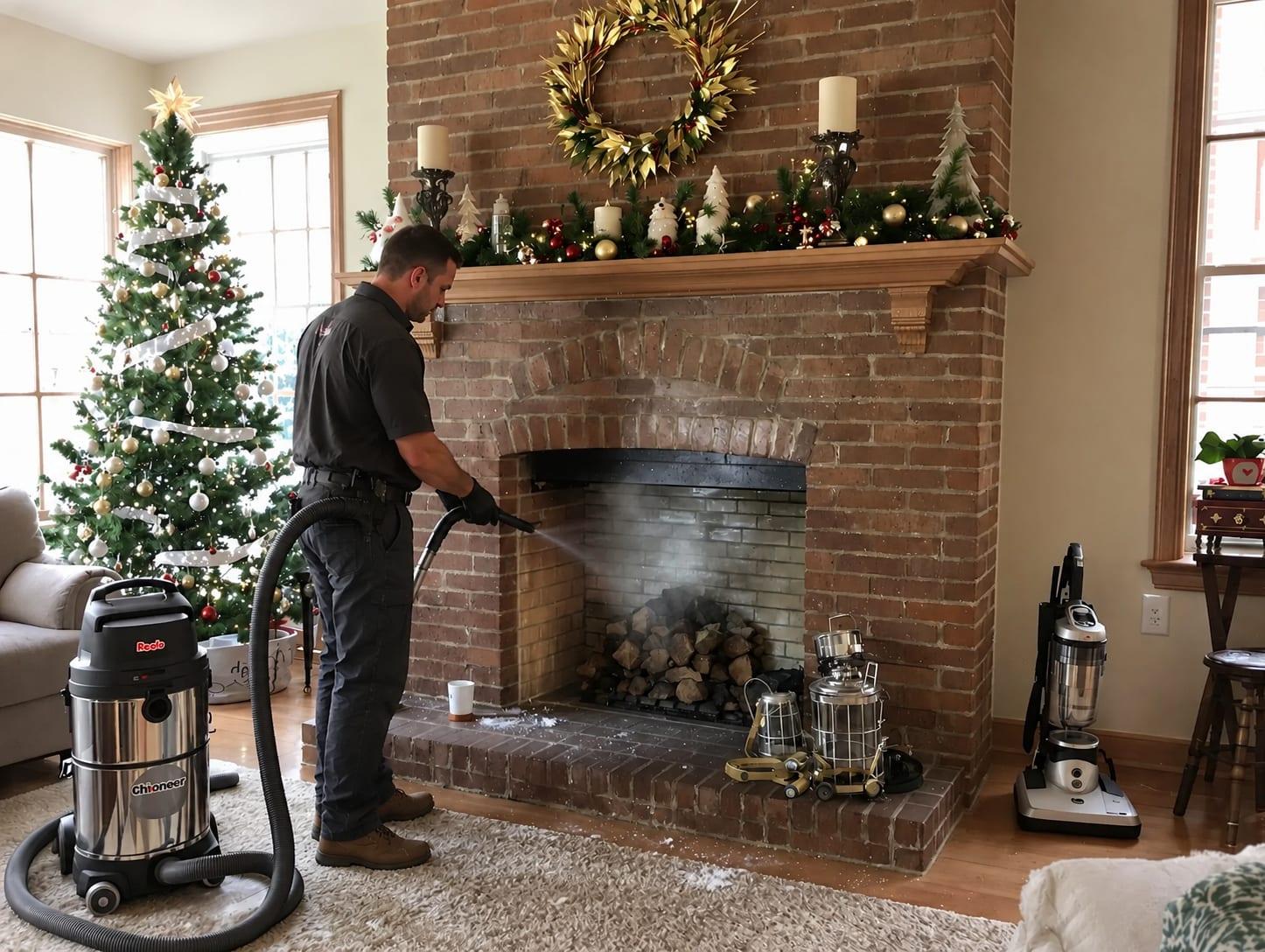
Soot sweeps out of a firebox easily. Creosote is the part of a fireplace cleaning that takes judgment. We clean fireplaces in homes across Sandy Springs, and our work there centers on what happens when a cleaning runs into creosote: removing what can come out and explaining what's left.
Getting creosote out during a Sandy Springs fireplace cleaning
The cleaning turns to creosote when the brush brings up more than dry soot. That can mean flaky black chips or sticky, tar-like deposits on the firebox walls, around the damper or in the smoke chamber. We loosen what will come free with brushes and scrapers and vacuum it out. Then we look at what remains: how thick it is, where it sits, and whether it is the soft kind or something harder.
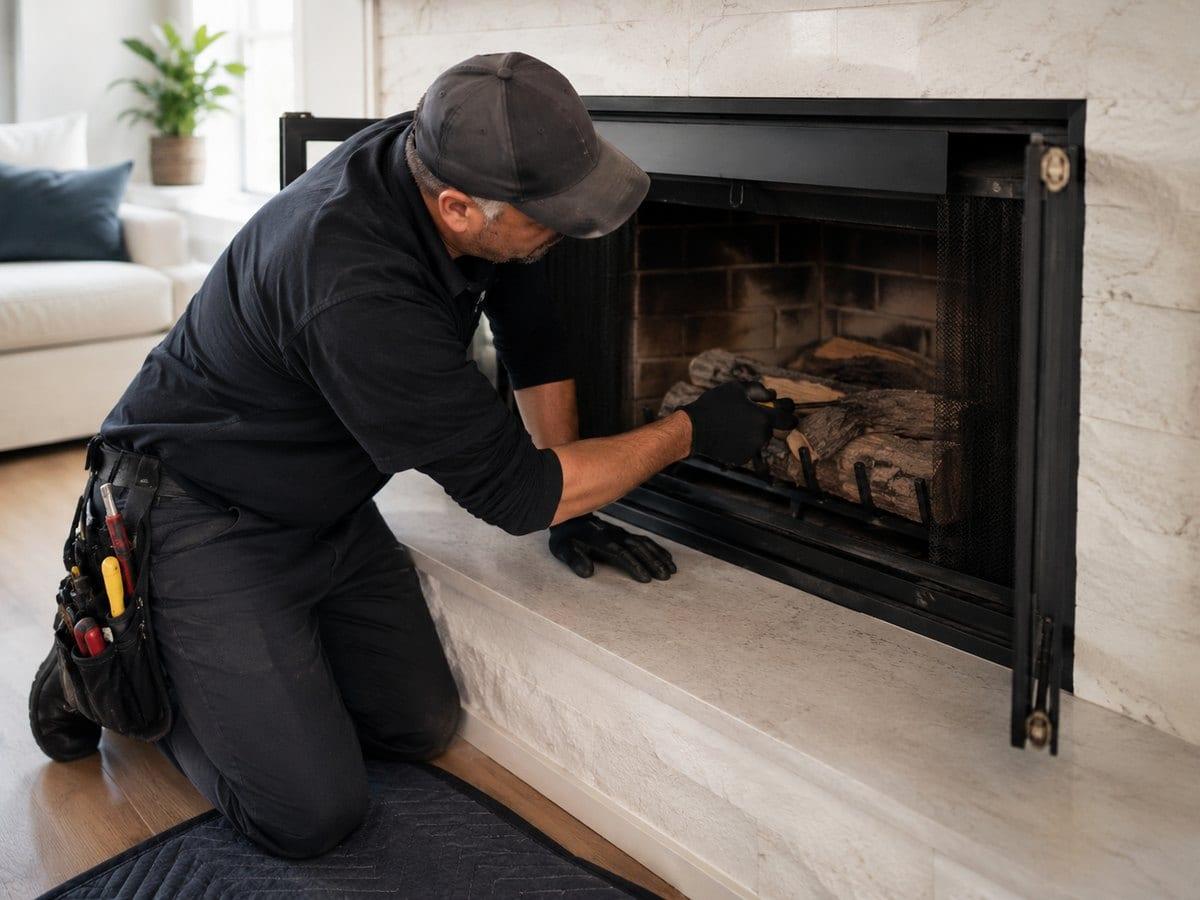
What that check helps you decide
- Whether one cleaning is enough to put the fireplace back in use
- Whether deposits run up into the flue and need their own cleaning
- Whether hardened deposits need treatment before your next fire
When the deposits are glazed
Glazed creosote is a hard, shiny coating that looks almost like enamel. It forms when tar-like deposits are heated again and again, and a brush skates right over it. If we find it during a fireplace cleaning, we note how far it reaches, whether that's the firebox walls only or up past the damper. We'll also tell you plainly that standard cleaning won't take it off. Removing it can involve a treatment that softens the glaze so it can be brushed out later, sometimes over more than one visit, or mechanical removal.
The decision glazed creosote leaves you with
Glazed creosote is highly flammable. The real question is whether to keep burning before it's dealt with, and our advice is not to light another fire until it has been removed.
Home age and fireplace cleaning in Sandy Springs
About 6% of the housing units in Sandy Springs were built before 1960, according to the U. S. Census Bureau's American Community Survey 2019–2023 5-year estimates (table B25034, Year Structure Built). If your home is one of them, its fireplace may have many decades of fires behind it, and older deposits can sit beneath newer soot. It helps to mention the home's age when you book.
When creosote buildup is heavy
Heavy buildup can turn a routine cleaning into a longer job. It can involve several passes in the firebox and smoke chamber, treating glazed patches separately, and checking how far the deposits climb. If the buildup continues past what can be reached from the fireplace, the flue itself needs cleaning. That's the job for our chimney sweep for homes in Sandy Springs. Thick deposits can also narrow the passage and push smoke back into the room. Before you light another fire, we explain what we found and what it means.
Related jobs this cleaning can lead to
- Chimney blockage removal: the right job when something other than creosote, such as fallen debris, is stopping smoke from going up.
- Chimney odor removal: the right job when a smoky or sour smell keeps coming from the fireplace even after it has been cleaned.
Also served nearby
We also clean fireplaces for homes in nearby Dunwoody, Brookhaven, Chamblee and Doraville.
More about this service
The service page has the complete overview, including fireplace types, the parts involved and how fireplace cleaning works step by step. The area page covers everything we do in Sandy Springs.
Booking a fireplace cleaning
Call or request an estimate, and let us know how often you burn and whether you've noticed shiny, hardened deposits in the firebox. Same-day visits are available where the schedule allows, but they are never guaranteed. We also take on commercial and property-manager work, as well as gas fireplace and gas appliance work, and we work on all major brands.
Sources (1)
The sources of the Sandy Springs facts on this page.
- 1U.S. Census Bureau, American Community Survey 2019–2023 5-year estimates, table B25034 (Year Structure Built)