On this page
What chimney blockage removal is and what it involves
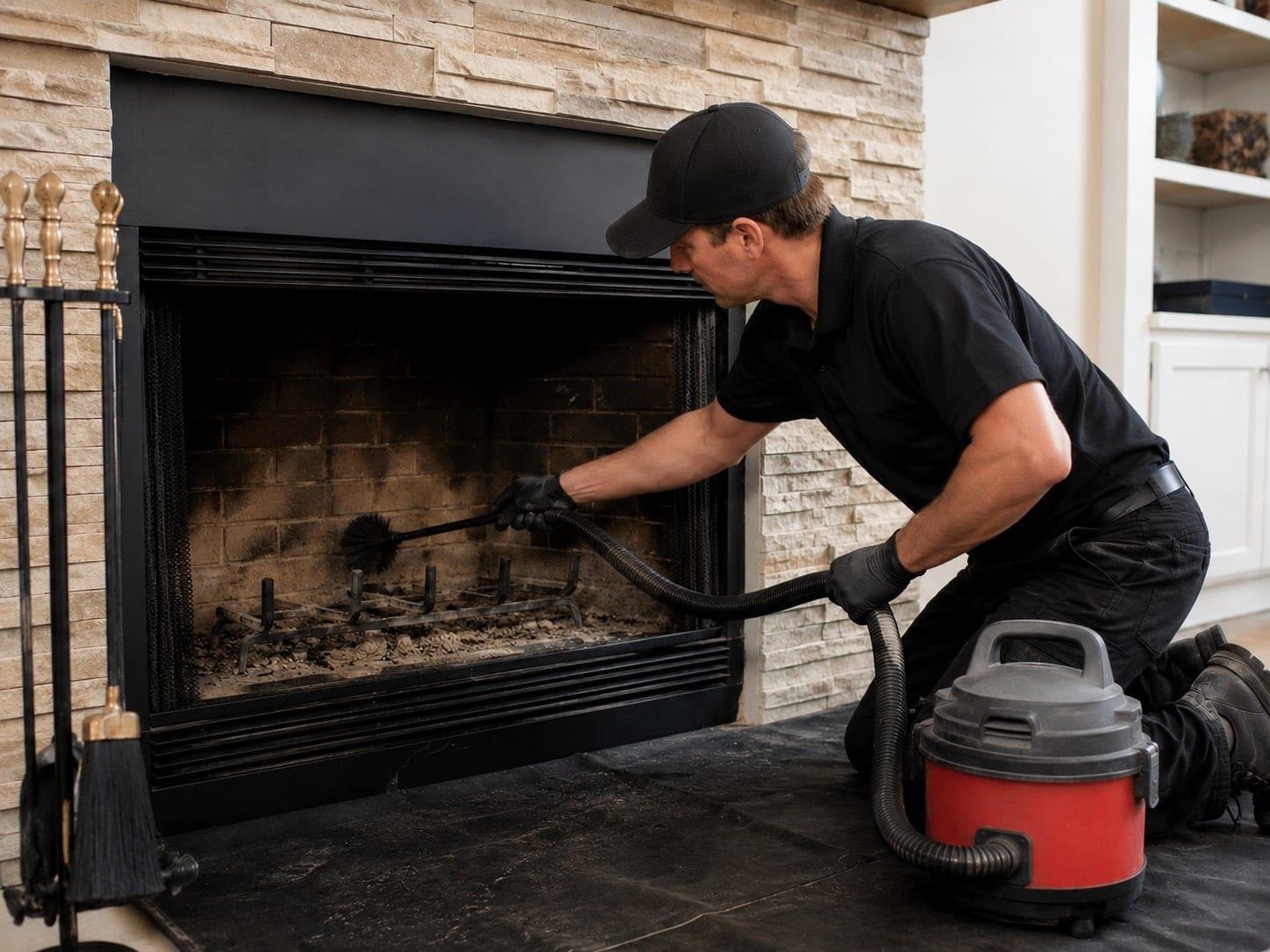
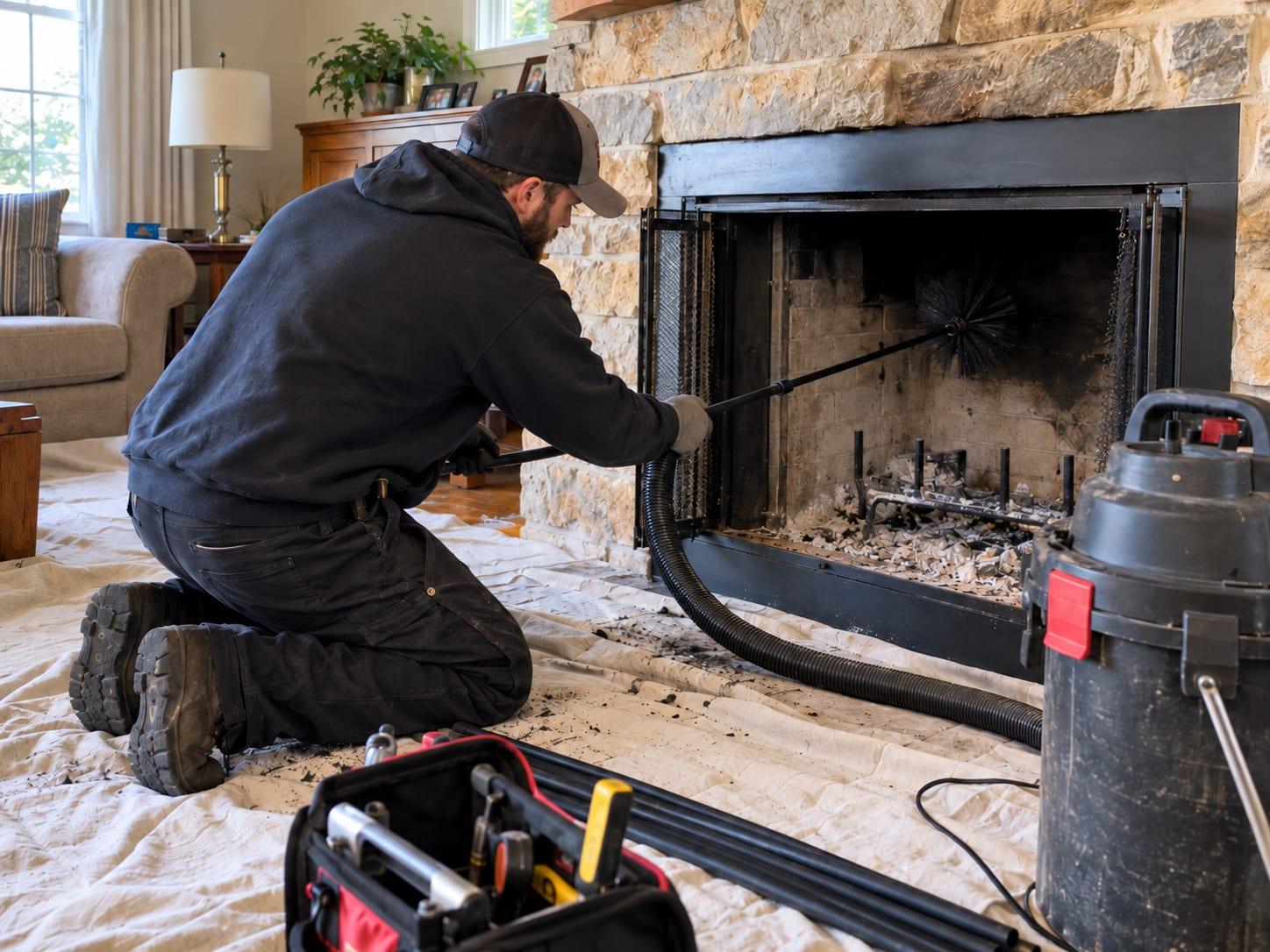
A blockage is anything that narrows or closes the flue. Finding it comes first, because the obstruction might sit just above the damper or many feet up. A camera can pinpoint it when it can't be seen from the firebox or the roof. Then it is pulled, pushed or brushed out with tools suited to what it is.
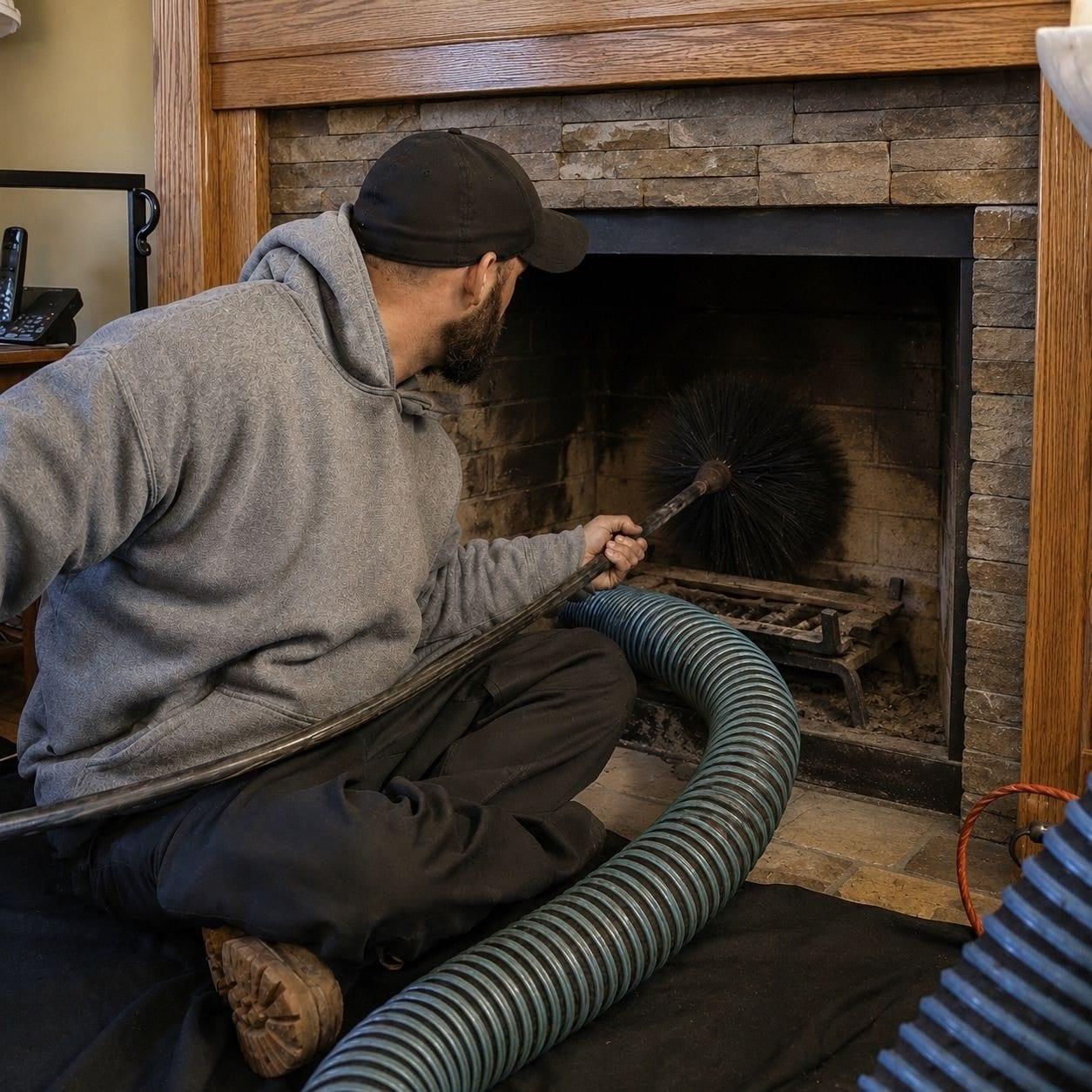
- Bird and squirrel nests, or an animal that became trapped
- Leaves and twigs that fell into an uncapped flue
- Thick creosote or glazed buildup from wood fires
- Pieces of broken flue tile, mortar or brick that fell from above
- Debris lodged on a smoke shelf or a damper that won't open
Fallen tile or brick usually means water or age has damaged the flue, so it is reported along with the blockage. Moisture is a common cause, which is one of the reasons chimneys get waterproofed.
What gets checked
- Cap and screen condition, where it can be seen safely
- Creosote level and type in the flue
- Visible liner sections for cracks or gaps
- Signs of animals or nesting material
- Damper opening, closing and seal
- Smoke shelf and smoke chamber
- Draft — how readily smoke moves up the flue
Signs of a chimney fire
A loud roaring sound, dense smoke or sparks from the top of the chimney can mean a chimney fire. Get everyone out and call 911; have the chimney inspected before the next fire.
Signs it's time for chimney blockage removal
- A full burning season since the last cleaning
- Soot marks on the face of the fireplace above the opening
- Smoke rolling into the room instead of drawing up
- Scratching or chirping sounds, or debris falling into the firebox
How to prepare
- Keep pets in another room while the work area is open.
- Note the make and model of any insert, stove or gas unit if you have it.
- Make sure the technician can reach the roof or attic access if it's needed.
- Clear a few feet of space in front of the hearth or appliance.
When homeowners need chimney blockage removal
- Smoke spills into the room, even with the damper open
- Fires are hard to start, smolder, or die out
- Debris, soot clumps or masonry chips land in the firebox
- A strong smell comes from the fireplace, which a chimney odor removal service can treat once the cause is gone
- Scratching or chirping in the flue
- A gas fireplace's pilot keeps going out, or soot builds up on its glass
Stop using the fireplace
A blocked flue can push smoke and carbon monoxide into the house. Don't light a fire or run a gas fireplace until the flue is cleared. If a carbon monoxide alarm sounds, get everyone outside and call emergency services.
What the visit involves, step by step
Clearing a blocked chimney
Protect the room
The hearth and floor are covered before anything is disturbed.
Locate the blockage
The flue is checked from below and above, with a camera if needed.
Remove it
The obstruction is cleared, and a full chimney sweep follows if buildup is part of the problem.
Look for the cause
Missing caps, damaged tile and water entry are noted so the blockage doesn't come back.
Test the draft
The flue is confirmed open and drawing before you use it again.
Getting a blocked chimney cleared in Atlanta
Emergency calls are accepted, and same-day visits are offered when the schedule allows. Wood-burning fireplaces, gas fireplaces and appliances, and commercial or managed properties are all covered. If damage turns up, a chimney inspection gives a fuller picture. The guide to chimney cleaning and safety covers habits that help prevent buildup.