If any of that sounds like your chimney, request a free estimate and we'll look at it with you.
When the repair comes down to mortar joints
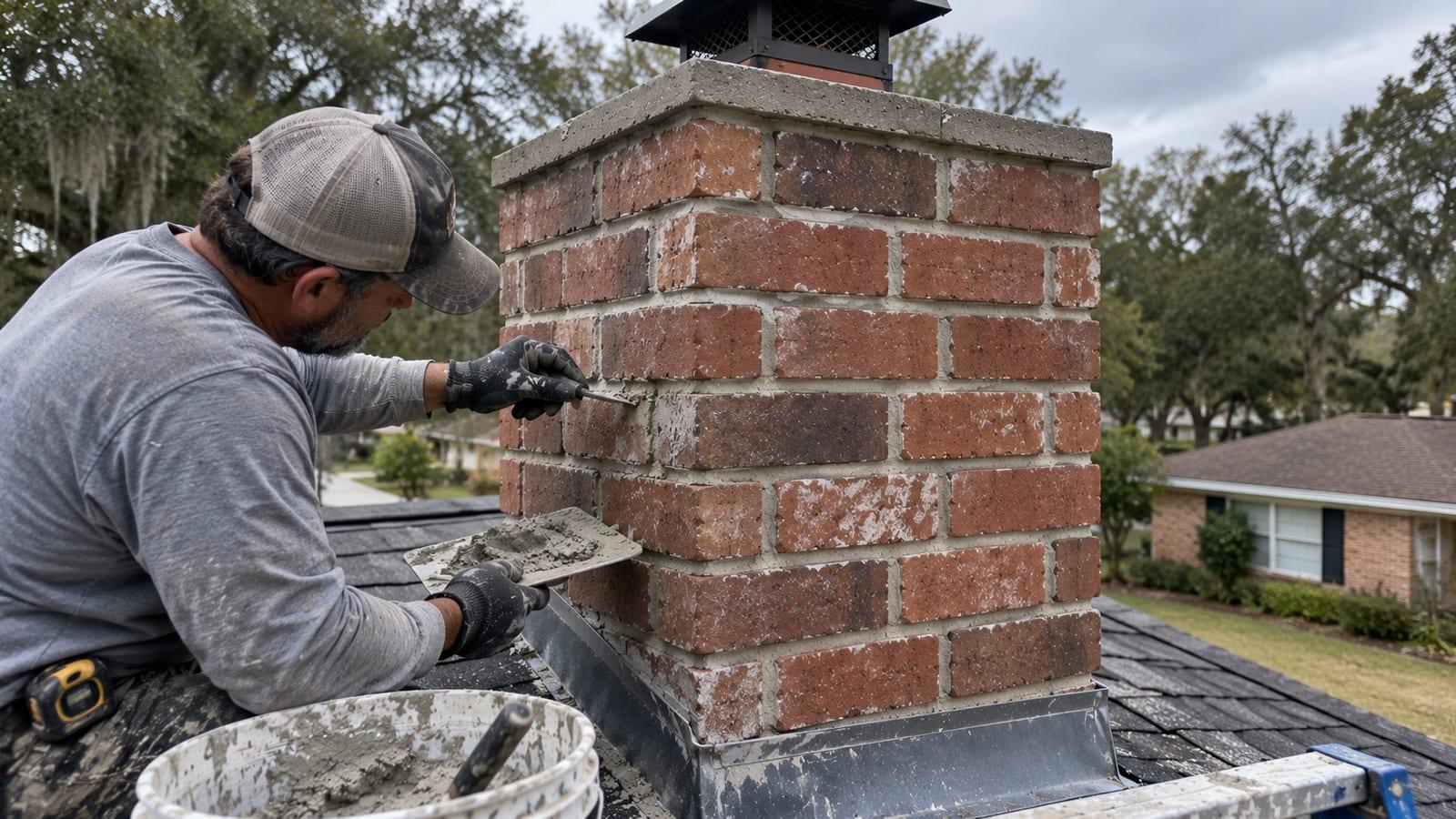
Mortar is meant to wear out before the brick does, so it's often where a repair visit starts. We check whether joints are recessed, crumbling when scraped, cracked in a stair-step line, or missing outright, and we note where the damage sits: above the roofline, at the crown, or near the flashing.
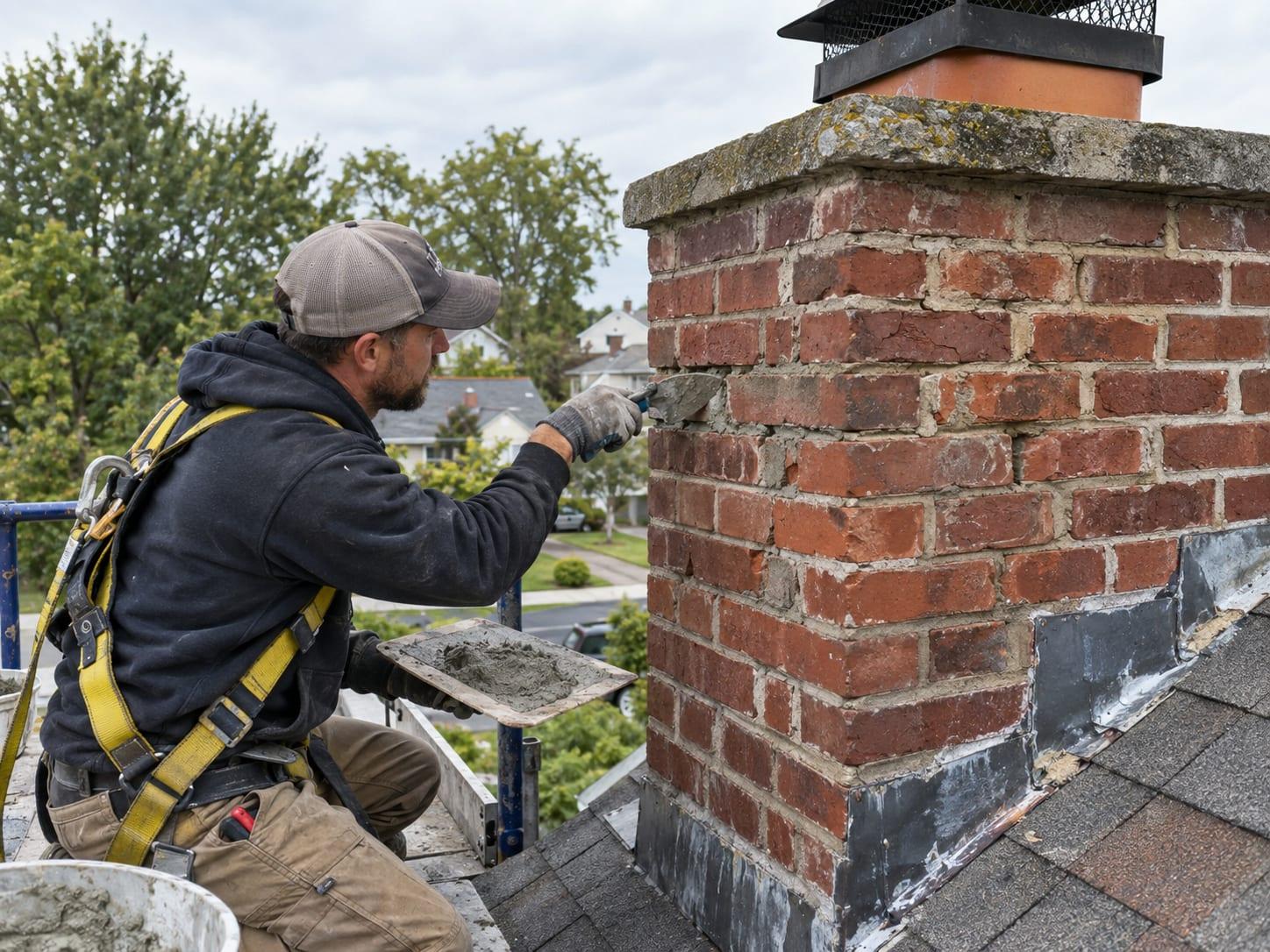
What you get from that is a clear choice. If the worn joints are confined to one face or the top few courses, repointing that section is usually enough. If loose mortar runs through most of the stack, or bricks have started to shift, a wider repointing or partial rebuild is the honest answer, and we'll show you which joints led us there.
When the repair comes down to the flue liner
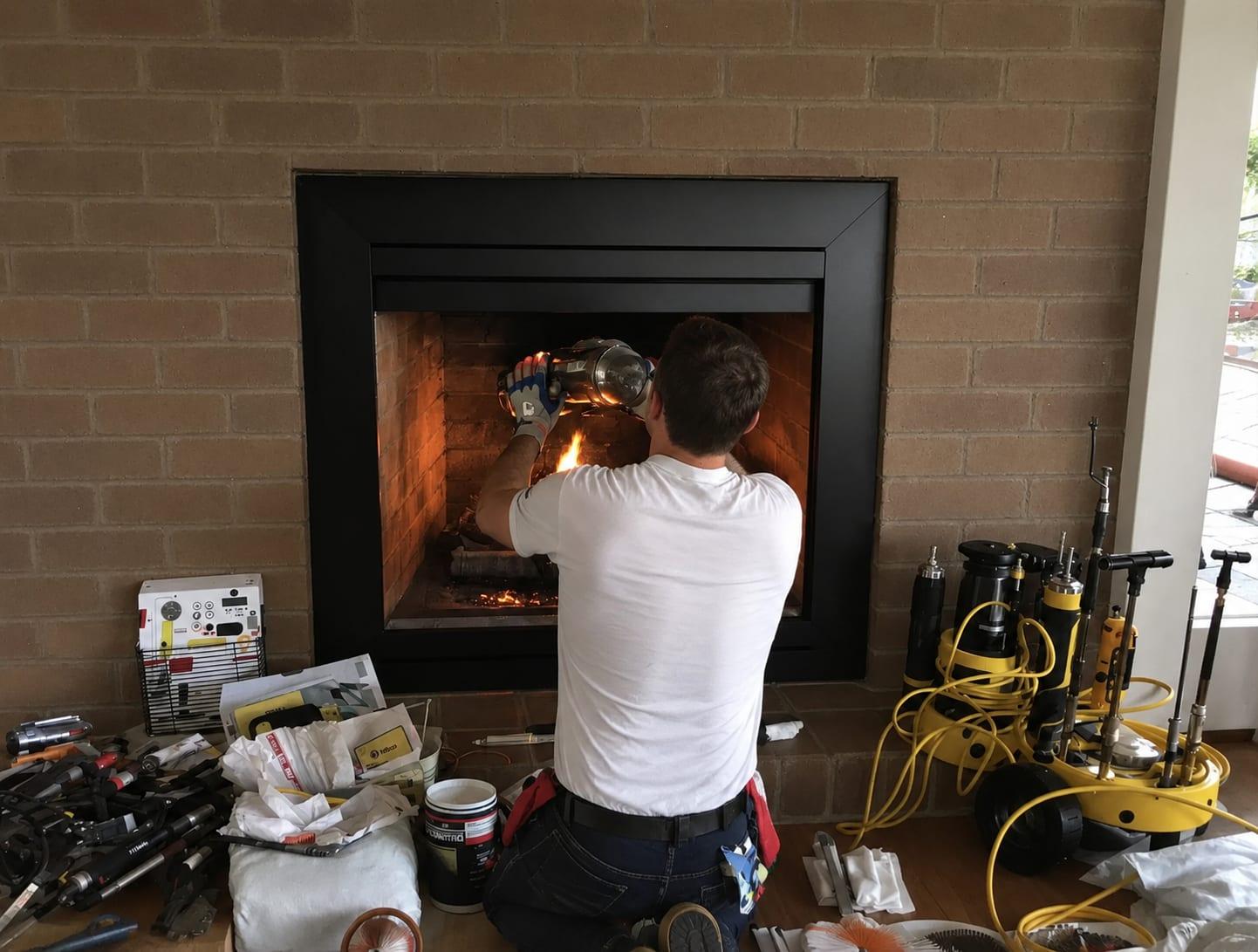
The liner is hidden inside the chimney, so we use a camera to see it. We look for cracked or broken clay tiles, open gaps between sections, missing mortar at the joints, and spots where the liner has shifted or fallen away.
The camera footage helps you decide between two paths. Small, isolated defects can sometimes be repaired in place. Widespread cracking, several open joints, or a liner that no longer fits the appliance you use usually points to installing a new liner. Either way, you see the same footage we do before choosing.
What the housing numbers mean for your Chimney
About 10% of the housing units in Smyrna were built before 1960, according to the U.S. Census Bureau's American Community Survey 2019–2023 5-year estimates (table B25034, Year Structure Built). A chimney that old has had decades for mortar and liner tiles to wear. If your home is one of them, it makes sense to have the joints and the liner checked on the same visit rather than one at a time.
Repairing a leaning or separating Chimney
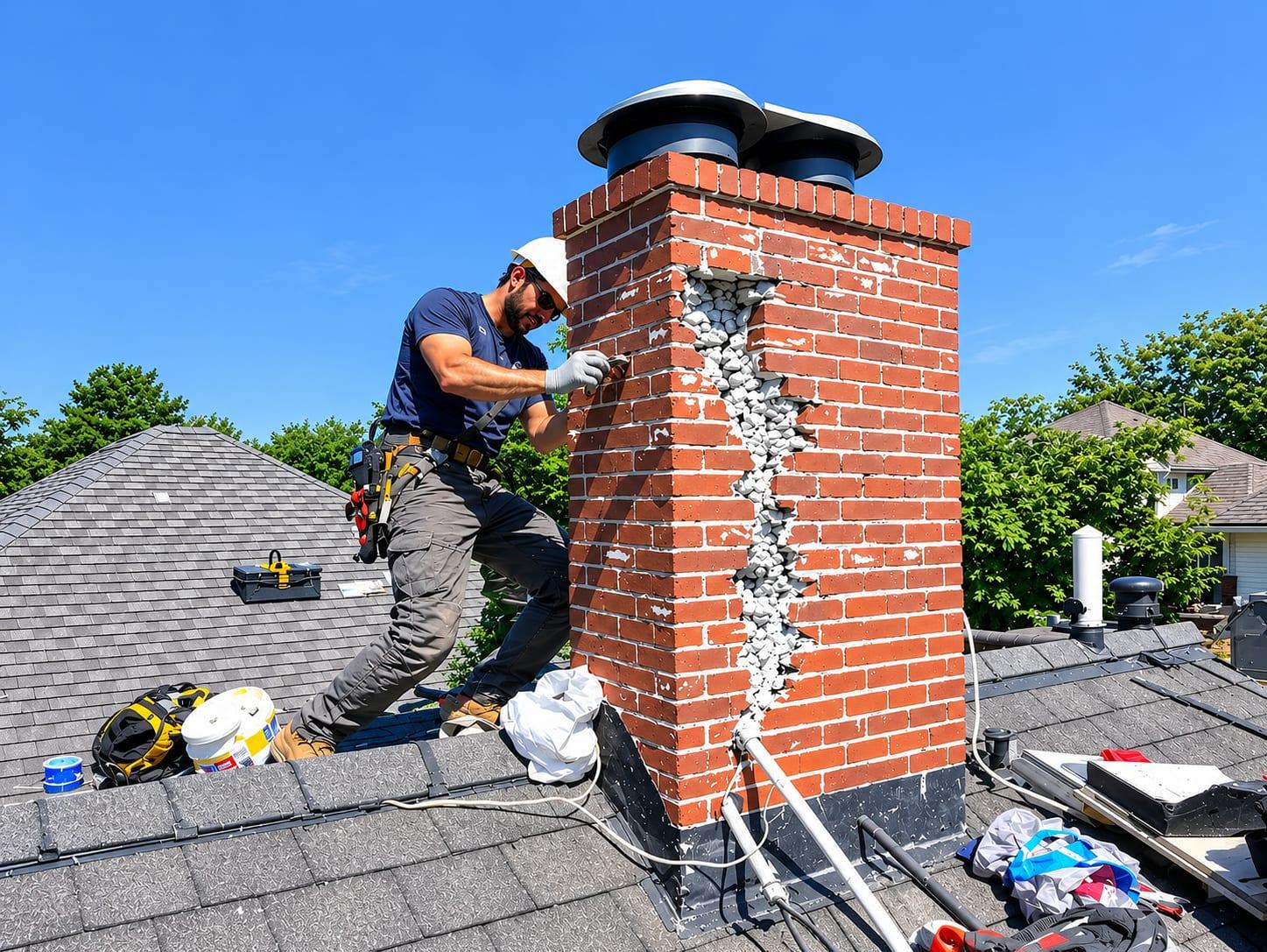
A chimney that tilts or shows a widening gap where it meets the house wall needs to be looked at before the fireplace is used again. The repair can involve finding where the movement starts (at the base, partway up, or only above the roofline), resetting or rebuilding the section that has moved, and closing the gap at the wall and the flashing so water stops getting in behind it.
If only the upper stack has shifted, a partial rebuild from the roofline up may be enough. If the movement starts lower, a larger rebuild can be the only lasting fix. We'll explain which applies to your chimney and why.
Other jobs that can come up alongside a repair
- If a musty or smoky smell lingers in the room after the repair, especially in humid weather, chimney odor removal is the job that targets it.
- If soot or creosote buildup makes the flue hard to inspect, or it hasn't been cleaned in a while, a chimney sweep clears it so the liner can be properly checked.
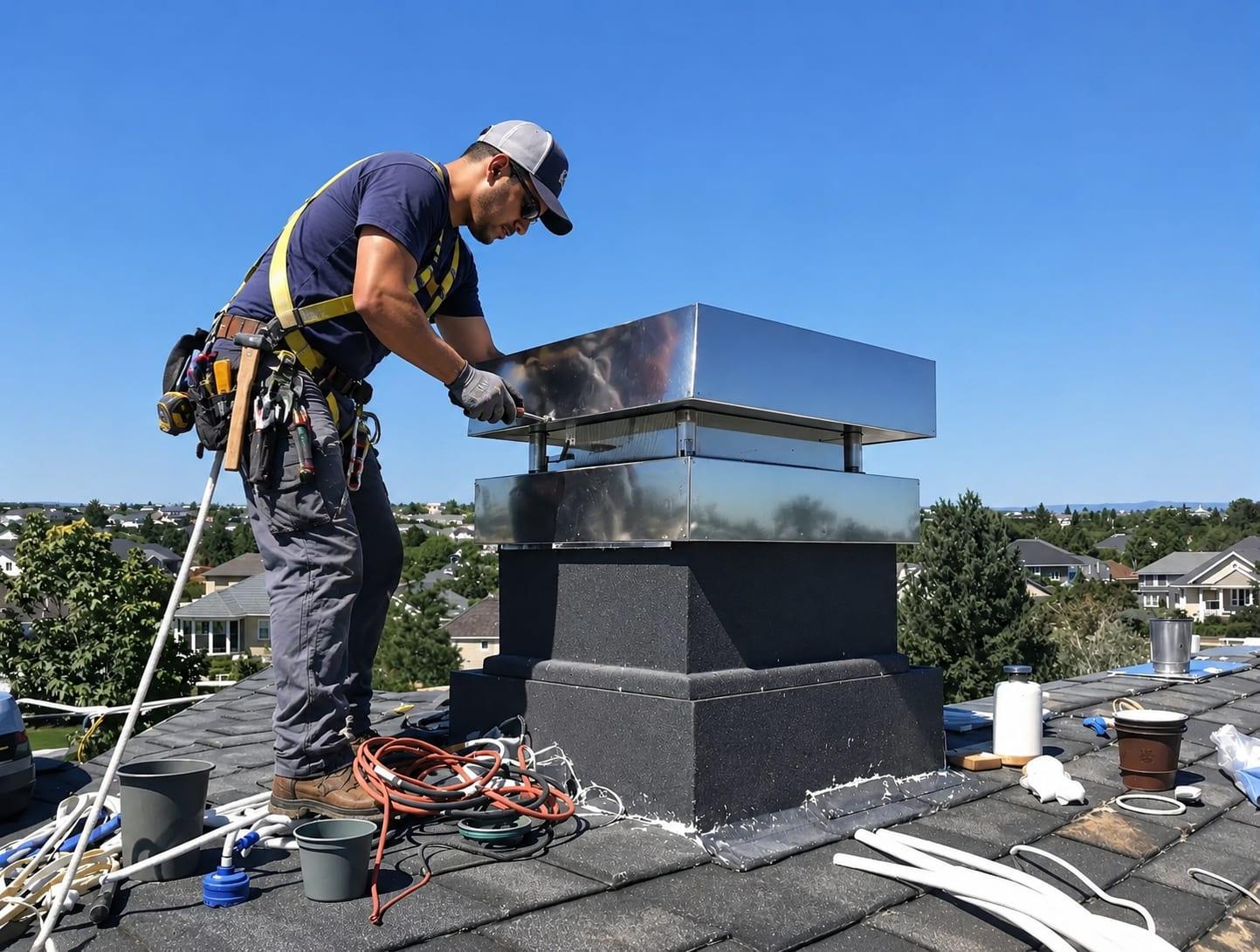
- If water has been getting in from the top, our guide to the benefits of chimney caps and dampers explains how both help protect fresh repair work.
Nearby areas we also serve
We also do chimney repair for homes in Marietta, Austell and Brookhaven.
For the complete overview of the work, its types and the parts involved, read how chimney repair works. To see everything else we do locally, including fireplace installation for homes in Smyrna, visit our page for Smyrna.
Booking a Chimney repair estimate
Call or request an estimate and tell us what you're seeing: loose mortar, a liner concern, or a chimney that's moving. Estimates are free. We also take on commercial and property-manager work.
Sources (1)
The sources of the Smyrna facts on this page.
- 1U.S. Census Bureau, American Community Survey 2019–2023 5-year estimates, table B25034 (Year Structure Built)