The short answer
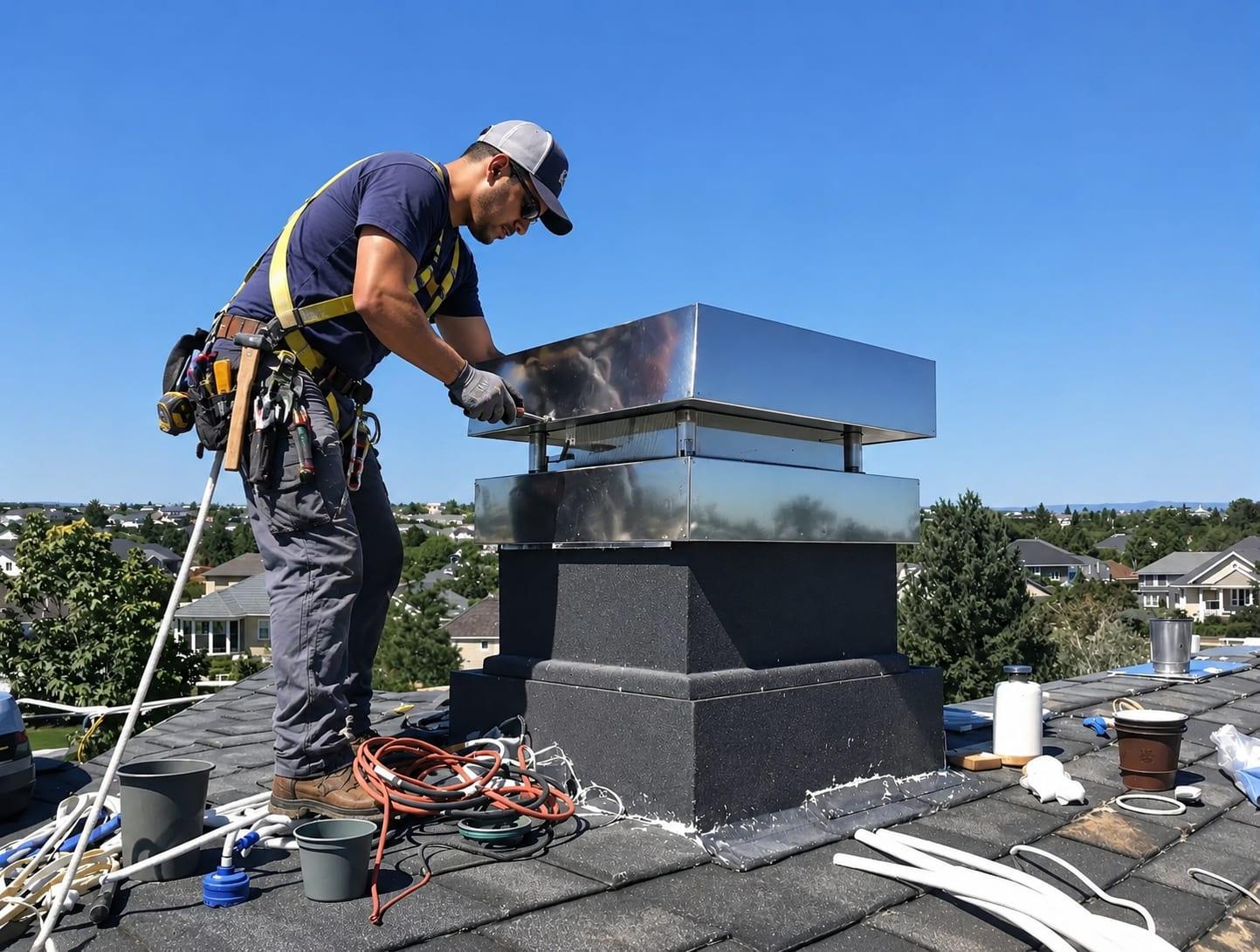
A chimney cap is the hood-and-screen assembly that sits directly over the flue opening. It keeps rain, animals, leaves and sparks out of the flue. A chase cover is a flat metal pan that caps the whole top of a chimney chase, which is the wood-framed, sided box that encloses the metal flue pipe of a factory-built fireplace. The flue pipe passes up through a collar in the chase cover, and the chimney cap then sits on top of that pipe.
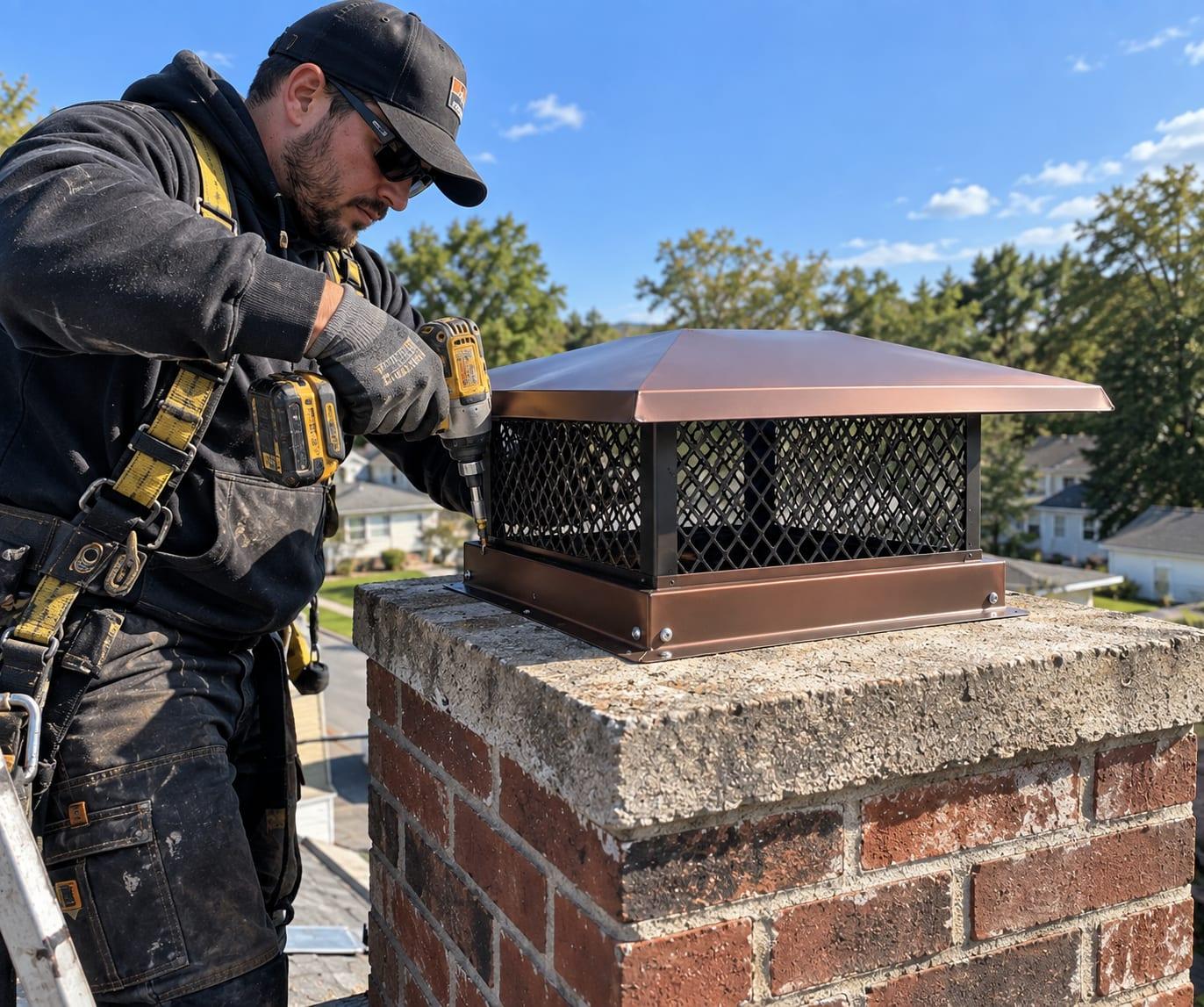
So the choice is rarely one or the other. A brick or stone chimney has a crown and a cap, not a chase cover. A framed chase around a prefab chimney has a chase cover and a cap. If you can't tell which kind you have, look at the outside of the chimney. Siding, stucco panels or a brick-look veneer over framing usually means a chase. Solid masonry that runs from the ground or roofline to the top usually means a masonry chimney.
| Feature | Chimney cap | Chase cover |
|---|---|---|
| What it covers | The flue opening only | The entire top of the framed chase |
| Found on | Masonry and factory-built chimneys | Factory-built chimneys inside a framed chase |
| Main job | Keeps rain, animals, debris and sparks out of the flue | Keeps water out of the chase framing and insulation |
| Typical shape | Mesh screen with a raised hood | Flat or sloped metal pan with a collar and drip edge |
| Common failure | Missing, bent, rusted or clogged screen | Rust, pooling water, cracked seams or sagging |
| Where trouble shows up | Water or debris in the firebox, animals in the flue | Stains on the chase siding, water in the firebox or on interior walls |
What it covers
- Chimney cap
- The flue opening only
- Chase cover
- The entire top of the framed chase
Found on
- Chimney cap
- Masonry and factory-built chimneys
- Chase cover
- Factory-built chimneys inside a framed chase
Main job
- Chimney cap
- Keeps rain, animals, debris and sparks out of the flue
- Chase cover
- Keeps water out of the chase framing and insulation
Typical shape
- Chimney cap
- Mesh screen with a raised hood
- Chase cover
- Flat or sloped metal pan with a collar and drip edge
Common failure
- Chimney cap
- Missing, bent, rusted or clogged screen
- Chase cover
- Rust, pooling water, cracked seams or sagging
Where trouble shows up
- Chimney cap
- Water or debris in the firebox, animals in the flue
- Chase cover
- Stains on the chase siding, water in the firebox or on interior walls
Why each part matters
What a chimney cap prevents
An open flue collects rainwater, which can rust a metal damper and firebox parts and wash into the smoke chamber. It also invites birds, squirrels and raccoons looking for a sheltered spot, and catches leaves that can block the flue. The screen on a cap stops embers from leaving the chimney as well. If you are weighing a cap against relying on the damper alone, the ways chimney caps and dampers work together cover that trade-off in more detail.
What a chase cover prevents
A chase is built from wood framing, sheathing and insulation, none of which tolerate standing water. The chase cover is the roof over all of it. When a cover rusts through, separates at a seam or sags so water pools around the flue collar, water runs straight down into the framing. It often shows up as streaks on the siding below the top of the chase, or as dripping inside the fireplace. Because the source sits several feet above the stain, chase cover failures are often mistaken for roof or flashing leaks. That is one reason tracking down where a chimney leak starts is worth doing before anything gets replaced.
Signs pointing to the cap or the cover
Which part is likely failing
01Rust streaks on the chase siding
- What you may notice
- Orange or brown stains running down from the top of the chase
- How it’s confirmed
- Inspect the chase cover for rust, pinholes, pooling and a failed seal at the flue collar
02Chase cover rusted through or sagging
- What you may notice
- Visible holes, a dished center that holds water, or a loose cover after high wind
- How it’s confirmed
- Check whether the pan can be sealed and re-secured, or whether it has to be replaced with a sloped cover
03Missing or damaged chimney cap
- What you may notice
- No hood visible from the yard, bent mesh, debris or water in the firebox
- How it’s confirmed
- Look at the cap from the roof for fit, screen condition and secure mounting
04Scratching, chirping or nesting material
- What you may notice
- Noises from the flue, twigs or droppings on the smoke shelf or damper
- How it’s confirmed
- Inspect the flue with a light or camera before any fire, then check the cap screen for gaps
Options when a chase cover fails
A chase cover that is mostly sound may only need resealing at the collar, re-fastening, or treatment of light surface rust. A cover that is rusted through or sags so water pools usually needs to be replaced. Two points help a replacement last longer:
- Material: galvanized steel is common on builder-grade chases and tends to rust over time. Stainless steel, aluminum and copper resist rust better.
- Shape: a cover with a slight slope or cross-break sheds water, while a dead-flat pan lets it sit. A raised collar around the flue opening and a drip edge that extends past the siding keep water off the framing.
If you want to know what the work involves, you can read about repairing a leaking or rusted chase cover and when a full chase cover replacement is the better call.
Custom chimney caps vs single-flue caps
A single-flue cap fits one flue. On a factory-built chimney, the cap is normally the termination cap made for that specific chimney system. A custom or multi-flue cap is sized to the chimney top instead. It mounts on the crown and covers every flue under one hood. Custom caps suit chimneys with several flues, odd-sized flue tiles, or a crown that needs extra shelter. Single-flue caps are simpler and leave the crown exposed. Since a single-flue cap depends on a sound flue to attach to, it helps to know why every chimney needs a working liner before a cap goes on.
Chimney crown vs chimney cap
On a masonry chimney the crown is the concrete or mortar slab that seals the top of the brickwork around the flue. It should slope away from the flue and overhang the bricks so water drips clear of the chimney face. The cap sits above the crown and covers the flue opening itself. The crown plays roughly the same role on masonry that a chase cover plays on a framed chase. A cracked crown lets water into the brick even when the cap is in perfect shape, so both are worth checking together.
Can one cap cover both of my flues?
Sometimes. On a masonry chimney, a multi-flue cap that mounts on the crown can cover two or more flues, as long as the flue tops are close enough together and the hood is tall enough to clear the highest one. Whether that is allowed also depends on what each flue serves. Some gas and other appliance vents call for their own termination, and the appliance manufacturer's instructions may forbid sharing a hood with a wood-burning flue. On a factory-built chimney, each flue pipe normally takes its own listed cap, so one shared cap usually isn't an option there.
What helps you decide what to do
Before you call about a cap or chase cover
- Identify the chimney type: solid masonry, or a framed chase with siding
- Note where water or stains appear: in the firebox, on the chase siding, or on an inside wall or ceiling
- Look from the ground with binoculars for a missing hood, bent mesh or rust at the top of the chase
- Listen for animal noises and check the firebox for nesting material or debris
- Count the flues and note which appliance each one serves
- Note whether the problem started after a storm or high wind
For a damaged cap, a rusted chase cover, or a leak you can't trace, Oakwell Chimney & Fireplace inspects, repairs and replaces both parts, and estimates are free.