On this page
What chase cover replacement is
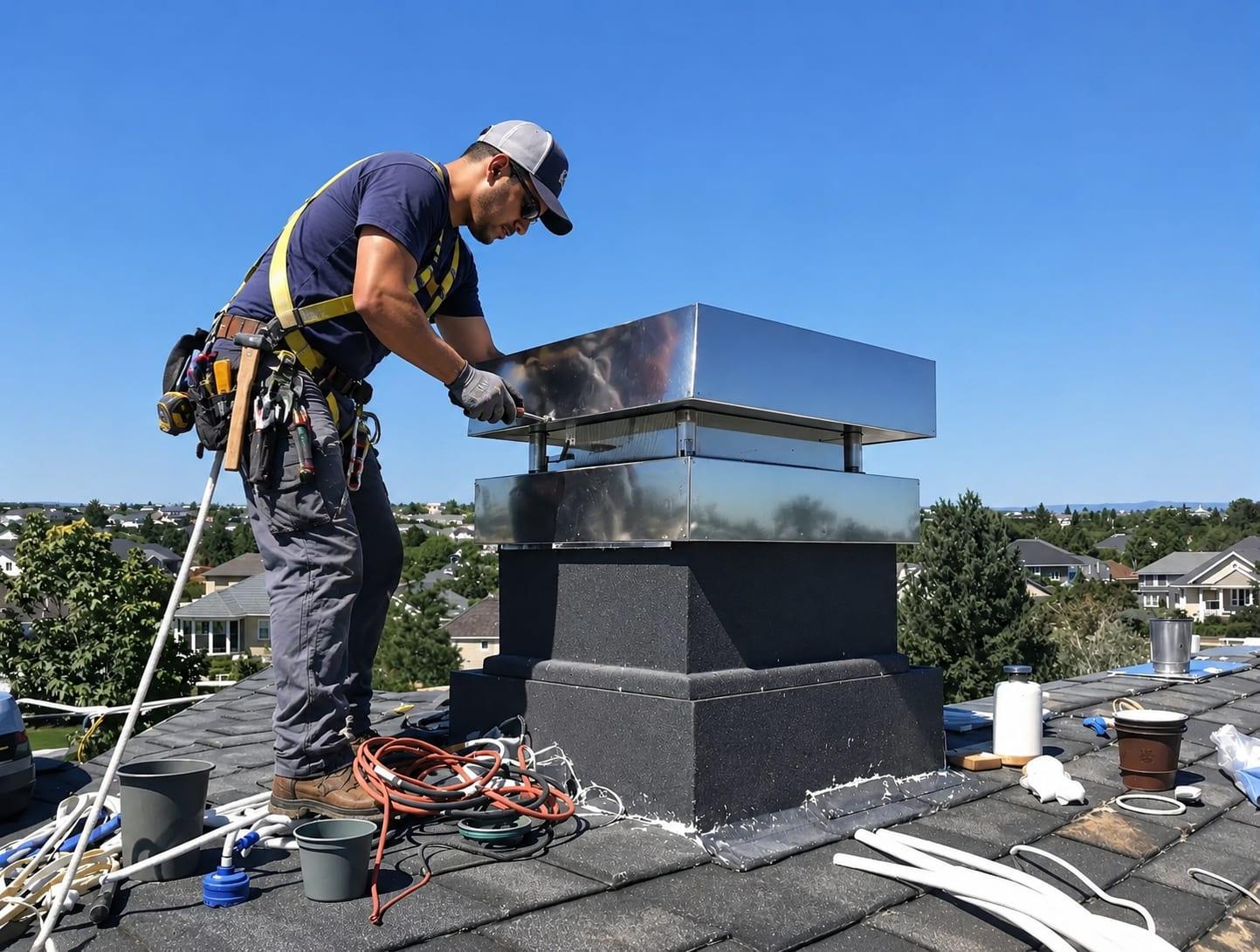
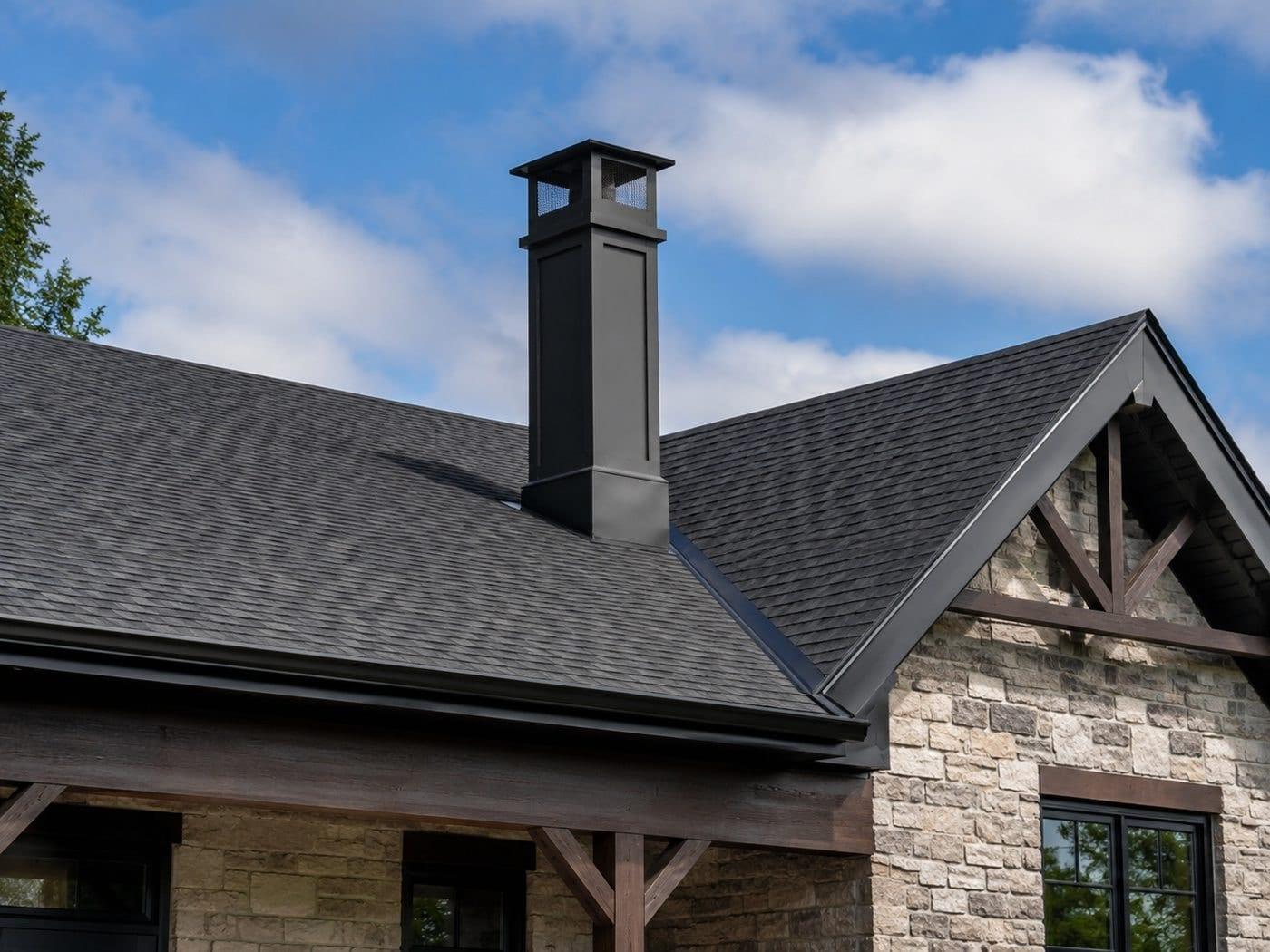
Prefab fireplaces usually vent through a wood-framed enclosure called a chase, finished to match the house. The chase cover is the metal pan across its top, with a collar where the flue pipe passes through. It plays the role a masonry crown plays on a brick chimney. If you're unsure which one your home has, our guide to chimney caps vs chase covers sorts out the difference.
Replacement means removing the old cover and installing a new one sized to the chase, sloped or crossbroken so water runs off instead of pooling, and sealed with a storm collar around the flue.
Signs your chase cover needs replacing
- Rust streaks running down the siding from the top of the chase.
- A cover that dips in the middle and holds standing water after rain.
- Holes, rust-through spots or seams that have pulled apart.
- Water stains on the ceiling or wall near the fireplace.
- Rust or dripping inside the firebox, or water spots on the fireplace's metal parts.
- Soft, swollen or stained siding or trim at the top of the chase.
Minor problems, such as a loose seam or a failed sealant bead, can sometimes be handled with chimney chase cover repair instead. When rust has eaten through or the pan has sagged, a new cover is the lasting fix.
What the visit involves, step by step
Replacing a chase cover
Inspection and measurements
We check the old cover, measure the chase precisely, and note the flue size and position.
Free estimate
You get an estimate for the cover and for anything else we find, such as rotted framing.
Removal
The old cover and cap come off, exposing the top of the chase.
Framing check
We look at the plywood and framing underneath, since long-term leaks often soften it.
Installation
The new cover is fastened down with a drip edge that sheds water past the siding, and a storm collar is sealed around the flue.
Cap and finish
The chimney cap goes back on or is replaced, and we confirm everything is tight.
Materials and related parts
| Feature | Galvanized steel | Stainless steel |
|---|---|---|
| Rust resistance | Coating protects it at first, but rust sets in once it wears through | Resists rust far longer |
| Typical shape | Often flat on original builder covers | Can be made with a slope or crossbreak to shed water |
| Where you see it | Many original installations | Common choice for replacements |
Rust resistance
- Galvanized steel
- Coating protects it at first, but rust sets in once it wears through
- Stainless steel
- Resists rust far longer
Typical shape
- Galvanized steel
- Often flat on original builder covers
- Stainless steel
- Can be made with a slope or crossbreak to shed water
Where you see it
- Galvanized steel
- Many original installations
- Stainless steel
- Common choice for replacements
The cap above the cover matters too. A rusted or bent one can be swapped during the same visit through chimney cap replacement. If water has already damaged the chase framing, siding or the prefab chimney pipe, prefab chimney and chase repair addresses that damage.
Scheduling a replacement
Request an estimate and let us know whether you've seen rust, standing water or leaks inside. If water is actively coming in, emergency calls are accepted. We also replace chase covers for property managers and commercial buildings.
Stay off the roof
Looking from the ground or with binoculars is safe. Climbing a steep or wet roof to inspect a chimney is not — leave that to someone with the right equipment.
What we look at
- Flue size and shape
- Corrosion on metal parts
- Screen mesh and spark arrestor
- Chase top and cover fit on prefab chimneys
- Damper seal and operation
Getting ready for the visit
- Note the make and model of any insert, stove or gas unit if you have it.
- Let the fireplace or stove cool completely — ideally no fire for 24 hours before the visit.
- Keep pets in another room while the work area is open.
- Write down what you've noticed and when it happens — smells, smoke, sounds or stains.