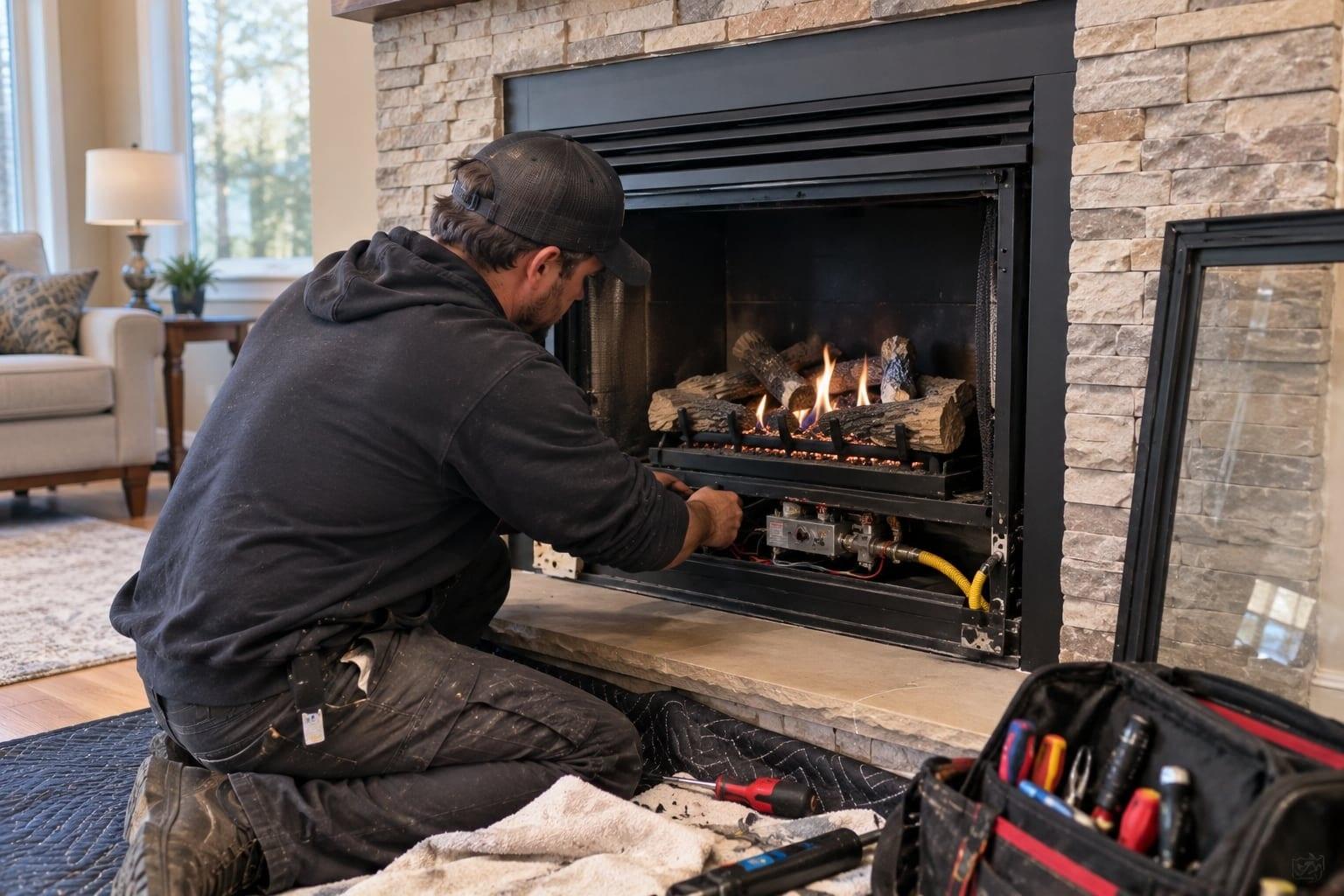
The short answer
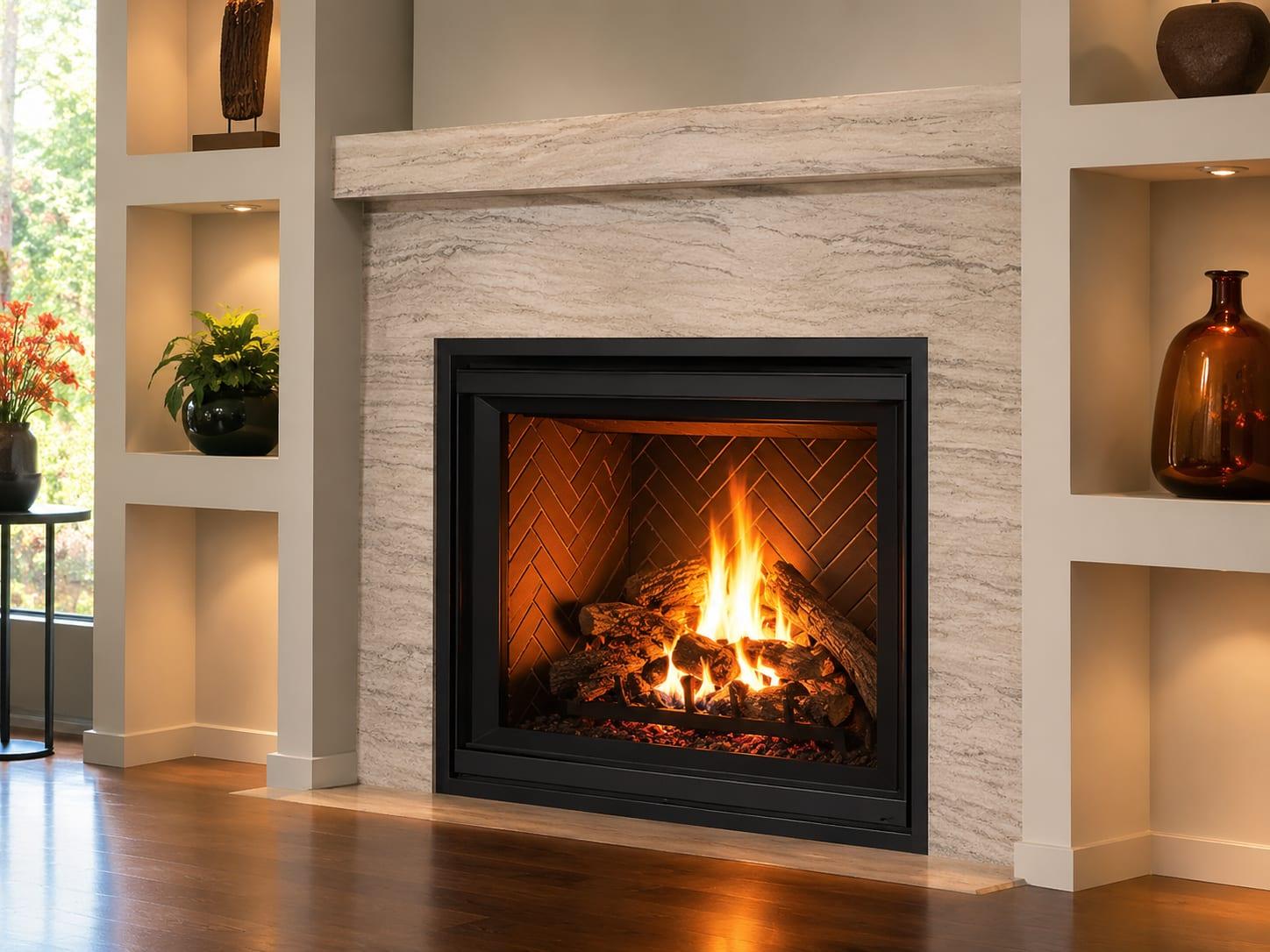
Choose gas logs if you mainly want the look of a fire in an existing fireplace with little change to how it looks. Choose a gas fireplace insert if you want the fireplace to actually warm the room. Vented gas logs send most of their heat up the open chimney. An insert is a sealed firebox with a glass front that vents outside through a liner and pushes warmth into the living space, often with a blower.
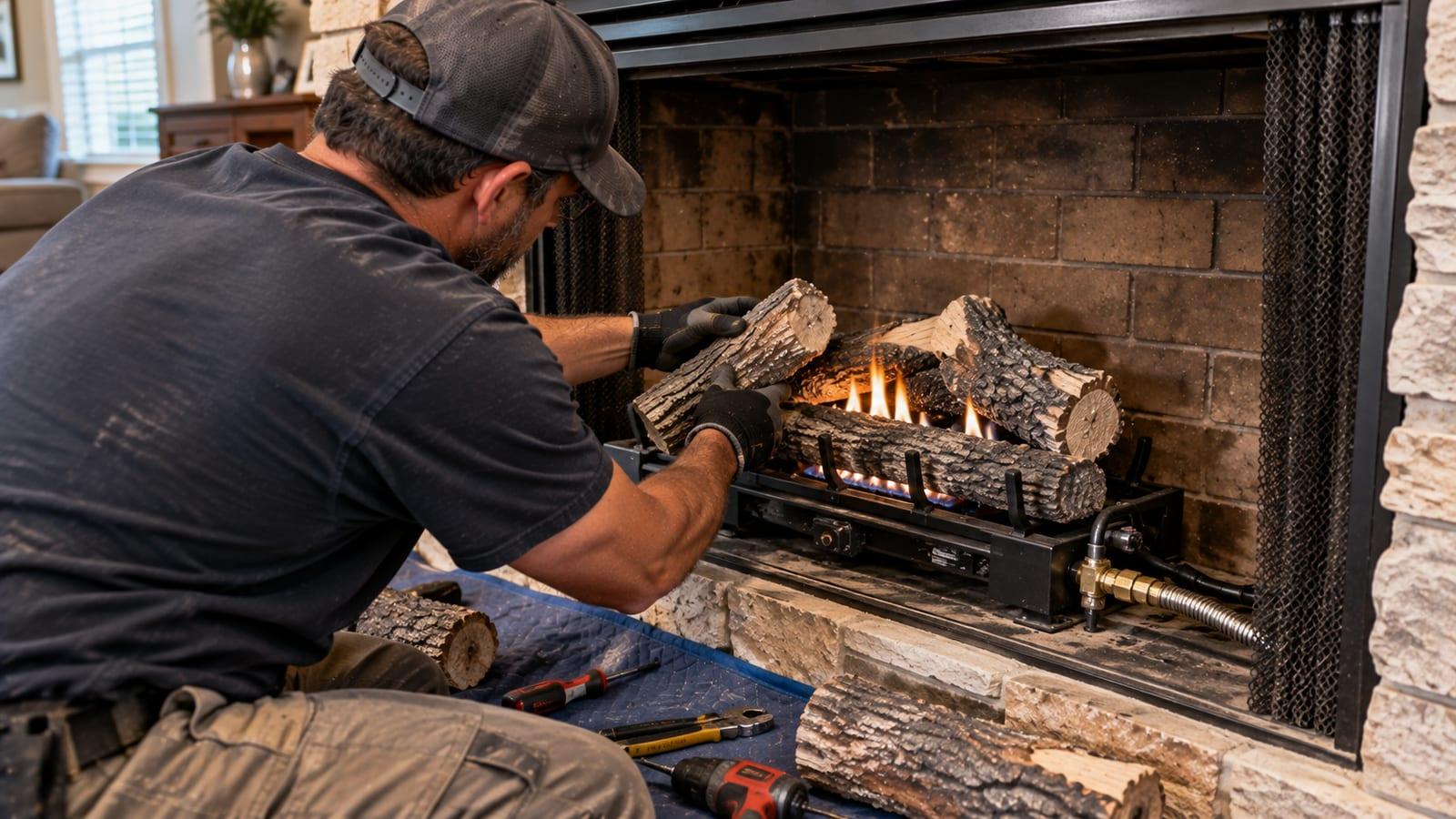
There is a middle option: vent-free gas logs. They put more heat into the room than vented logs, but they come with trade-offs, which are covered below.
If you smell gas
Leave the building right away. Don't use light switches, phones or any flame inside. Once you're outside, call the gas utility or 911. Do this before any troubleshooting of a fireplace, logs or insert.
How each option works
Vented gas logs
Ceramic logs sit on a burner in the open firebox. The damper stays open while they run, so combustion gases go up the chimney the same way wood smoke does. The flame looks tall and natural, but most of the heat leaves with the exhaust. The chimney still has to be sound and clear, because it is still doing the venting.
Vent-free gas logs
These burn cleaner and are designed to run with the damper closed, so the heat stays in the room. In exchange, combustion byproducts and water vapor also stay in the room. Some people notice an odor or extra humidity. These units use an oxygen depletion sensor that shuts the burner off if room oxygen drops. They aren't allowed everywhere, so check what your local code permits before you choose them.
Gas fireplace inserts
An insert is a complete appliance: a sealed steel box, a burner and logs, and a glass front. Most are direct-vent. A pair of flexible pipes runs up the existing chimney, one pulling in outside air for combustion and one carrying exhaust out. Because room air isn't used for burning and the glass front seals the opening, much more of the heat stays inside. Many inserts have a thermostat, remote and blower. Our page on how fireplace insert installation works walks through what fitting one involves.
Side-by-side comparison
| Feature | Gas logs | Gas insert |
|---|---|---|
| Main purpose | Ambiance, with some heat (more with vent-free) | Room heating, with a fire view |
| Look | Open firebox, tall natural flame | Glass front and a surround panel; firebox opening is reduced |
| Where heat goes | Vented: mostly up the chimney. Vent-free: into the room | Into the room, often helped by a blower |
| Venting | Vented: existing chimney, damper open. Vent-free: none to the outside | Sealed direct-vent liner up the chimney |
| Indoor air | Vent-free adds moisture and combustion byproducts to the room | Combustion is sealed off from room air |
| Installation scope | Gas supply to the firebox and a burner set | Gas supply, venting liner and often a power outlet for the blower |
| Upkeep | Log placement, burner ports, soot on vented sets | Glass cleaning, pilot assembly, blower and vent checks |
Main purpose
- Gas logs
- Ambiance, with some heat (more with vent-free)
- Gas insert
- Room heating, with a fire view
Look
- Gas logs
- Open firebox, tall natural flame
- Gas insert
- Glass front and a surround panel; firebox opening is reduced
Where heat goes
- Gas logs
- Vented: mostly up the chimney. Vent-free: into the room
- Gas insert
- Into the room, often helped by a blower
Venting
- Gas logs
- Vented: existing chimney, damper open. Vent-free: none to the outside
- Gas insert
- Sealed direct-vent liner up the chimney
Indoor air
- Gas logs
- Vent-free adds moisture and combustion byproducts to the room
- Gas insert
- Combustion is sealed off from room air
Installation scope
- Gas logs
- Gas supply to the firebox and a burner set
- Gas insert
- Gas supply, venting liner and often a power outlet for the blower
Upkeep
- Gas logs
- Log placement, burner ports, soot on vented sets
- Gas insert
- Glass cleaning, pilot assembly, blower and vent checks
What helps you decide
Questions to answer first
- Do you want real heat on cold evenings, or mostly a fire to look at?
- Do you like the open-hearth look enough to keep it, or is a glass front acceptable?
- Is anyone in the home sensitive to odors or humidity? That weighs against vent-free logs.
- Is the chimney in good condition? Both vented logs and inserts rely on it.
- Is there already a gas line to the fireplace, and an outlet nearby for a blower?
- Is the fireplace masonry, or a factory-built (prefab) unit? Prefab fireplaces only accept logs or inserts their manufacturer allows.
If you are still weighing whether gas is the right fuel at all, our guide to electric vs gas fireplace covers that earlier choice.
Before either one goes in
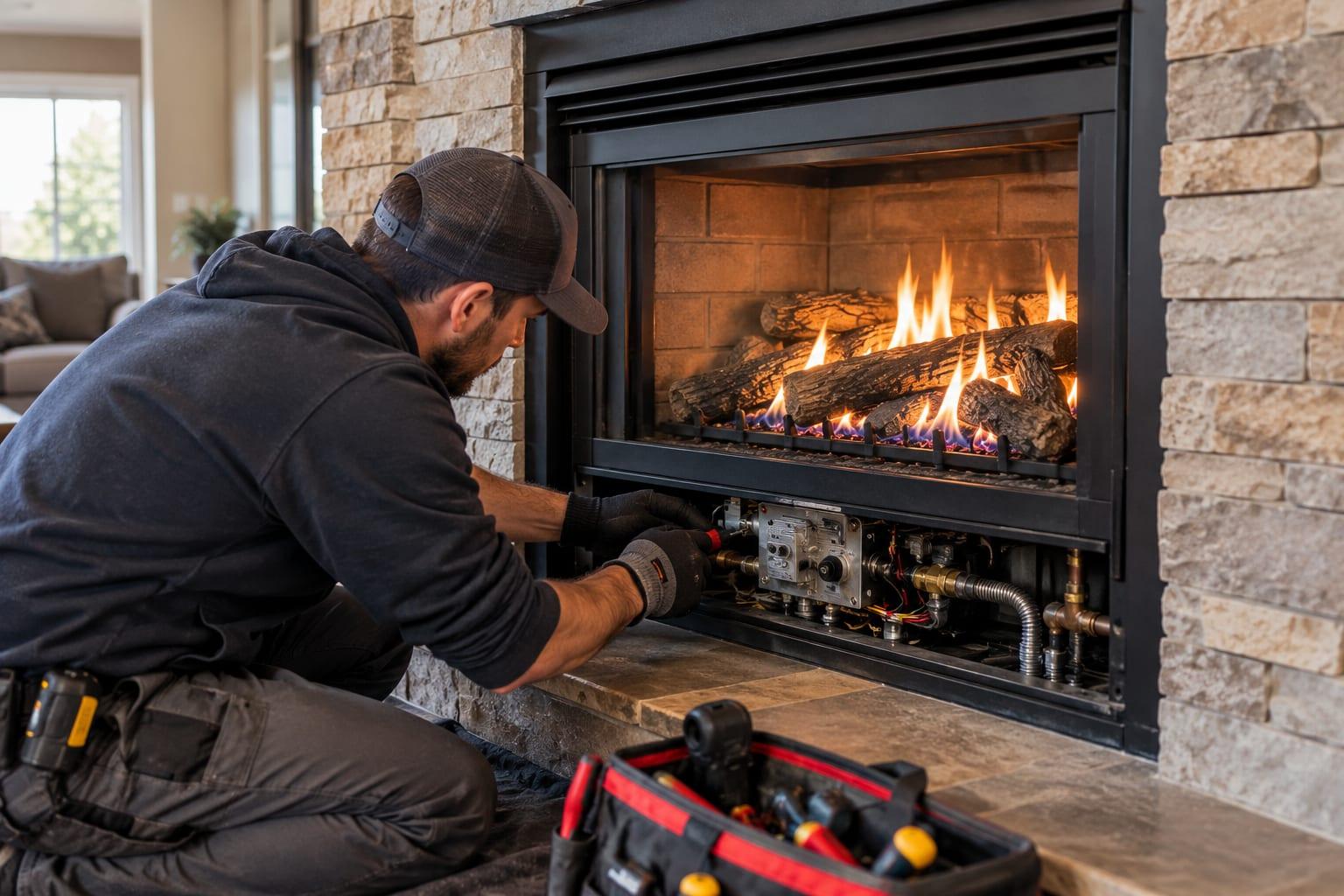
An existing wood-burning fireplace should be cleaned and checked before gas equipment is added. Creosote, a damaged flue or a broken damper all affect how vented logs or an insert will perform. If the fireplace already burns gas, a gas fireplace inspection looks at the burner, valve, pilot, venting and connections before you change anything.
Living with each option
Logs and inserts both need periodic attention. On inserts, a white or gray film on the glass is common. What causes cloudy gas fireplace glass explains where it comes from and when it points to a burner issue. For the insert's interior, blower and vent path, routine fireplace insert cleaning keeps things running cleanly. If a pilot won't stay lit or the burner won't start on either type, start with fixing a gas fireplace that won't light. Our guide to when a gas fireplace needs cleaning lists the signs to watch for between visits.
We install gas logs and fireplace inserts, run gas lines and fit chimney liners, and estimates are free if you'd like someone to look at your fireplace before deciding.