On this page
What fireplace insert installation is and what it involves
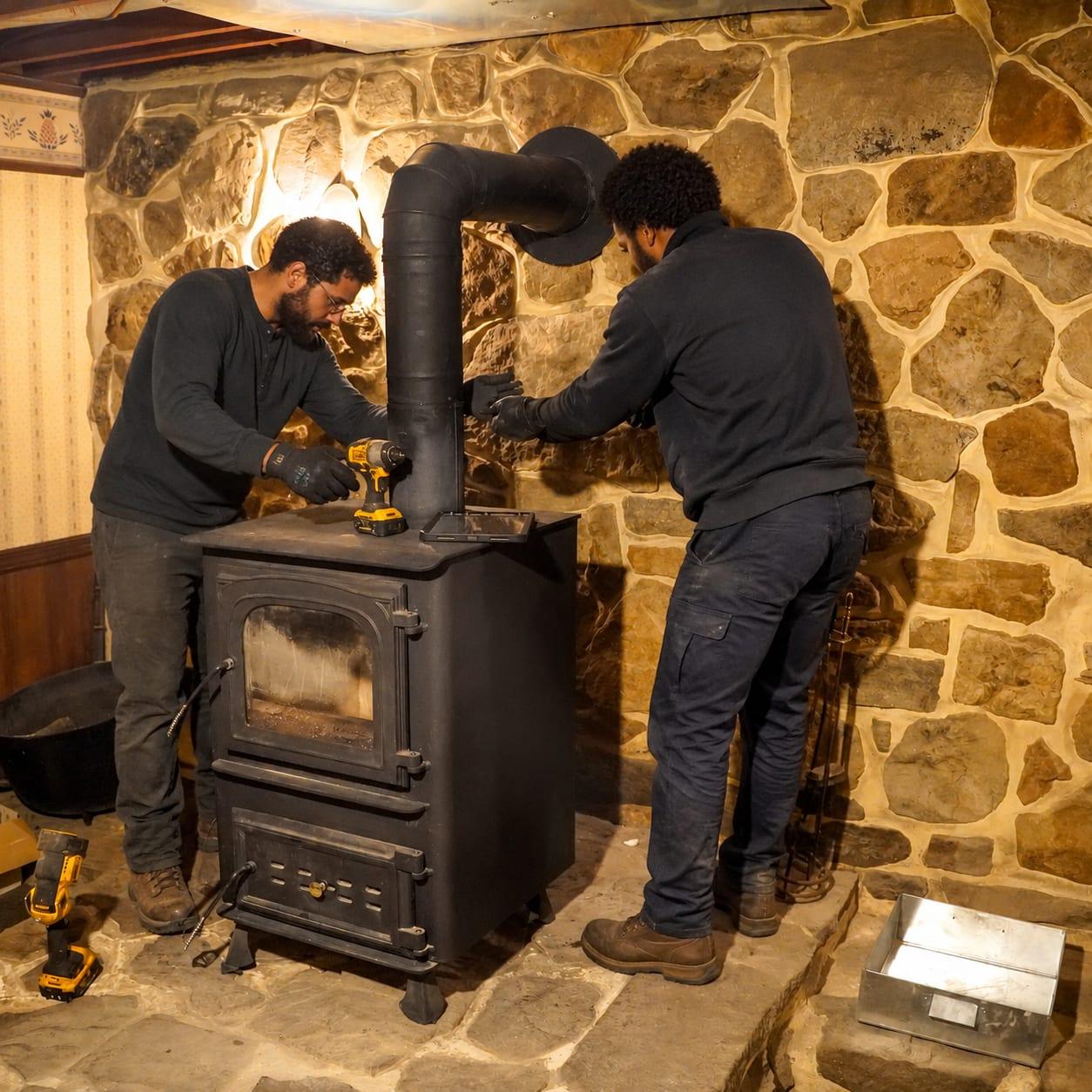
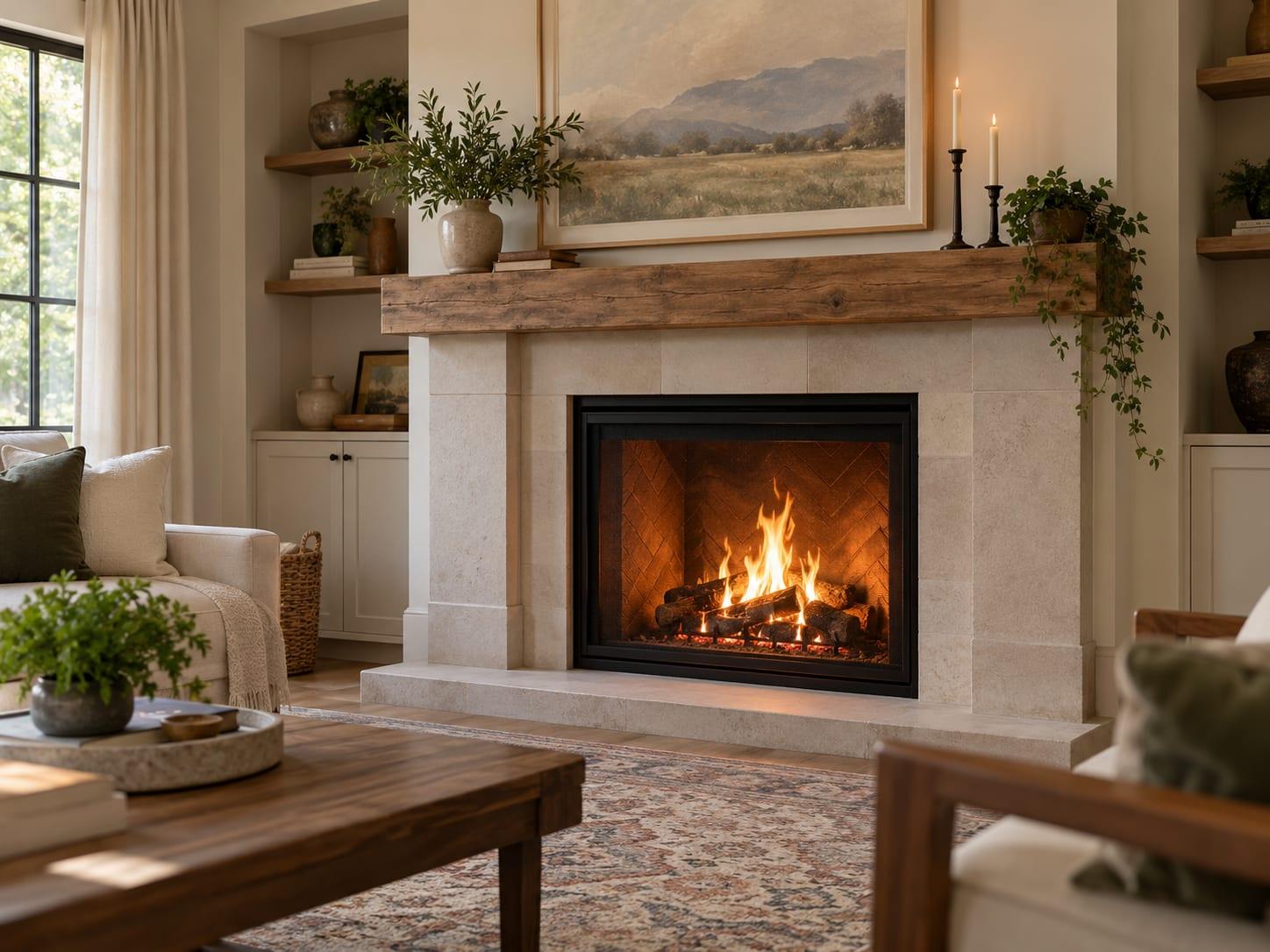
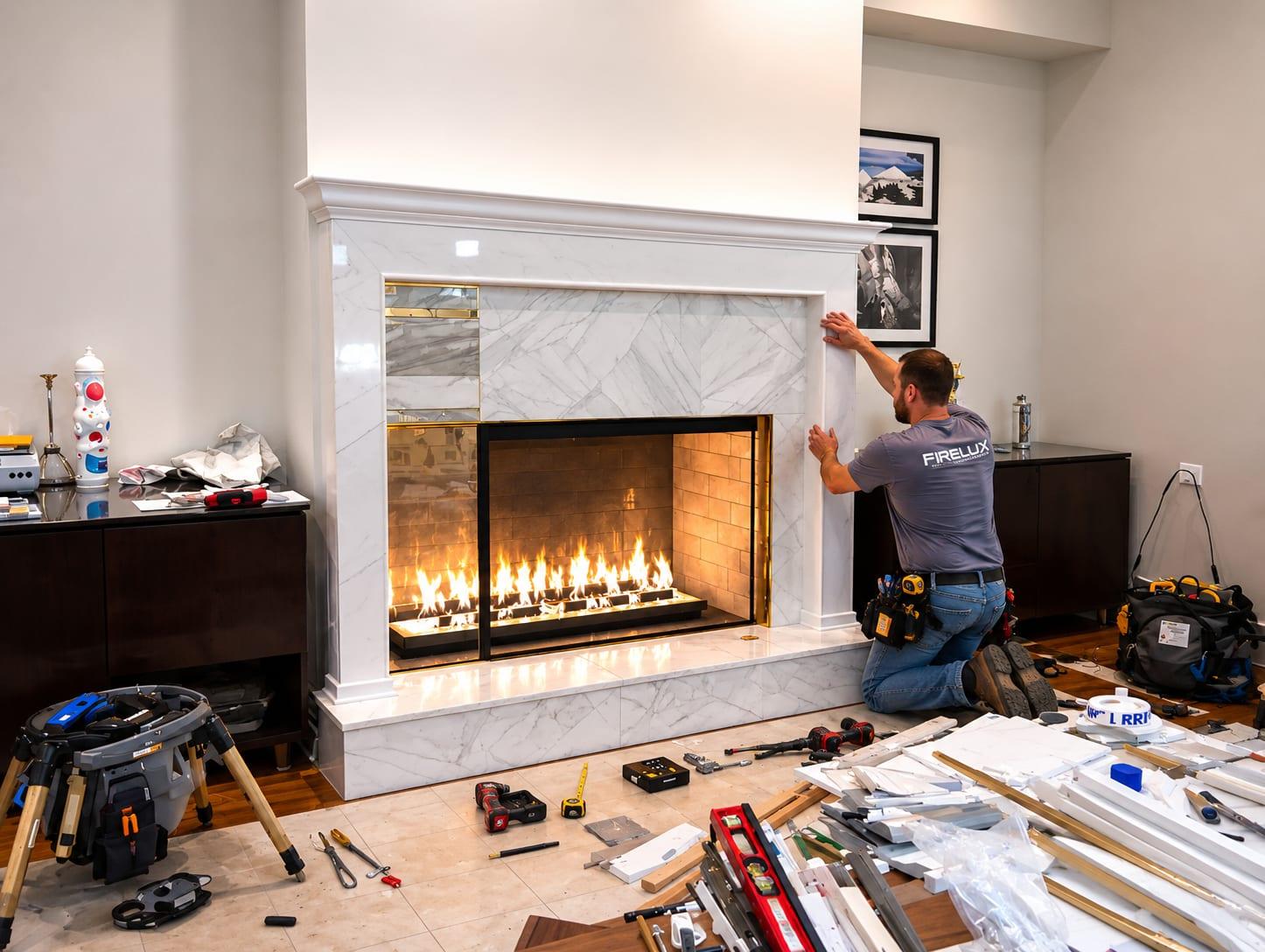
An insert is a factory-built firebox that slides into an existing fireplace opening. Installing one goes beyond setting a box in the hearth. The insert needs a properly sized vent running to the top of the chimney, a fuel supply if it burns gas, and a surround panel that seals the gap between the unit and the old opening. Done right, the old fireplace becomes a controlled, closed-door heater. Free standing wood stove vs fireplace insert explains how inserts compare with a stove on legs.
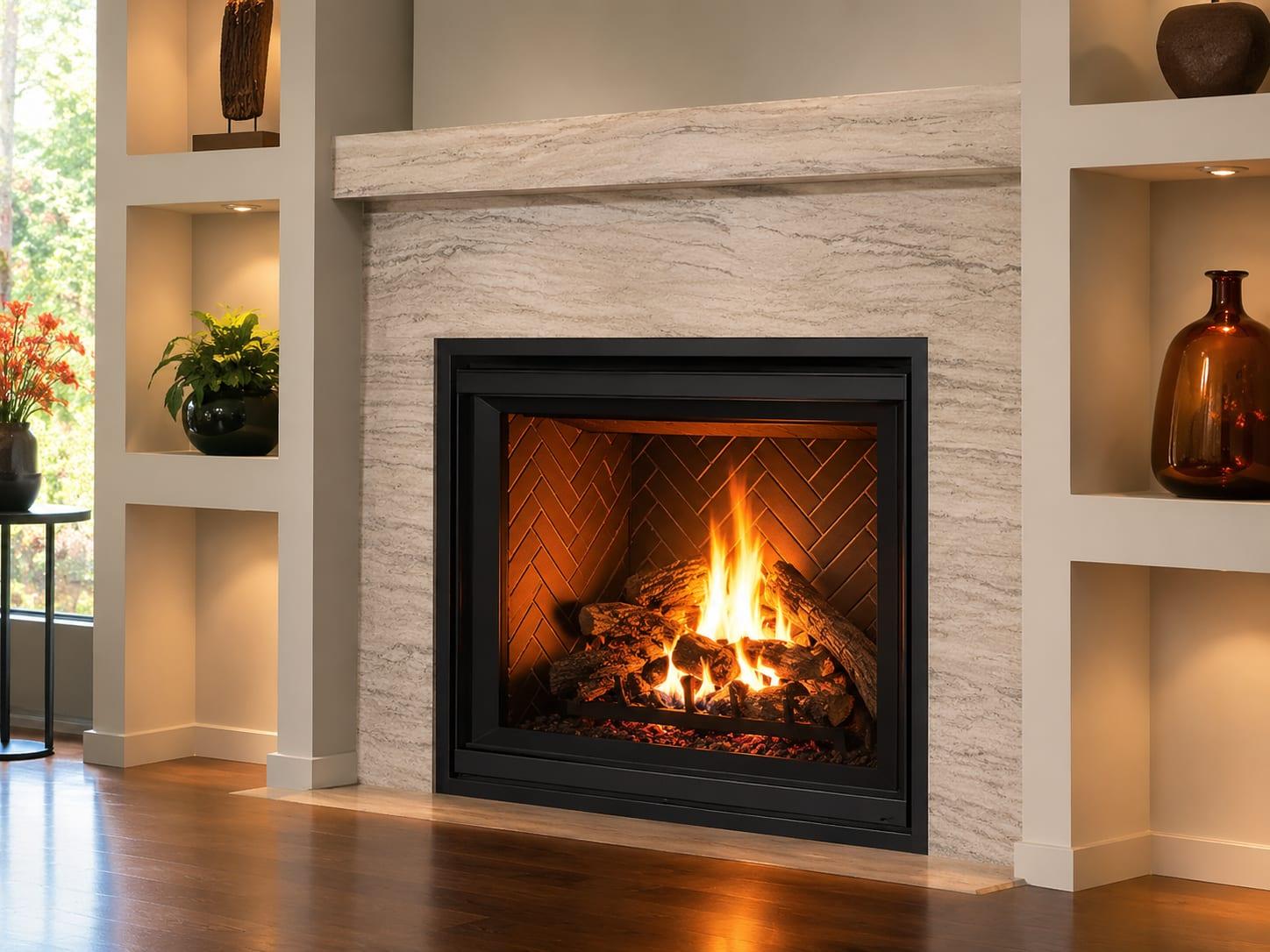
Inserts need an existing fireplace and chimney to work with. In a home with neither, look at our fireplace installation service or how chimney installation works instead.
When an insert is the right move
- The room near the fireplace stays cold even while a fire is burning.
- Cold air spills out of the fireplace when it isn't in use.
- You want the warmth of a fire without hauling wood, and a gas insert fits that.
- Smoke drifts into the room on some days because the open firebox drafts poorly.
- The firebox shows wear, and closing it in with an insert is part of the plan.
If you'd rather keep an open fire and only the firebox or damper is damaged, wood-burning fireplace repair may be the better fit. If your current insert works and just needs servicing, a cleaning visit is the right call rather than a new unit.
Fuel types and insert styles
Gas fireplace insert installation
A gas insert gives you a real flame at the push of a button or a wall switch, with no ash to haul. It usually vents through two liners run up the chimney, one carrying exhaust out and one bringing combustion air in. It also needs a gas supply at the fireplace. Gas fireplace and gas appliance work is part of what we do, and gas line installation is offered when there's no line to the hearth yet.
Wood-burning fireplace inserts
A wood insert keeps the crackle and heat of a wood fire but burns it in a closed box with controlled air, so more of the heat reaches the room. It needs a full-height liner sized to its flue collar, and it will need yearly cleaning once it's in use.
Stove-style fireplace inserts
Some inserts are built to look like a cast-iron stove, with a projecting front and a broad hearth face. They suit homeowners who like a traditional stove look but want to keep the fireplace opening, and they follow the same liner and clearance rules as other inserts.
| Feature | Gas insert | Wood insert |
|---|---|---|
| Starting a fire | Switch or remote | Kindling and seasoned wood |
| Venting | Paired liners for exhaust and air | Single liner sized to the flue collar |
| Ongoing upkeep | Yearly service of burner and vent | Yearly cleaning for creosote |
| Extra work it may need | Gas line to the fireplace | Firewood storage |
Starting a fire
- Gas insert
- Switch or remote
- Wood insert
- Kindling and seasoned wood
Venting
- Gas insert
- Paired liners for exhaust and air
- Wood insert
- Single liner sized to the flue collar
Ongoing upkeep
- Gas insert
- Yearly service of burner and vent
- Wood insert
- Yearly cleaning for creosote
Extra work it may need
- Gas insert
- Gas line to the fireplace
- Wood insert
- Firewood storage
What the visit involves, step by step
From first look to first fire
Measure and assess
The firebox opening, depth, hearth and chimney are measured and checked so the insert fits and can be vented safely.
Choose the unit
Fuel, style and size are matched to the room and the opening. We work with all major brands.
Prepare the fireplace
The existing fireplace is cleaned, and the damper is removed or secured if it would block the liner.
Run the liner
The vent liner is installed from the insert to the top of the chimney and capped.
Set and connect
The insert is set, connected to the liner and, for gas units, to the fuel supply.
Finish and test
The surround is fitted, and the unit is fired and checked for draft, seals and operation. You're also shown how to run it.
Safety and upkeep after the install
Keep a working smoke alarm and carbon monoxide alarm near the fireplace, keep furniture and decor clear of the insert front, and have the unit and liner serviced every year. If the old brick or tile around the new insert looks tired, the benefits of fireplace refacing are worth reading before the work starts.
Getting started
Request a free estimate and we'll look at your fireplace, talk through gas and wood options, and explain what the installation would involve. Emergency calls are accepted, and commercial and property-manager projects are welcome.
Signs of a chimney fire
A loud roaring sound, a glowing connector pipe, dense smoke or sparks from the top of the chimney can mean a chimney fire. Get everyone out and call 911; have the system inspected before the next fire.
Signs it's time for fireplace insert installation
- An open fireplace that loses most of its heat up the chimney
- A drafty fireplace even with the damper shut
- A wish to burn less wood or switch to gas
- An old insert past repair
What the technician checks
- Flue condition and liner size
- Gas supply on gas units
- Permit requirements
- Hearth extension
- Firebox opening and depth
- Clearances to the mantel and trim
How to prepare
- Clear a few feet around the unit and the area under any connector pipe.
- Write down what you've noticed — smoke at the door, a hard-to-control fire, noises or smells.
- Make sure the roof or the attic access can be reached if the flue needs to be checked from above.
- Let the stove or insert go out and cool completely — ideally no fire for a full day before the visit.