On this page
What fireplace insert cleaning is and what it involves
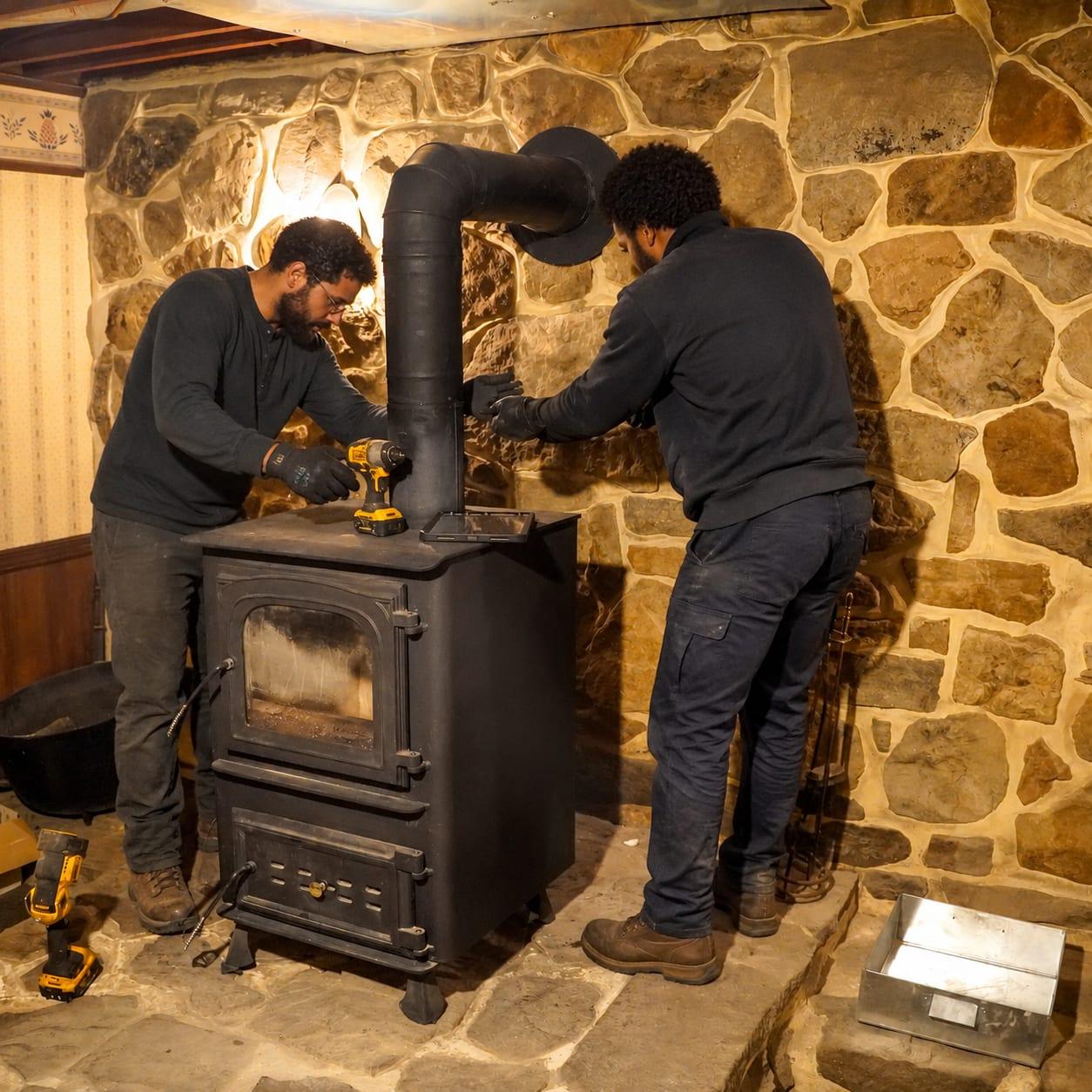
A fireplace insert is a closed firebox set into an existing masonry or prefab fireplace, usually vented through a liner that runs to the top of the chimney. Because the unit is enclosed, cleaning it is a different job from sweeping an open fireplace. The parts that need attention sit inside and behind the insert, not just in the visible firebox. If you're not sure what you have, our guide to type of fireplace explains how inserts differ from other setups, and free standing wood stove vs fireplace insert covers the two most common heaters.
- Baffle and smoke path: the plate above the fire, where creosote and fly ash pile up and choke the draft.
- Flue collar and liner: the connection out of the insert and the pipe running up the chimney.
- Firebox and firebrick: ash, clinkers and glazed deposits on the burn surfaces.
- Blower and fan housing: dust and ash that make the fan noisy and cut heat output.
- Door, gasket and glass: the seal that controls the burn, plus the glass haze that blocks your view of the fire.
For a traditional open hearth with no insert, standard fireplace cleaning is the better match. Heavy staining on the doors alone can be handled with fireplace glass cleaning.
Checked on every visit
- Surround panel and seal
- Firebrick and baffle on wood units
- Clearances to the mantel and trim
- Burner, pilot and logs on gas units
- Liner connection and condition
- Door or glass gaskets
Getting ready for the visit
- Have the make and model handy; it's usually on a plate on the back or under the ash lip.
- Clear a few feet around the unit and the area under any connector pipe.
- Write down what you've noticed — smoke at the door, a hard-to-control fire, noises or smells.
- Let the stove or insert go out and cool completely — ideally no fire for a full day before the visit.
Carbon monoxide
A stove or insert that vents poorly can push carbon monoxide into the home. If an alarm sounds or anyone feels dizzy or sick near it, get everyone outside and call 911.
When an insert needs cleaning: the signs to watch for
Book a cleaning if you notice
- Fires that are harder to start or die down even with the air control open
- Smoke rolling out when you open the door
- Glass that blackens within one or two fires
- A strong smoky or tar-like smell, especially on humid days
- Flaky, crusty or shiny black deposits on the baffle or in the flue collar
- A blower that rattles, whines or moves less warm air than it used to
- A full season of burning since the last cleaning
What the visit involves, step by step
A typical insert cleaning
Protect the room
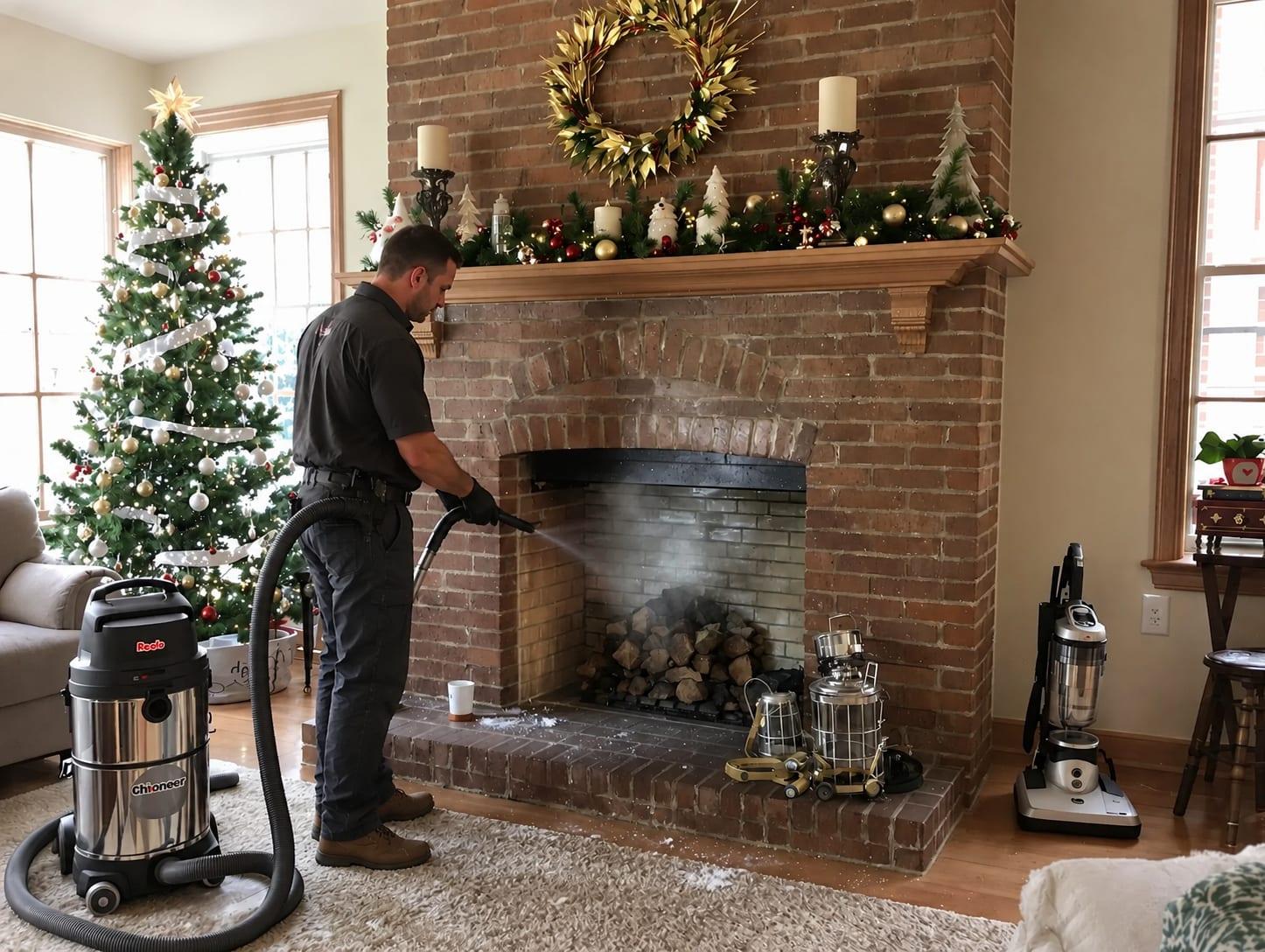
Drop cloths go down around the hearth, and dust containment is set up before anything is opened.
Open up the insert
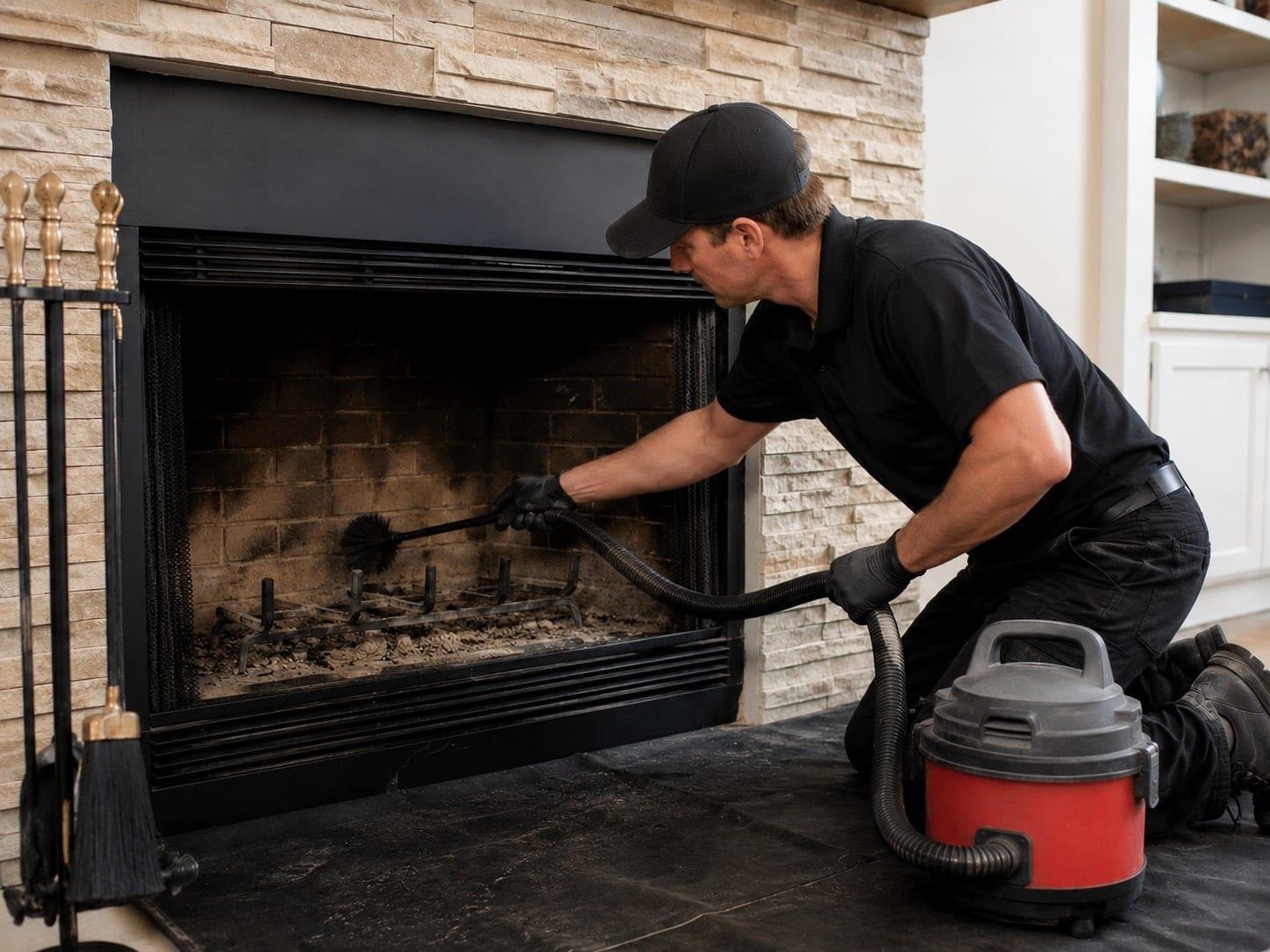
Ash is removed, and the baffle and any removable panels come out so the smoke path can be reached.
Clean the flue path
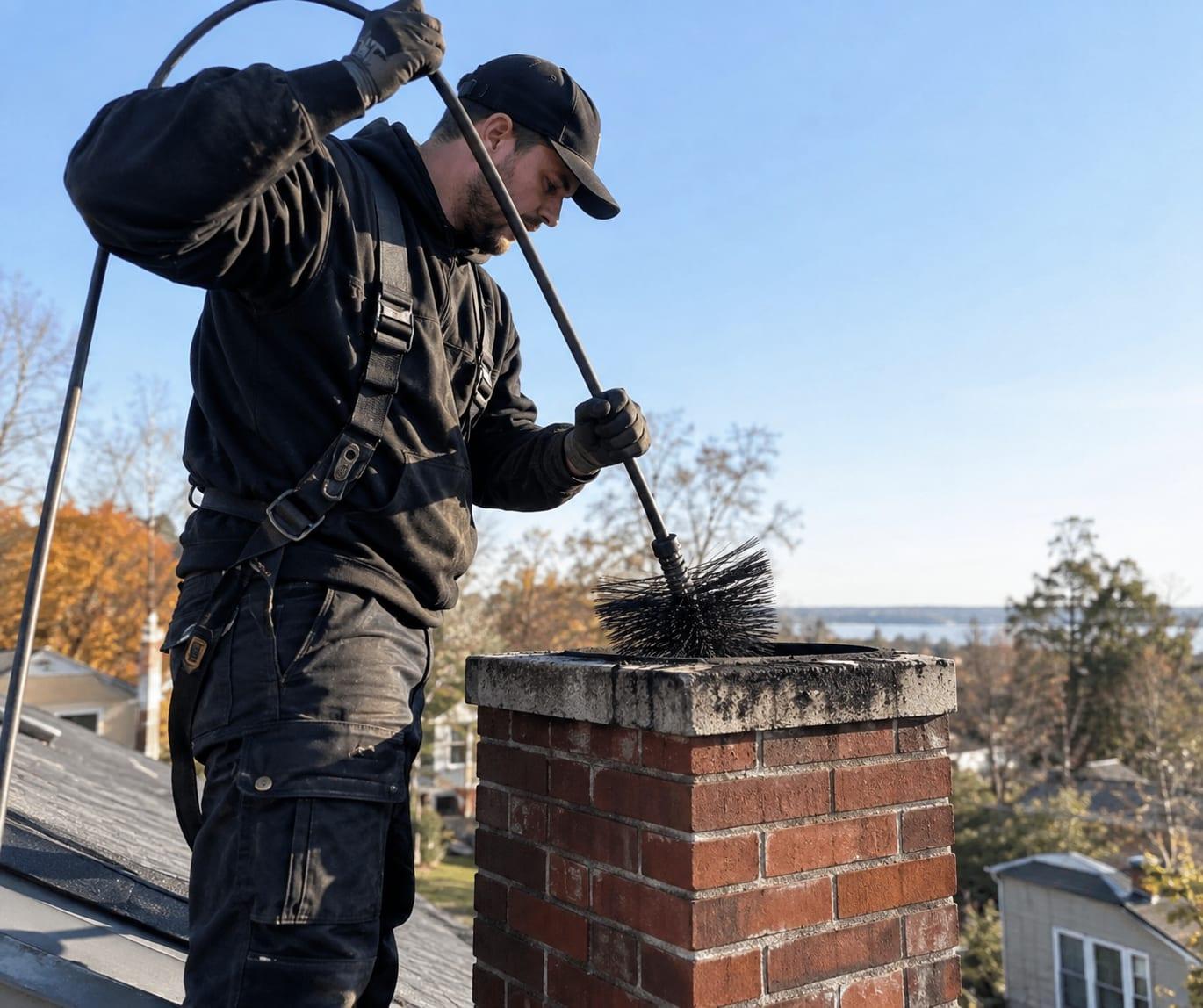
The flue collar and liner are brushed with tools sized to the pipe, working from inside, from the chimney top, or both, depending on the setup.
Clean the firebox and blower
Burn surfaces are scraped and vacuumed, and the fan housing is cleared of ash and dust.
Check the seals and glass
The door gasket is looked over for gaps, and the glass is cleaned.
Reassemble and report
Parts go back in place, and you hear what was found, such as cracked firebrick, a worn gasket or damage in the liner.
Safety and maintenance between cleanings
Creosote is the main reason wood-burning inserts need regular attention. It builds faster in a sealed unit that's run low and slow overnight, and a thick layer in the liner can ignite. Burning dry, seasoned wood and giving each fire a hot start both slow that buildup. Gas inserts don't make creosote, but they still collect soot, dust, spider webs and debris around the burner and vent, and gas fireplace work is part of what we do.
Stop using the insert if
you hear a loud roaring or popping in the chimney, see dense smoke from the top, or smell gas. If you hear roaring or see flames or sparks from the top of the chimney, get everyone out and call 911. Let the fire die down safely, leave the door closed and get help before burning again.
If the insert is warped, cracked or worn past the point where cleaning helps, ask about our fireplace insert installation service instead.
Booking a fireplace insert cleaning
Estimates are free, so you can describe your insert and get a clear picture of the work before anything is scheduled. Same-day visits are available when the schedule allows, and emergency calls are accepted. We work on all major brands of wood and gas inserts. Commercial and property-manager work is offered too, which helps if you look after several units. Call or request an estimate to get started.