The short answer
Choose a pellet stove if you want heat that runs itself for a day or more from a hopper, holds a set temperature, and can often vent through a wall instead of up through the roof. Choose a wood stove if you want heat that does not depend on electricity, you are comfortable splitting, drying and loading wood, and you have or can add a chimney built for solid fuel. Neither is better for every home. The right one depends on how you will use it, where it can be vented, and how much daily attention you want to give it.
How pellet and wood stoves compare
| Feature | Pellet stove | Wood stove |
|---|---|---|
| Fuel | Compressed wood pellets, bought in bags | Split cordwood, ideally seasoned until dry |
| Feeding the fire | An auger feeds pellets from a hopper automatically | You load logs by hand every few hours |
| Temperature control | Thermostat or heat settings on a control panel | Air controls and how much wood you load |
| Electricity | Required for the igniter, auger and fans | Not required to burn |
| Venting | Sealed, fan-assisted pellet vent; wall venting is often possible | Natural draft through a solid-fuel chimney that rises above the roof |
| Moving parts | Auger motor, combustion and room fans, igniter, control board | Few or none beyond doors, gaskets and baffles |
| Main residue | Fine fly ash and some soot | Ash plus creosote in the flue |
| Fire you can watch | Smaller, steady flame | Larger, natural wood fire |
Fuel
- Pellet stove
- Compressed wood pellets, bought in bags
- Wood stove
- Split cordwood, ideally seasoned until dry
Feeding the fire
- Pellet stove
- An auger feeds pellets from a hopper automatically
- Wood stove
- You load logs by hand every few hours
Temperature control
- Pellet stove
- Thermostat or heat settings on a control panel
- Wood stove
- Air controls and how much wood you load
Electricity
- Pellet stove
- Required for the igniter, auger and fans
- Wood stove
- Not required to burn
Venting
- Pellet stove
- Sealed, fan-assisted pellet vent; wall venting is often possible
- Wood stove
- Natural draft through a solid-fuel chimney that rises above the roof
Moving parts
- Pellet stove
- Auger motor, combustion and room fans, igniter, control board
- Wood stove
- Few or none beyond doors, gaskets and baffles
Main residue
- Pellet stove
- Fine fly ash and some soot
- Wood stove
- Ash plus creosote in the flue
Fire you can watch
- Pellet stove
- Smaller, steady flame
- Wood stove
- Larger, natural wood fire
Fuel and daily handling
Pellets come in bags that stack in a garage or dry corner and pour into the hopper. Firewood takes more space and work: it has to be split, stacked off the ground, covered from rain and left to dry before it burns cleanly. Wet or green wood smolders, makes less heat and builds creosote faster, so a wood stove is only as good as the wood you feed it.
Power outages
This is the biggest practical difference. A pellet stove shuts down when the power goes out unless it is connected to a battery backup or generator that the manufacturer approves. A wood stove keeps heating without electricity, which is why many homeowners who want backup heat lean toward wood.
Maintenance and repairs
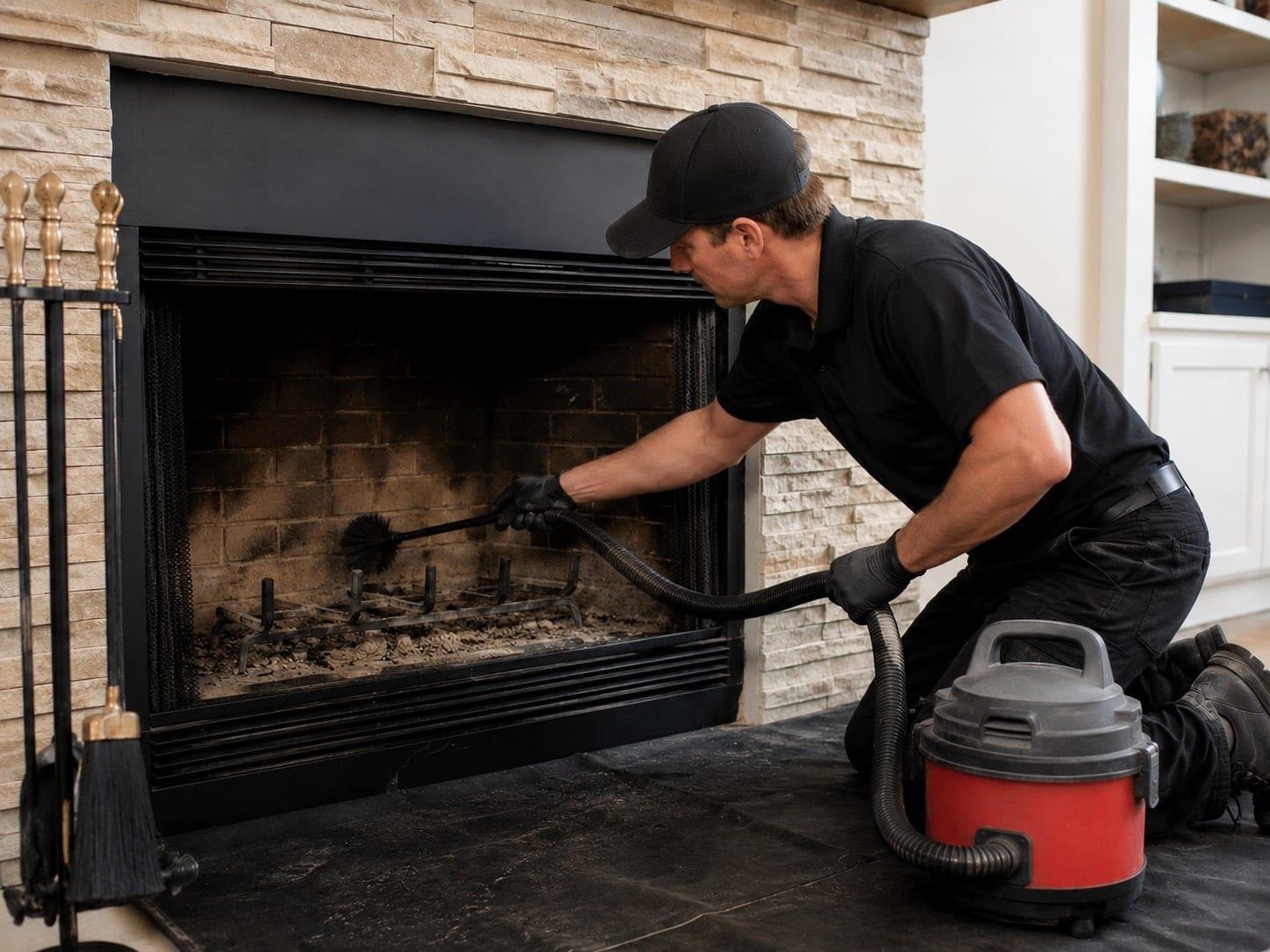
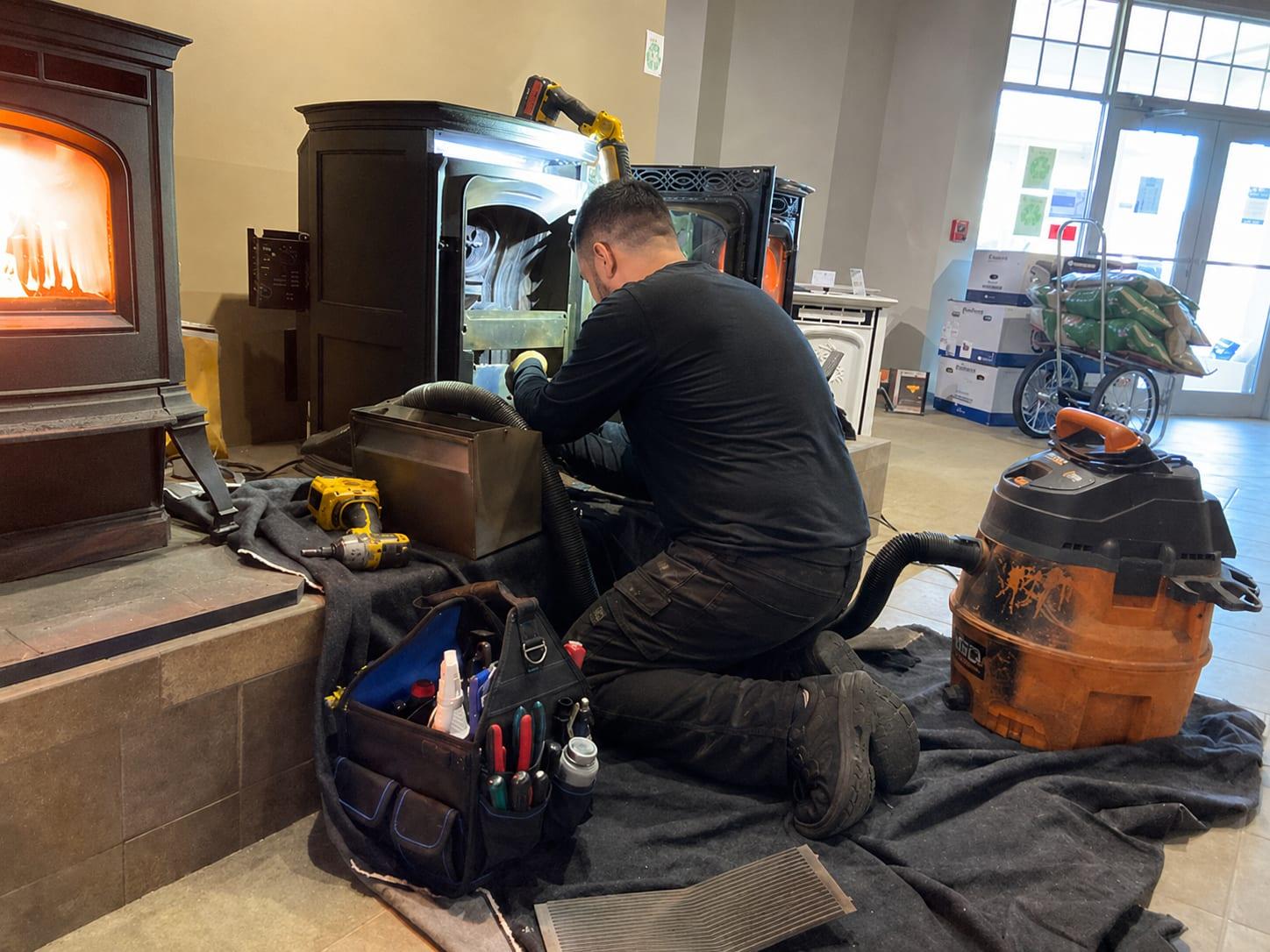
A wood stove is mechanically simple, but its chimney collects creosote, a flammable residue that has to be swept out regularly. Door gaskets, glass and baffles wear over time; when they do, repairing an existing wood stove is usually simpler than replacing it. A pellet stove burns cleaner in the flue, but its ash builds up in the burn pot, heat exchanger and exhaust passages, and its motors, fans and controls can fail. Most owners empty the burn pot often and schedule a thorough pellet stove cleaning at least once a season to keep the fans and vent clear. Do this only with the stove off, cold and unplugged.
Routine upkeep for each type
- Pellet: scrape or empty the burn pot as the owner's manual directs. Do this only with the stove off, cold and unplugged.
- Pellet: clean the heat exchanger and ash traps, and keep the hopper free of dust and fines
- Pellet: have the vent, combustion fan and exhaust path cleaned each season
- Wood: burn only dry, seasoned wood and remove ash before it reaches the door
- Wood: check door gaskets and glass for leaks or cracks
- Wood: have the chimney swept and inspected for creosote each year
How is venting different for pellet vs wood stoves?
A pellet stove pushes its exhaust out with a fan, while a wood stove relies on hot air rising up a chimney. Because pellet exhaust is under pressure, it runs through sealed pellet vent pipe with tight joints. That pipe can often exit straight through an outside wall with a short run, though many manufacturers call for some vertical rise to help the stove clear smoke if the fan stops. Each stove's installation manual sets the allowed pipe type, length, number of elbows and clearances.
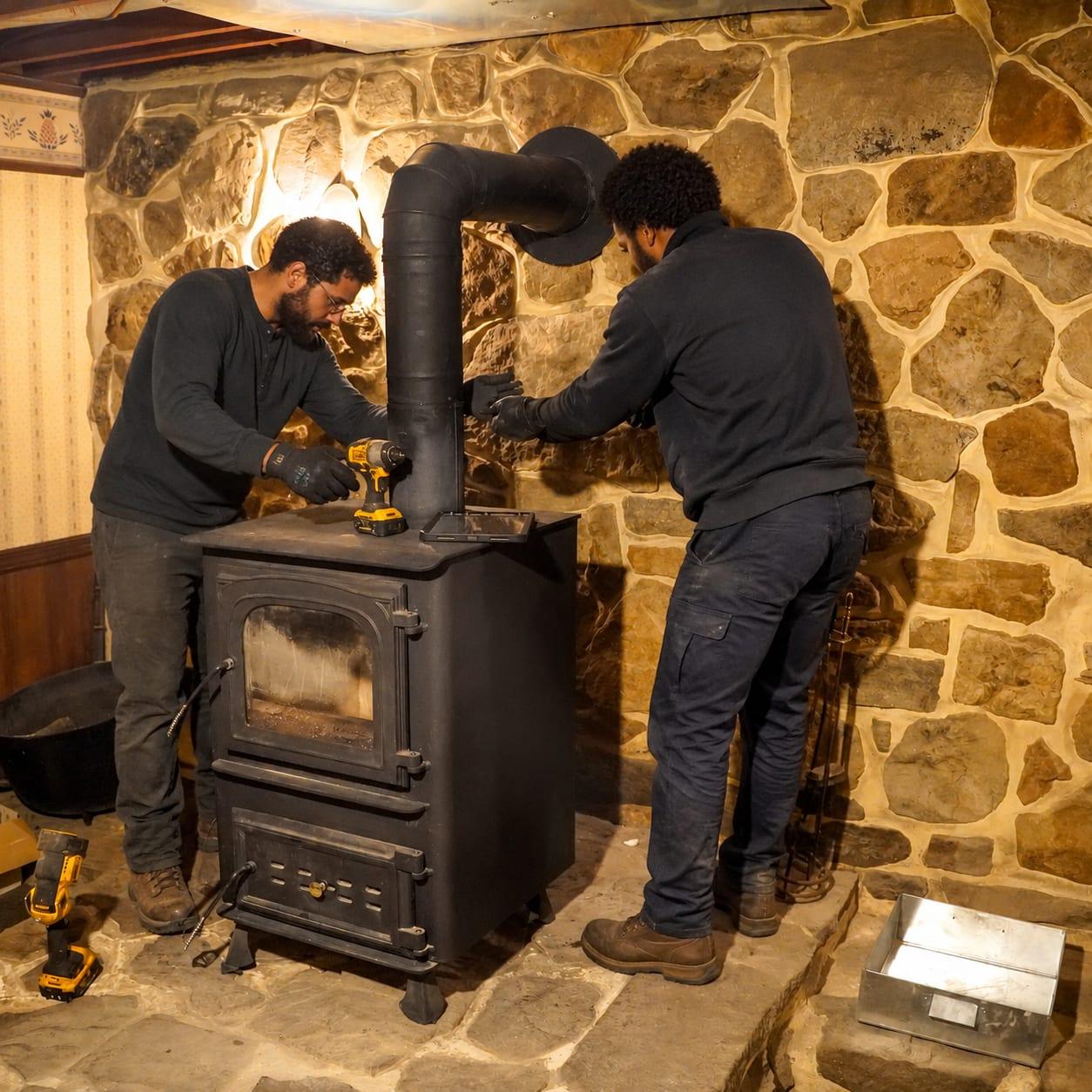
A wood stove needs a chimney listed for solid fuel, either a factory-built high-temperature chimney or a masonry chimney with a suitable liner, running vertically and ending above the roofline. A common rule of thumb is at least 3 feet above where it passes through the roof and 2 feet higher than anything within 10 feet, but the stove manual and local code decide. Wall-vented setups like the ones pellet stoves use are not an option for wood.
Either stove can sometimes use an existing chimney, but usually only with a properly sized liner run down inside it. Before connecting anything to an old fireplace flue, have the masonry checked, including any cracked or deteriorated smoke chamber and firebox. For new setups, the details of venting a pellet stove through a wall or chimney and installing a wood stove with a proper chimney are different jobs with different parts.
Never mix the venting
Pellet vent pipe is not rated for wood stove temperatures, and an unsealed wood stove connector is not built for pressurized pellet exhaust. Use only the vent type the stove's manufacturer lists.
What helps you decide
- Do you need heat during power outages? If yes, wood has the edge unless you add backup power for a pellet stove.
- Where can the vent go? If there is no practical route up through the roof, a wall-vented pellet stove may be the only workable choice.
- How much tending will you do? Pellet stoves need a hopper fill and a burn pot cleanout; wood stoves need loading through the day.
- Do you have room to store and dry firewood, or would bagged pellets be easier?
- Is this primary heat, backup heat or occasional ambiance? Steady all-day heat favors pellet; a fire to enjoy and rely on in an outage favors wood.
- Freestanding or set into an existing fireplace? The trade-offs between a freestanding stove versus a fireplace insert are worth weighing too.
If you are still sorting out whether a stove is the right path at all, comparing the main fireplace types can narrow things down. Oakwell Chimney & Fireplace installs pellet stove venting and wood stoves, repairs wood stoves, and cleans both.