On this page
What wood stove cleaning covers
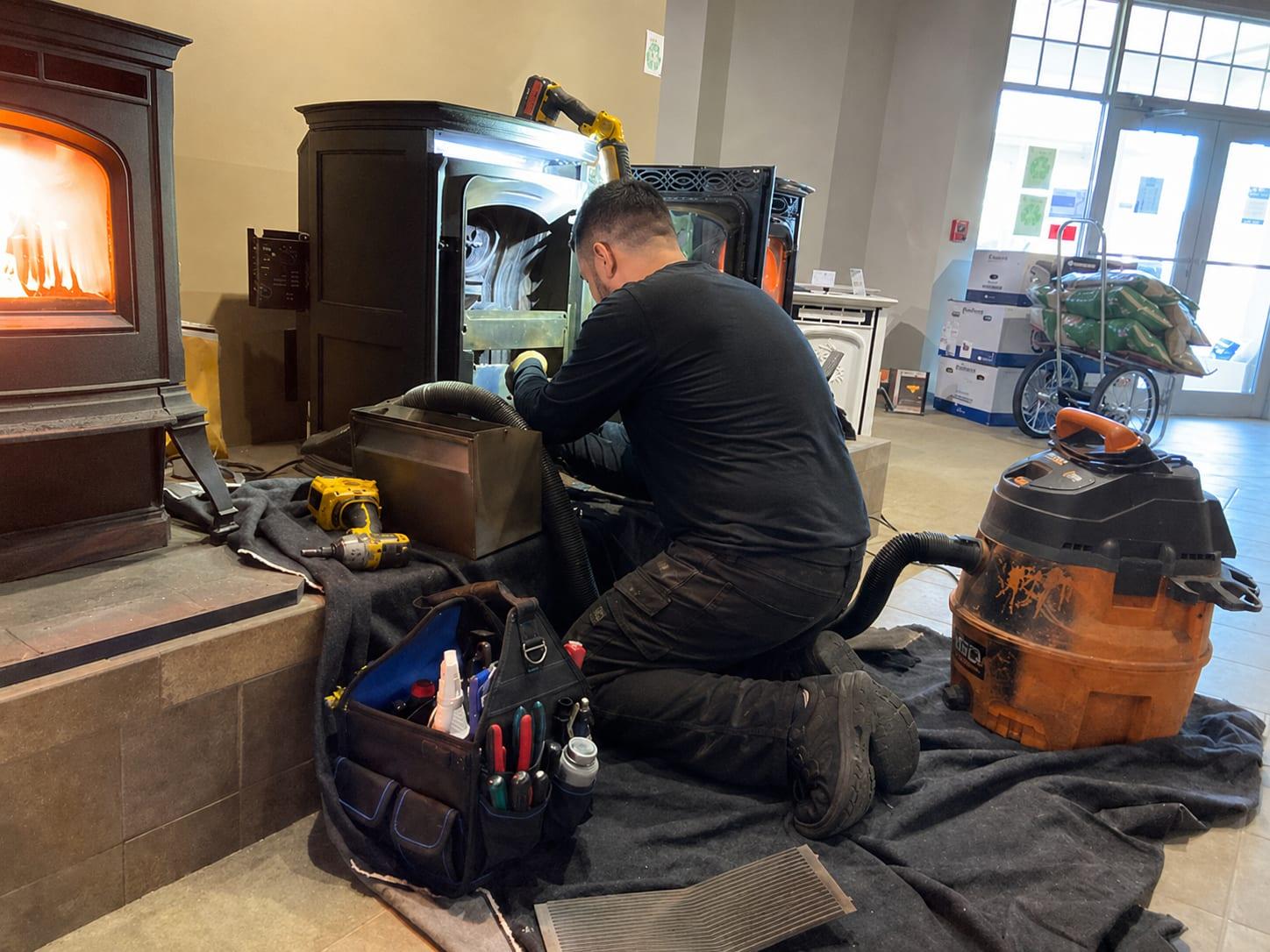
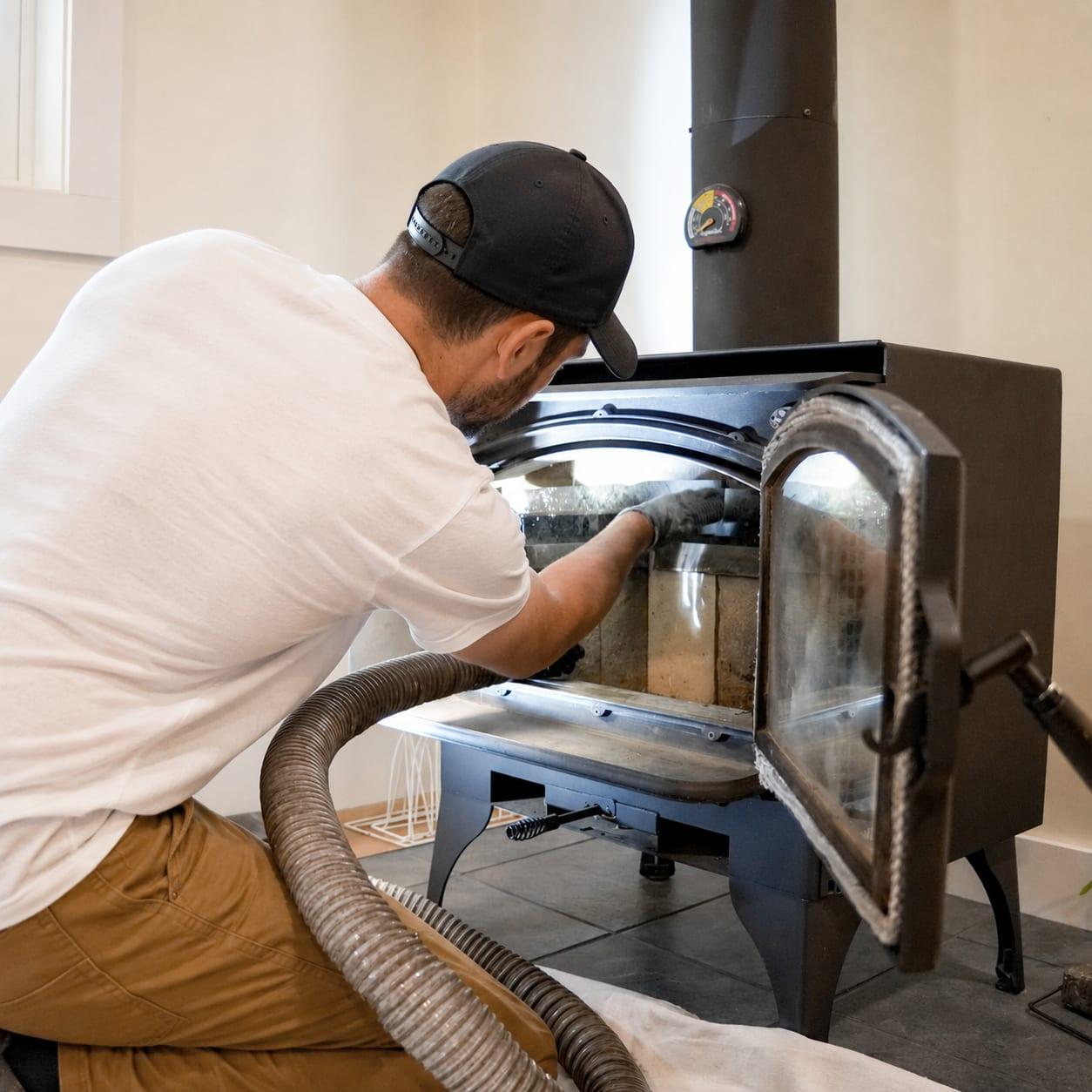
Cleaning a wood stove takes more than emptying the ash pan. Creosote collects wherever smoke cools, and in a stove system that means the top of the firebox, the baffle, the connector pipe and the chimney flue. Wood stove cleaning removes that buildup along the whole exhaust path, so each part is cleared rather than only the parts you can see.
- Firebox: ash and loose debris removed, firebrick and grates checked
- Baffle or secondary burn tubes: soot and creosote cleared from above and around them
- Catalytic combustor, on stoves that have one: gently cleaned and checked for clogging or damage
- Glass: cleaned so you can see the fire again
- Stovepipe or connector: brushed and checked at every joint
- Chimney flue: swept from the stove to the cap
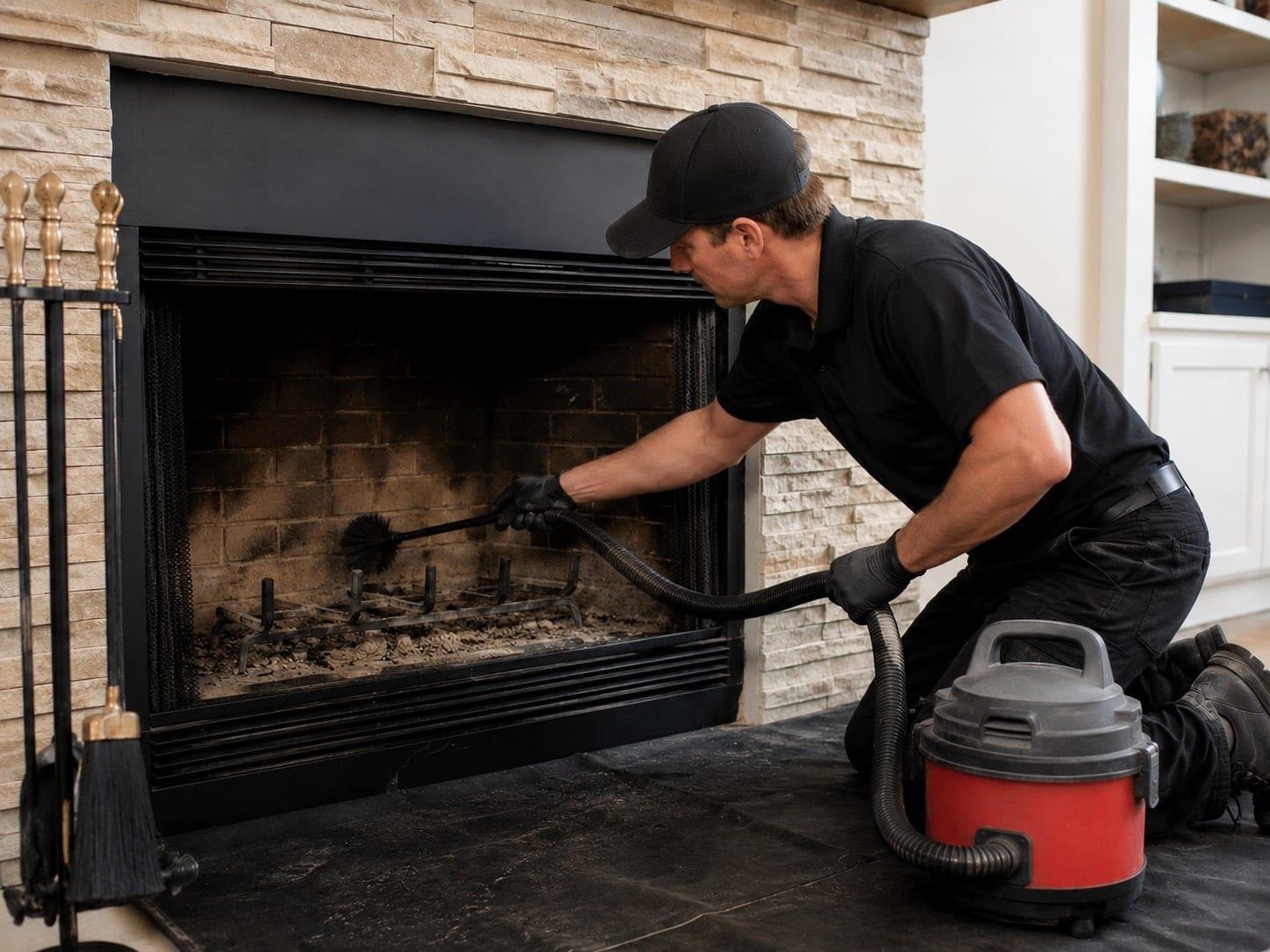
Fireplace inserts are cleaned the same general way. If you're comparing the two styles, see free-standing wood stove vs fireplace insert. Open fireplaces are handled through fireplace cleaning instead.
What we look at
- Liner or thimble connection at the chimney
- Clearances to walls, floor protection and the hearth pad
- Door latch, gasket and glass seal
- Air controls and their range
- Creosote in the connector and flue
How to prepare
- Clear a few feet around the unit and the area under any connector pipe.
- Let the stove or insert go out and cool completely — ideally no fire for a full day before the visit.
- Have the make and model handy; it's usually on a plate on the back or under the ash lip.
- Write down what you've noticed — smoke at the door, a hard-to-control fire, noises or smells.
Signs of a chimney fire
A loud roaring sound, a glowing connector pipe, dense smoke or sparks from the top of the chimney can mean a chimney fire. Get everyone out and call 911; have the system inspected before the next fire.
Signs your wood stove is due for cleaning
Time to book when you notice
- Smoke puffs into the room when the door is opened
- Fires are harder to start or keep going than they used to be
- Glass blackens quickly, even with dry wood
- Black flakes or a shiny, tar-like coating inside the stovepipe
- A strong campfire smell in the room when the stove is cold
- A full heating season has passed since the last cleaning
What the cleaning visit involves
Step by step
Protect the room
Drop cloths go down and the stove area is sealed off so soot stays contained.
Empty and inspect the firebox
Ash is removed, and the bricks, grate, door gasket and baffle are looked over.
Clear the baffle and combustor
Buildup is removed from the top of the firebox and from the combustor if there is one.
Brush the stovepipe and flue
The connector and chimney are swept, and debris is collected at the bottom.
Reassemble and report
Parts go back in place, the glass is cleaned, and you hear about anything worn or damaged.
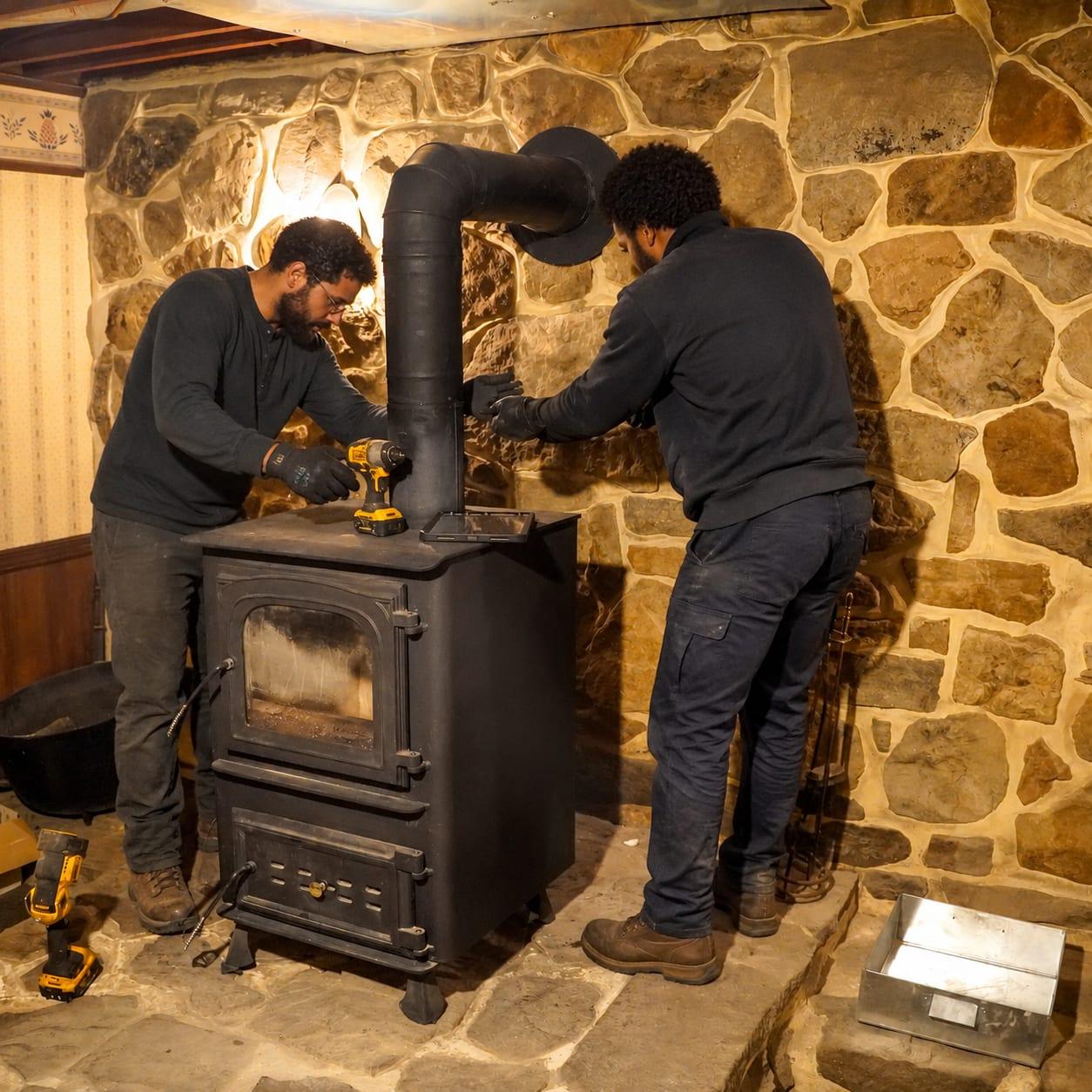
If the cleaning turns up a cracked firebrick, a warped baffle or a leaking gasket, that's a job for wood stove repair. If you're replacing the stove entirely, wood stove installation is the right service.
Safety and maintenance between cleanings
How fast creosote builds up depends on how you burn. Seasoned wood, a fire that's allowed to burn hot for a while after loading, and not damping the air down too far all slow it down. Empty ash into a metal container with a lid and keep it outside, away from the house. Do this only with the stove off, cold and unplugged. Keep smoke and carbon monoxide alarms working. If you're weighing fuel options, pellet vs wood stoves compares how much upkeep each needs, and our guide to chimney cleaning and safety covers the flue side in more detail.
Signs of a flue fire
A roaring sound, a very hot stovepipe or sparks from the chimney top can mean creosote is burning. Close the stove's air controls, get everyone out and call 911.
Booking a wood stove cleaning
Call or request an estimate. Same-day visits are available where the schedule allows, though they're never guaranteed, and emergency calls are accepted. All major stove brands are cleaned, and property managers with several units can arrange the work together.