On this page
What pellet stove cleaning covers
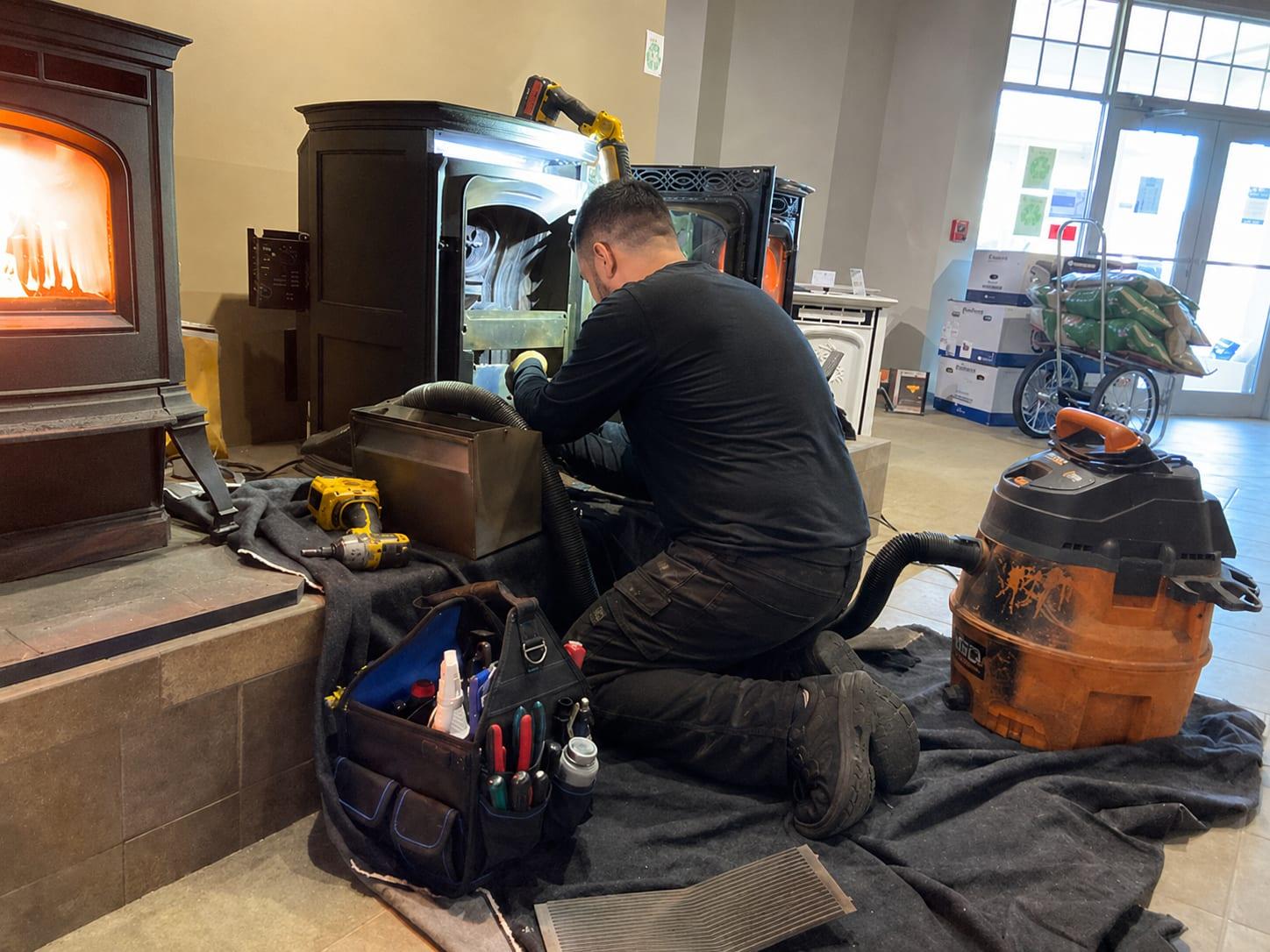
Emptying the ash pan and scraping the burn pot are owner jobs that come up every few days of use. A full cleaning goes into the places you can't easily reach:
- Burn pot and its air holes, which clog with clinkers and starve the flame of air
- Heat exchanger tubes and the firebox walls behind the baffles
- Combustion blower and its housing, where ash packs around the fan blades
- Convection fan, which moves warm air into the room
- The pellet stove chimney or vent, including the cleanout tee and termination cap
- Door glass, plus a check of the door and ash pan gaskets
If you also have an open fireplace, our fireplace cleaning service handles that firebox and flue. Our guide to pellet vs wood stoves explains why the two need different upkeep.
Signs your pellet stove is due for cleaning
- The glass turns dark within a day of lighting it.
- The flame is tall, lazy and orange, or has sooty black tips.
- Clinkers build up in the burn pot and pellets start to overflow it.
- The stove shuts down on its own or shows an exhaust, vacuum or draft error.
- You get a puff of smoke at startup or a smoky smell during a burn.
- The blower sounds louder or rougher than it used to.
- The room feels cooler even on a high setting.
- You notice soot or sticky residue at a vent joint. Damp pellets or long low-setting burns can leave creosote.
What the visit involves, step by step
How a pellet stove cleaning goes
Confirm the stove is cold and unplugged
Pellet stoves have powered parts, so we start with the unit fully shut down and cool.
Clear the firebox
We empty the ash, scrape the burn pot, open its air holes and brush down the heat exchanger tubes.
Clean the blowers
We remove ash from the combustion blower housing and the convection fan.
Clean the vent
We brush the pellet vent from the cleanout tee to the cap and clear the ash collected at the bottom of the run. Do this only with the stove off, cold and unplugged.
Check and test
We look over gaskets, joints and the igniter area, clean the glass, then fire the stove and watch the flame and draft.
The pellet stove cleaning inspection
While the stove is open, we look for the problems cleaning alone won't fix. These include worn door gaskets, a cracked or loose vent joint, a cap blocked by debris or nesting, and clearance issues around the wall pass-through. Anything we find is pointed out, not quietly added to the job. For a broader look at the whole hearth, our fireplace inspection is a separate service.
Safety and maintenance between cleanings
Pellet ash stays hot longer than it looks
Put ash in a metal container with a tight lid and set it outdoors on a noncombustible surface, away from the house, decks and anything that can burn. Never empty ash into a paper bag, a plastic bin or a household vacuum.
- Use dry, quality pellets. High-ash or damp fuel means more clinkers and faster soot buildup.
- Don't let fines, the dust at the bottom of the bag, pile up in the hopper. They can jam the auger.
- Follow the cleaning interval in your owner's manual. Many are based on how much fuel you've burned, so heavy-use seasons need cleaning sooner.
- Our guide to chimney cleaning and safety covers the warning signs that apply to every vented appliance.
The pellet stove chimney
Does a pellet stove need a chimney of its own?
It doesn't need a traditional chimney, but it does need its own dedicated vent. A pellet stove shouldn't share a flue with a furnace, water heater or another fireplace. It can run inside an existing chimney only through a pellet liner connected directly to the stove.
How is a pellet stove chimney installed?
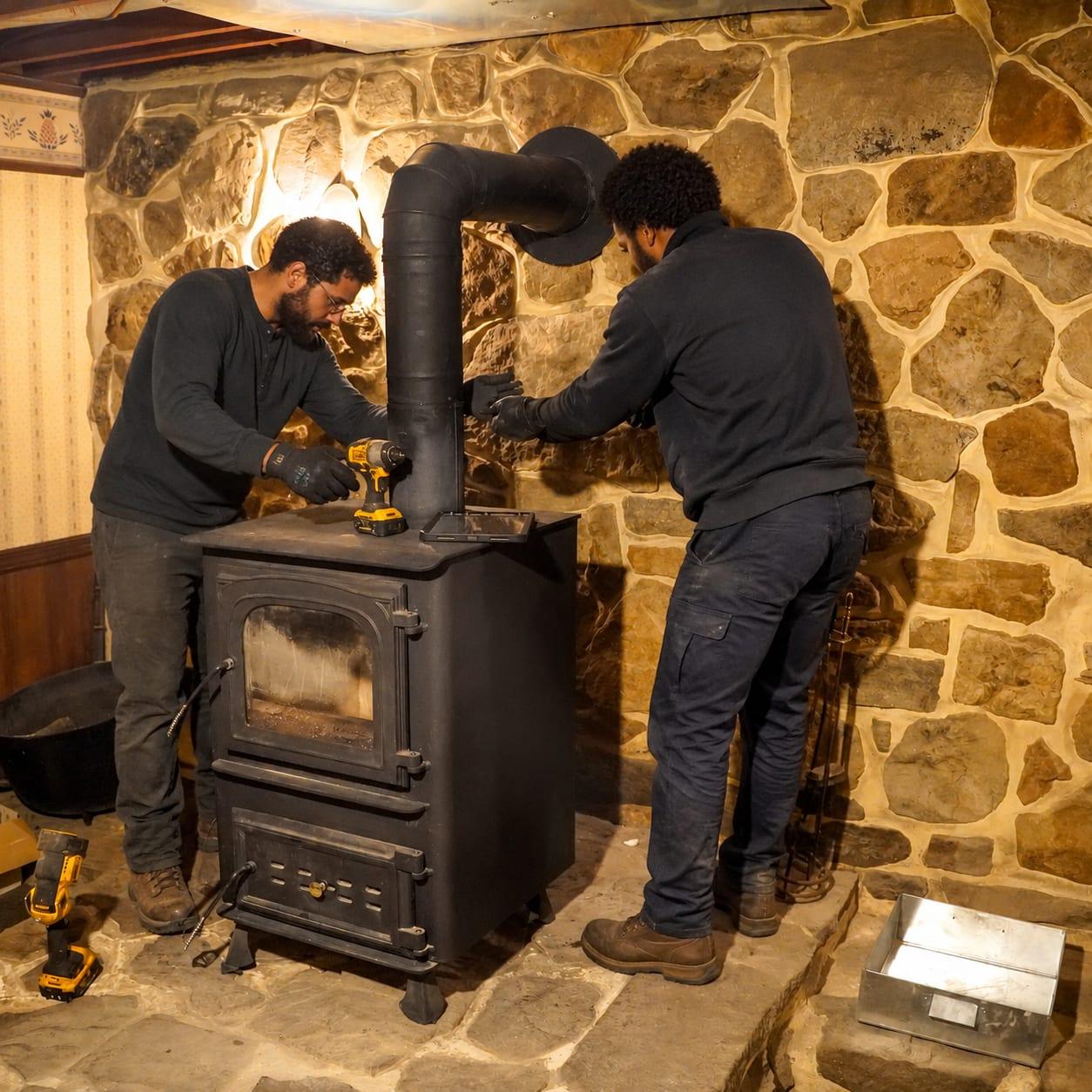
Sealed double-wall pellet vent runs from the stove's exhaust outlet through a wall thimble or ceiling support. It usually includes a cleanout tee and ends at a cap placed at the distances the manufacturer specifies. The route, pipe size and outside air connection all come from the stove's manual. Our pellet stove chimney installation service covers the work in detail.
Are there pellet stoves without chimneys?
Yes, in the sense that most pellet stoves vent sideways through a wall with no chimney at all. There is no vent-free pellet stove, though. Every one has to send its exhaust outdoors through a sealed vent.
Schedule a pellet stove cleaning
Estimates are free, and same-day visits are available when the schedule allows. We clean all major brands, including freestanding stoves and pellet inserts. Our guide to free-standing wood stove vs fireplace insert explains how the two setups differ. Property managers with several units can arrange the work too. Get in touch to request an estimate.
Getting ready for the visit
- Clear space around the stove and the outside vent termination.
- Run the hopper low if you can, so the feed system can be reached.
- Note any error codes and when the problem happens.
- Let the stove burn out, then switch it off and unplug it once it is cold.
Exhaust in the room
If you smell exhaust or smoke from the stove or vent, shut the stove down. If a carbon monoxide alarm sounds or anyone feels unwell, get everyone outside and call 911.
What gets checked
- Burn pot and air holes
- Door and hopper gaskets
- Vent pipe joints and termination
- Auger and hopper feed
- Pressure and temperature safety switches
- Combustion and convection fans