On this page
What pellet stove chimney installation involves
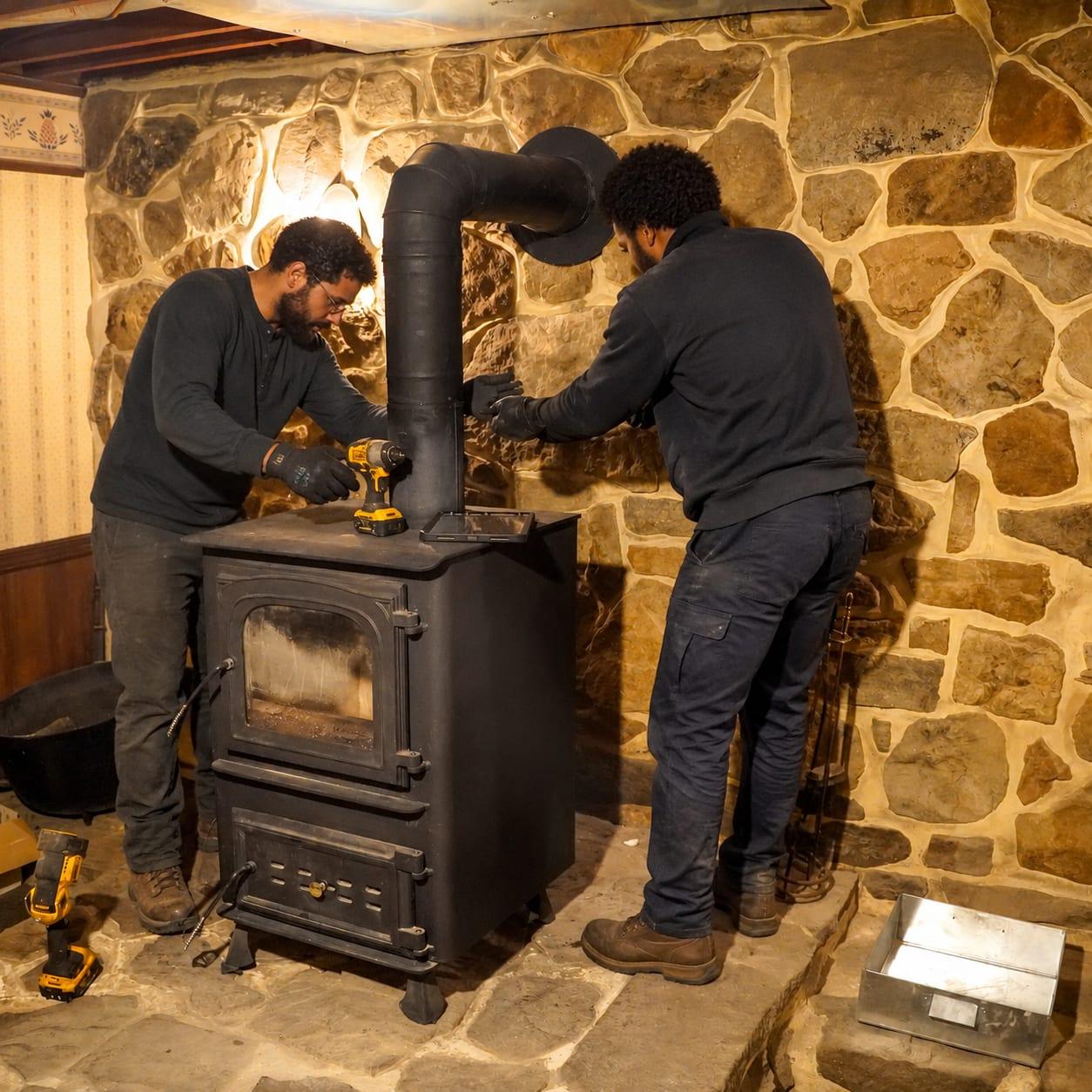
A pellet stove doesn't rely on natural draft the way a wood stove does. A combustion blower pushes the exhaust out, so the vent runs under slight positive pressure. Any gap at a joint can leak fine ash and exhaust into the room. If a carbon monoxide alarm sounds or anyone feels unwell, get everyone outside and call 911. That's why pellet stoves use dedicated pellet vent pipe, often called PL vent. It is double-wall pipe with sealed or gasketed joints, usually 3 or 4 inches across, and ordinary stovepipe can't stand in for it.
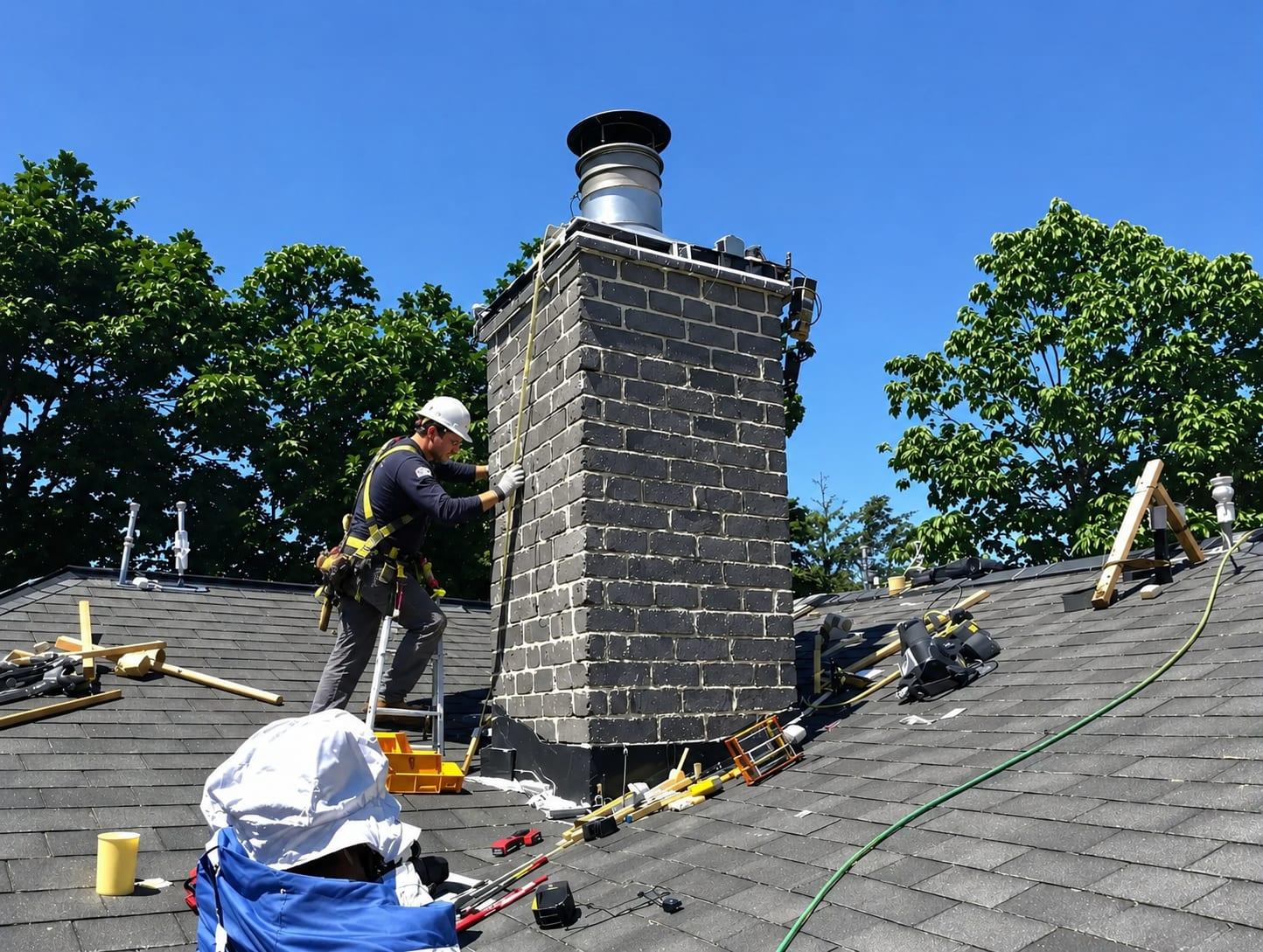
The job covers choosing the route, sizing the pipe to the stove and the length of the run, keeping the required clearance from framing and other combustibles, and finishing with a termination cap placed away from windows, doors and walkways. Most homes use one of these three routes:
- Through an exterior wall, ideally with a few feet of vertical rise outside before the cap.
- Up through the ceiling and roof, which gives the strongest natural draft if the blower ever stops.
- Inside an existing masonry or factory-built chimney, using a pellet liner sized to the stove, so the old flue doesn't act as an oversized, leaky vent.
If you haven't settled on the stove yet, our guide to pellet vs wood stoves covers how the two differ in fuel, power needs and upkeep. If you decide on cordwood, our wood stove installation service handles that venting, which is built very differently.
When a home needs pellet stove venting installed
- You've bought a new pellet stove and there's no vent in the room where you want it.
- You're replacing a stove, and the old vent is the wrong diameter or a different brand's pipe that doesn't match the new unit's instructions.
- You smell smoke near the pipe, or gray ash shows up around joints or the wall pass-through.
- The stove throws exhaust or vacuum error codes. A run with too many elbows or too much length can choke the blower.
- The cap sits under a deck, beside a window or close to a walkway, where exhaust can drift back toward people.
- A pellet stove or insert was set in a fireplace and vented into the open flue with no liner.
What the visit involves, step by step
From first look to first fire
Review the stove and the room
We read the stove's manual and data label for vent size, clearances and maximum run length, then look at where the stove will sit.
Plan the route
We decide between a wall, roof or chimney route based on the framing, the exterior and where the cap can safely end. Roof work is the riskiest part of the job; without fall protection, leave rooftop brushing to a sweep.
Install the pass-through and pipe
We fit a wall thimble or ceiling support, run the pellet vent with sealed joints and add a cleanout tee where the run turns upward.
Add outside air if called for
Many stoves accept an outside air kit that feeds combustion air from outdoors rather than from the room.
Terminate and test
We set the cap, fire the stove, check every joint for leaks and walk you through the cleanout points.
Why a little vertical rise matters
Pellet stoves need electricity to run the auger and blowers. If the power goes out mid-burn, a vent with some vertical rise lets leftover smoke escape outdoors instead of drifting back through the stove.
Book your pellet vent installation
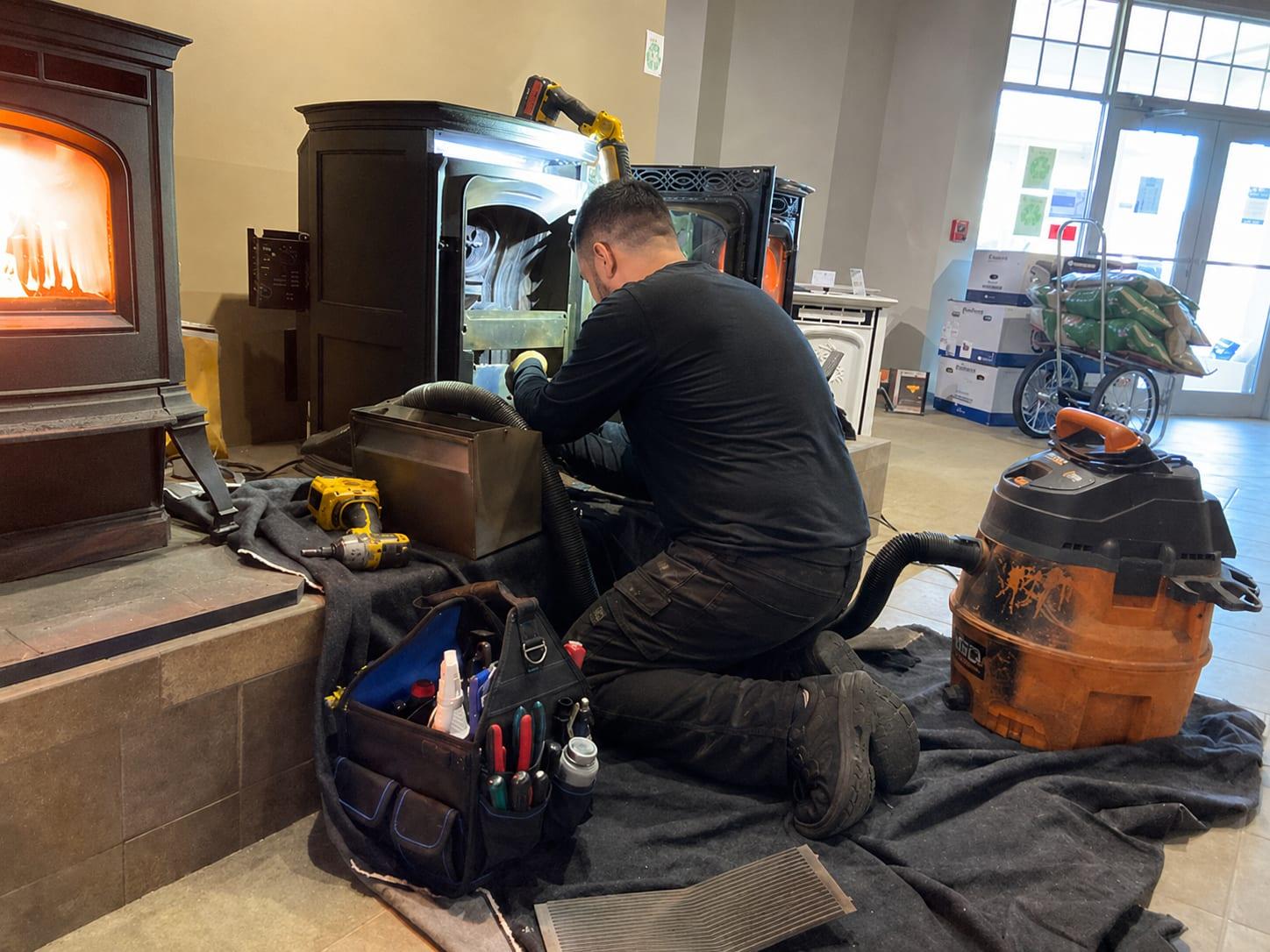
We work on all major stove brands. That includes freestanding units and models covered by our pellet fireplace installation and repair work. Once the stove is running, regular pellet stove cleaning keeps ash from building up in the new vent. Get in touch to request an estimate.
Getting ready for the visit
- Note any error codes and when the problem happens.
- Let the stove burn out, then switch it off and unplug it once it is cold.
- Run the hopper low if you can, so the feed system can be reached.
- Clear space around the stove and the outside vent termination.
Checked on every visit
- Liner connection if an existing chimney is used
- Outlet and power supply
- Vent route and termination location
- Permit requirements
- Clearances and floor protection
Off, cold and unplugged
Clean the burn pot, ash pan or glass only with the stove off, completely cold and unplugged — the auger and fans can start on their own.
Signs it's time for pellet stove chimney installation
- Lazy, dark or sooty flames
- The stove won't light or keeps shutting down
- Ash or a smoky smell around the vent pipe
- Pellets piling up in the burn pot
- Grinding, squealing or rattling from a fan or the auger