The short answer
A masonry chimney is a heavy, site-built structure. It has a firebrick firebox, a smoke chamber, a flue liner (often clay tile) and a mortar crown on top. A prefab chimney, also called factory-built or zero-clearance, is a matched set made by one manufacturer: a metal firebox, sections of metal chimney pipe, and a metal chase cover at the top. The pipe usually runs through a wood-framed chase finished with siding, stucco or brick veneer.
Masonry is durable and can usually be repaired piece by piece for a very long time. Prefab is lighter and faster to build, but it was tested and listed as a complete system. That means repairs have to use compatible parts, and a worn-out unit is often replaced rather than rebuilt.
How to tell which one you have
Quick checks you can do yourself
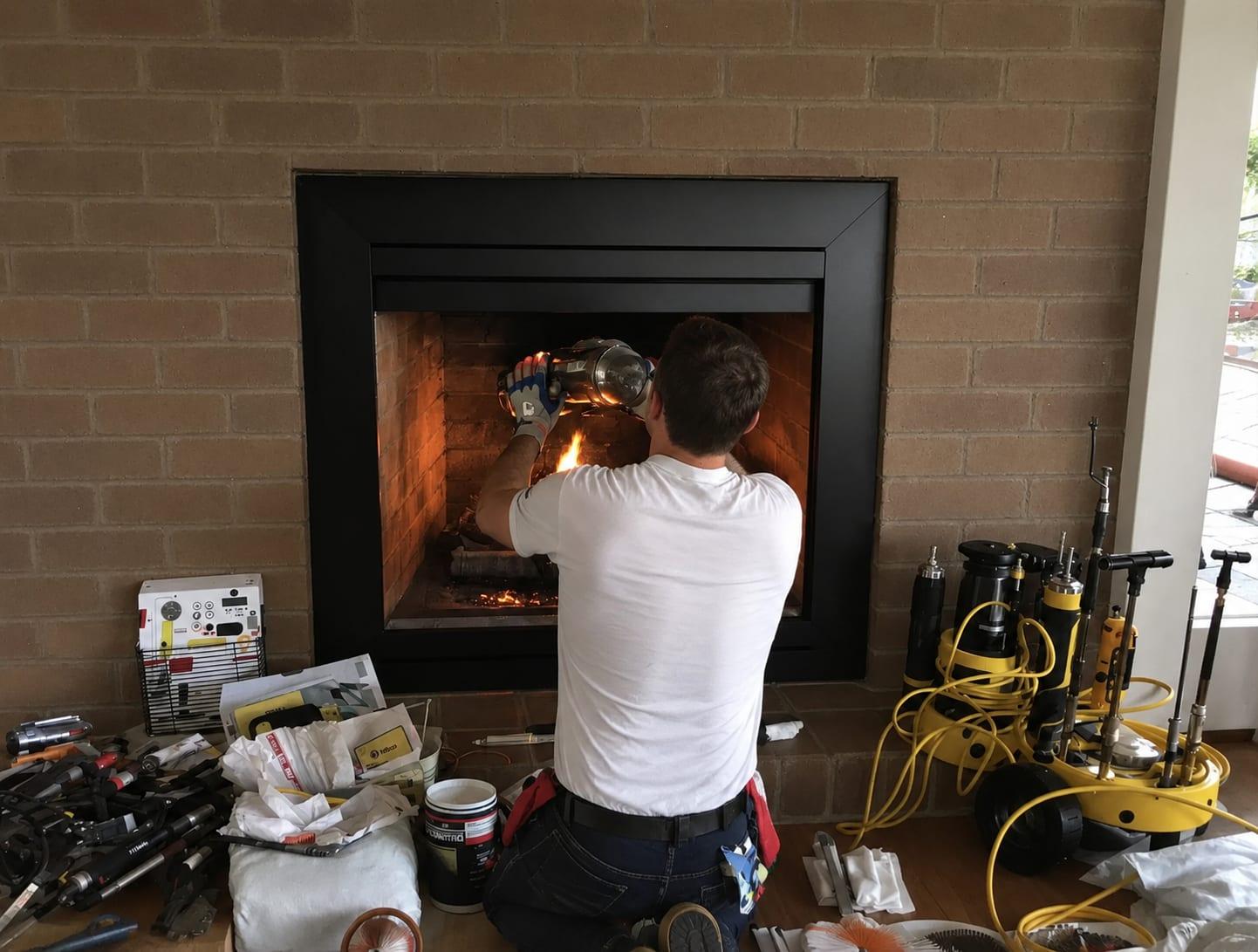
- Look inside the firebox. Firebrick laid in mortar points to masonry. Smooth or patterned panels set in a metal box point to prefab.
- Look for a metal label or data plate. Prefab fireboxes usually carry one, often behind a grille or screen panel near the opening.
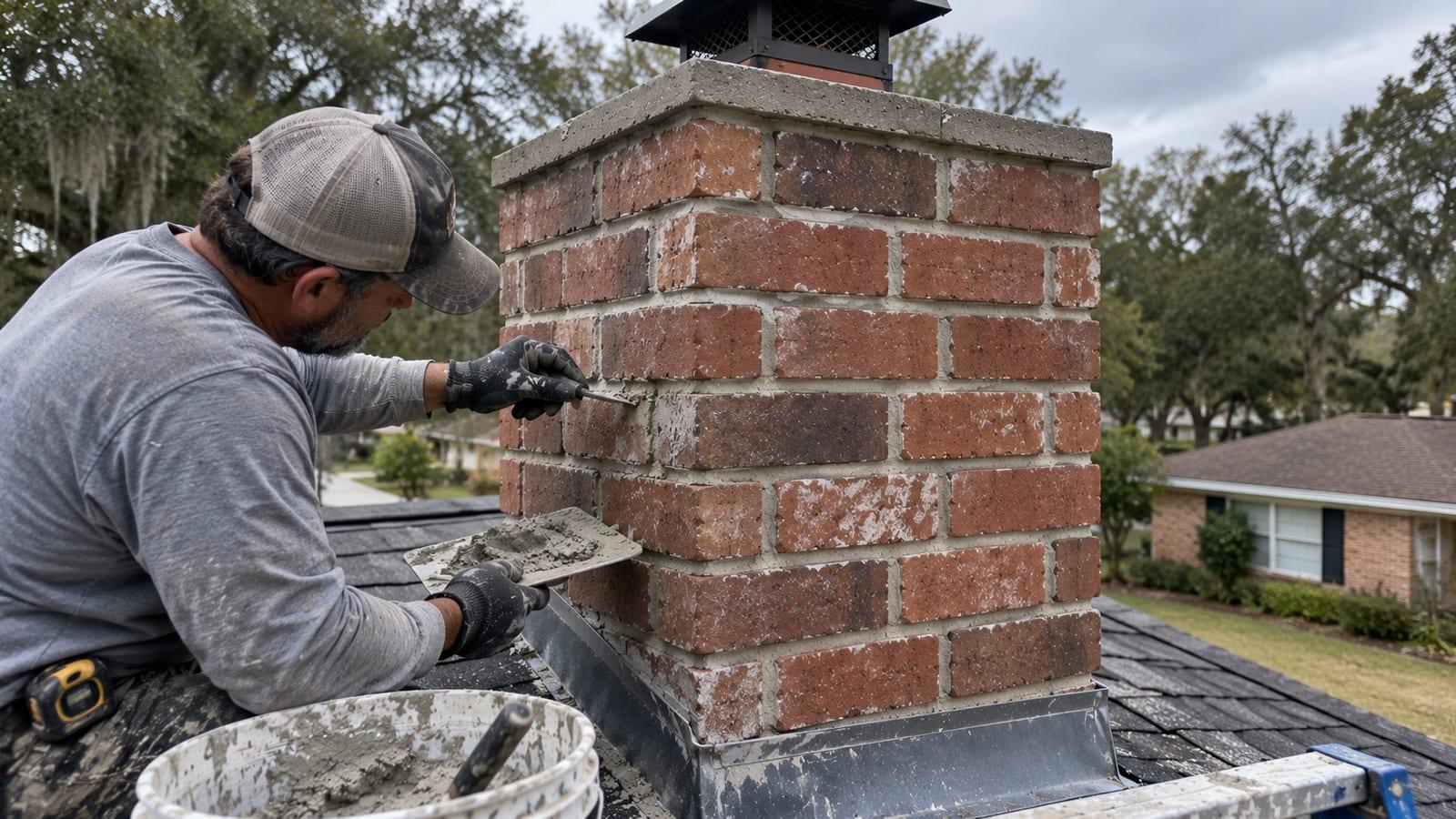
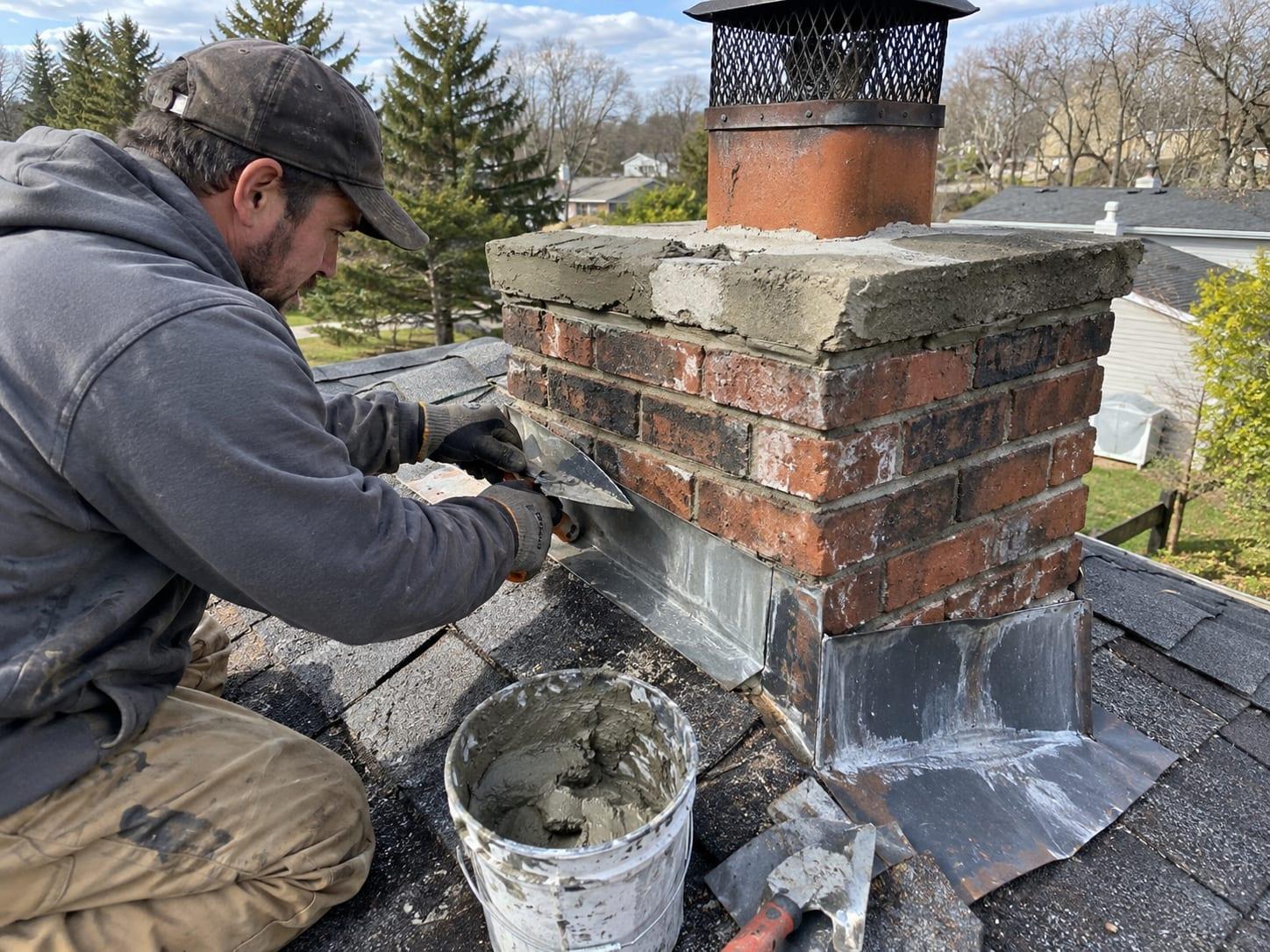
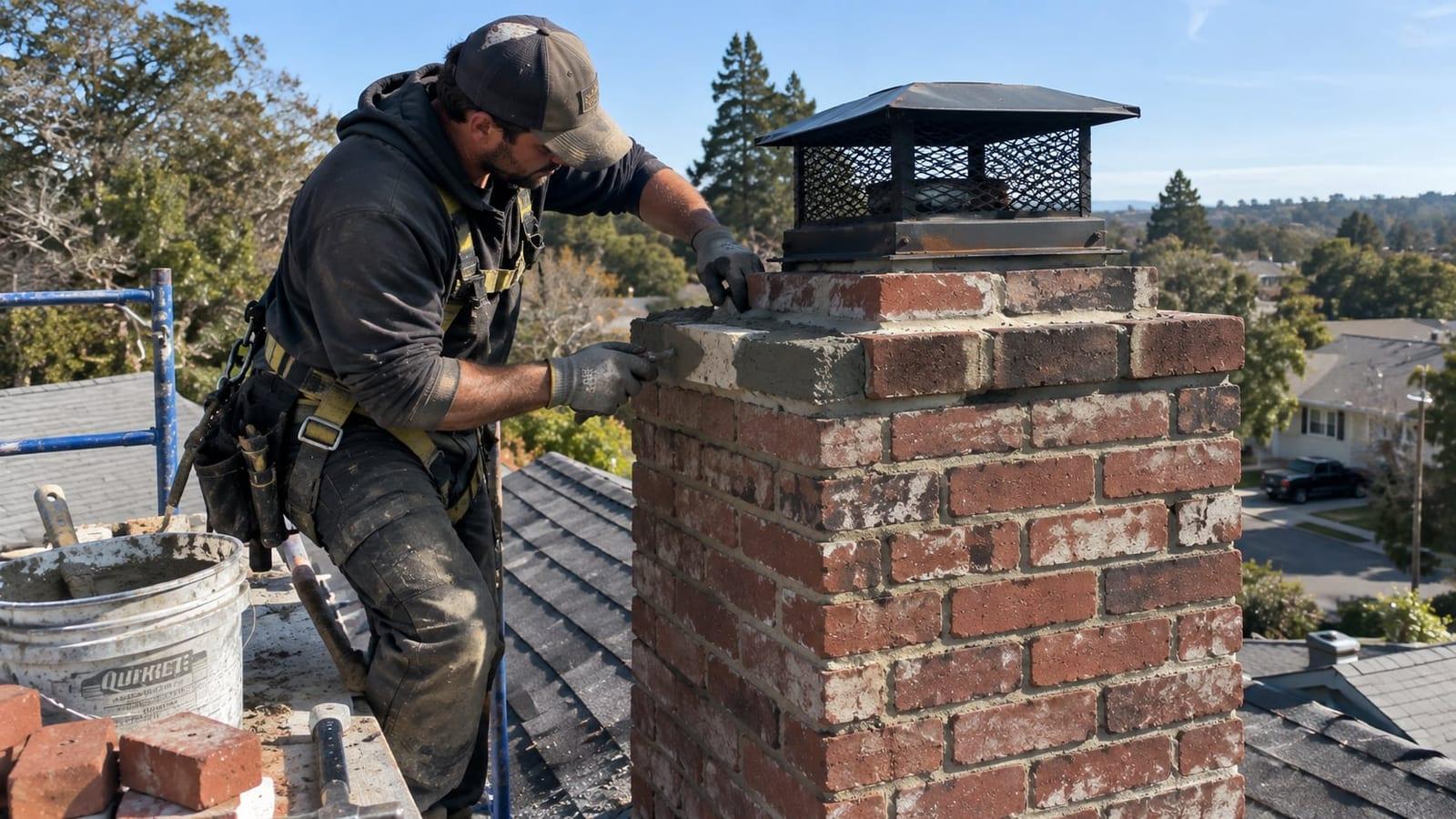
- Look at the top of the chimney from the yard. A flat metal pan with a cap on it is a chase cover, which means prefab. A sloped cement or mortar slab around a clay or metal flue is a masonry crown.
- Check the outside walls. A chimney clad in siding is almost always a prefab chase. Brick on the outside can be either solid masonry or brick veneer over a framed chase, so don't rely on that check alone.
- Look at the hearth. Many prefab units sit nearly flush with the floor on a thin hearth extension. Masonry fireplaces often have a raised or deep hearth built on a solid foundation.
When the checks disagree
Brick veneer, refaced surrounds and inserts can hide what's underneath. If you still can't tell, a chimney inspection with a camera down the flue will confirm the type and the condition of the parts you can't see.
Prefab chimney or brick: how they compare
| Feature | Prefab (factory-built) | Masonry (brick or stone) |
|---|---|---|
| How it's built | Matched metal firebox, pipe and chase cover from one manufacturer | Built on site from brick, block, stone, mortar and a flue liner |
| Weight and foundation | Light enough to frame into a wall without a masonry footing | Heavy, needs its own foundation |
| Firebox lining | Refractory panels inside a steel box | Firebrick set in refractory mortar |
| Top of the chimney | Metal chase cover, with a cap fitted to the pipe | Mortar or cement crown, with a cap over the flue |
| Common trouble spots | Rusted chase covers, cracked refractory panels, warped fireboxes, damaged pipe sections, leaks through the chase | Cracked crowns, worn mortar joints, spalling brick, failed flashing, cracked flue tiles |
| How repairs work | Parts must be compatible with the listed system. Worn-out units are often replaced. | Individual components can usually be repaired or rebuilt |
| Upgrades | Limited to what the manufacturer's listing allows | Can often take an insert, a new liner or a gas conversion |
How it's built
- Prefab (factory-built)
- Matched metal firebox, pipe and chase cover from one manufacturer
- Masonry (brick or stone)
- Built on site from brick, block, stone, mortar and a flue liner
Weight and foundation
- Prefab (factory-built)
- Light enough to frame into a wall without a masonry footing
- Masonry (brick or stone)
- Heavy, needs its own foundation
Firebox lining
- Prefab (factory-built)
- Refractory panels inside a steel box
- Masonry (brick or stone)
- Firebrick set in refractory mortar
Top of the chimney
- Prefab (factory-built)
- Metal chase cover, with a cap fitted to the pipe
- Masonry (brick or stone)
- Mortar or cement crown, with a cap over the flue
Common trouble spots
- Prefab (factory-built)
- Rusted chase covers, cracked refractory panels, warped fireboxes, damaged pipe sections, leaks through the chase
- Masonry (brick or stone)
- Cracked crowns, worn mortar joints, spalling brick, failed flashing, cracked flue tiles
How repairs work
- Prefab (factory-built)
- Parts must be compatible with the listed system. Worn-out units are often replaced.
- Masonry (brick or stone)
- Individual components can usually be repaired or rebuilt
Upgrades
- Prefab (factory-built)
- Limited to what the manufacturer's listing allows
- Masonry (brick or stone)
- Can often take an insert, a new liner or a gas conversion
Why the difference matters for repairs
Prefab systems: parts must match
A factory-built fireplace and chimney were tested together, so the safe clearances to framing depend on every piece being the right one. Mixing in pipe sections, caps or panels that weren't made for that system can undo those clearances. Common prefab repairs include replacing a rusted or sagging chase cover, swapping cracked refractory panels, resealing the chase against water, and replacing damaged pipe sections with compatible ones. When the firebox itself is warped or burned through, replacing the unit is usually the safe route.
Masonry chimneys: weather is the main enemy
Brick and mortar hold up well to heat, but water slowly wears them down. Cracks in the crown, open mortar joints and loose flashing let moisture into the structure, and the damage spreads from there. Most of this is handled through repointing, crown work and other chimney masonry repair. Damage inside the firebox, such as cracked firebrick or eroded joints, falls under firebox and fireplace masonry repair. If you're seeing stains or drips, the ways masonry repairs stop chimney leaks are a good place to start.
Leaks look similar but start in different places
On a masonry chimney, water usually gets in through the crown, the mortar or the flashing. On a prefab chimney, the usual culprits are a rusted or pooling chase cover, gaps around the pipe collar, or the siding and trim on the chase. The ceiling stain may look the same either way, which is why tracking down the source of a chimney leak starts with knowing which type you have.
Caps on masonry and prefab chimneys
Both types need a cap to keep out rain, debris and animals, but the caps aren't interchangeable. On a masonry chimney, the cap typically clamps onto the flue tile or covers the whole crown. On a prefab chimney, the cap has to be the style made for that brand and size of pipe, and it sits on top of the chase cover. A rusted chase cover is a separate part from the cap and is usually replaced along with it. For damaged or missing caps, see how chimney cap repair is handled. The benefits of chimney caps and dampers covers why both parts are worth keeping in good shape.
What helps a homeowner decide
Most people aren't choosing between the two from scratch. They're deciding what to do with the chimney they already have. These questions usually settle it:
- Is the problem a part or the whole system? A cracked panel or a rusted chase cover is a repair. A warped prefab firebox or a masonry chimney that is badly deteriorated from the roofline up is a bigger decision.
- How do you want to use it? If you want to burn wood regularly, switch to gas or add an insert, find out what your existing type allows before you plan around it.
- Is the flue lined and sound? Masonry chimneys rely on an intact liner. Why every chimney needs a liner explains what's at stake when tiles are cracked or missing.
- Are you buying or selling? A real estate chimney inspection confirms the type and condition before the deal closes.
Don't keep using a damaged firebox
Cracked refractory panels in a prefab unit, or missing firebrick in a masonry firebox, can let heat reach materials that weren't meant to get hot. Stop using the fireplace until it has been checked.
Oakwell Chimney & Fireplace handles inspections, prefab chimney and chase repair, prefab fireplace replacement, masonry and crown repair, caps and liners on both types, and estimates are free.