On this page
What prefab chimney installation is
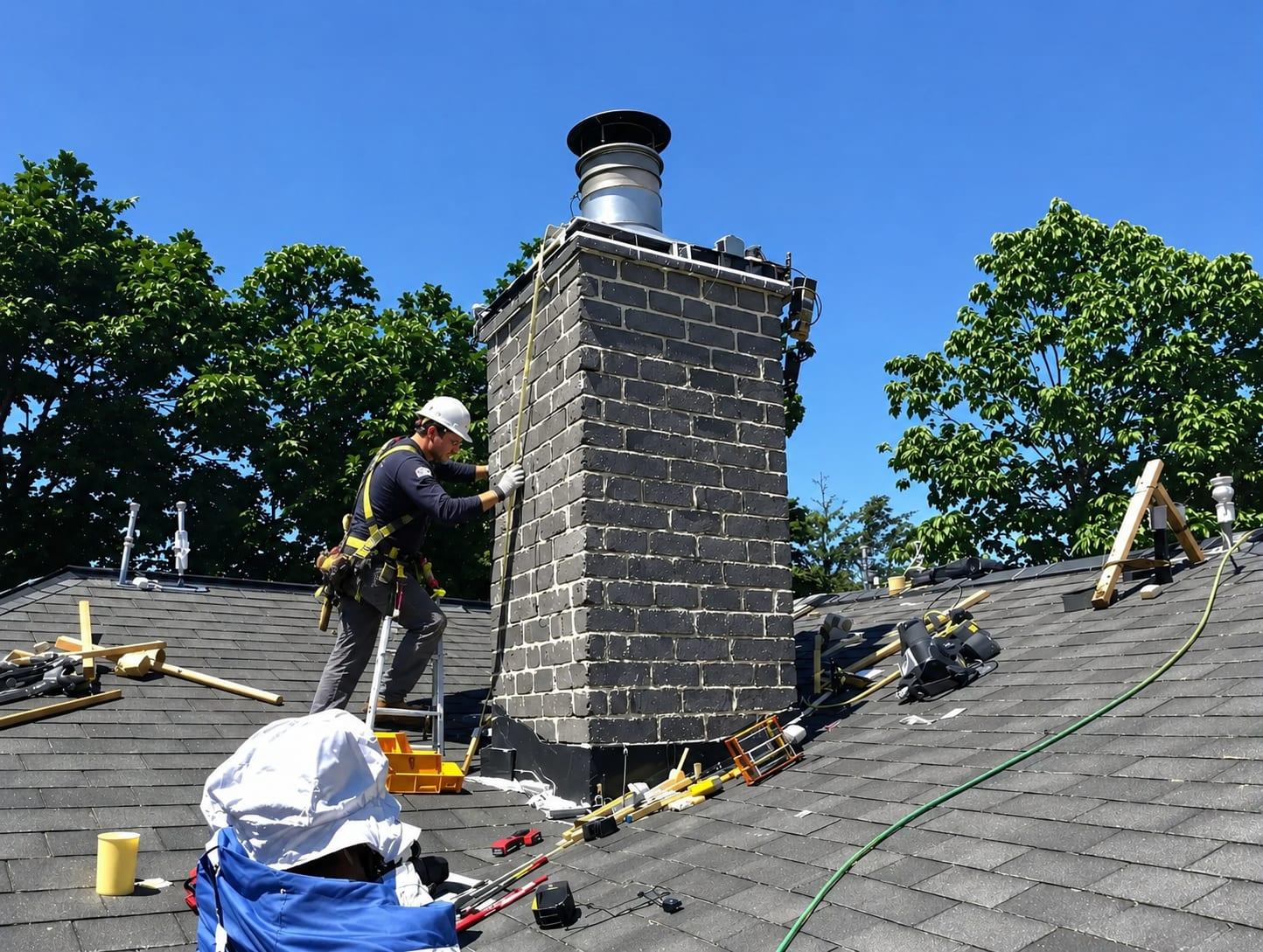
A prefab, or factory-built, chimney is a stack of metal flue sections, double- or triple-walled and either air-cooled or insulated, made to work with a particular fireplace or appliance. The sections lock together from the top of the unit, pass through ceilings and the attic, and exit the roof. Outside, the chimney is often boxed in a framed chase, or it rises as exposed pipe with flashing and a storm collar. Our guide to prefab vs masonry chimneys compares the two building methods.
The parts of a prefab chimney system
- Chimney pipe sections from the same manufacturer as the listed system
- Ceiling supports and firestop spacers that hold the required air gap to wood framing
- An attic insulation shield that keeps insulation off the pipe
- Offset elbows, limited to the angles and number the instructions allow
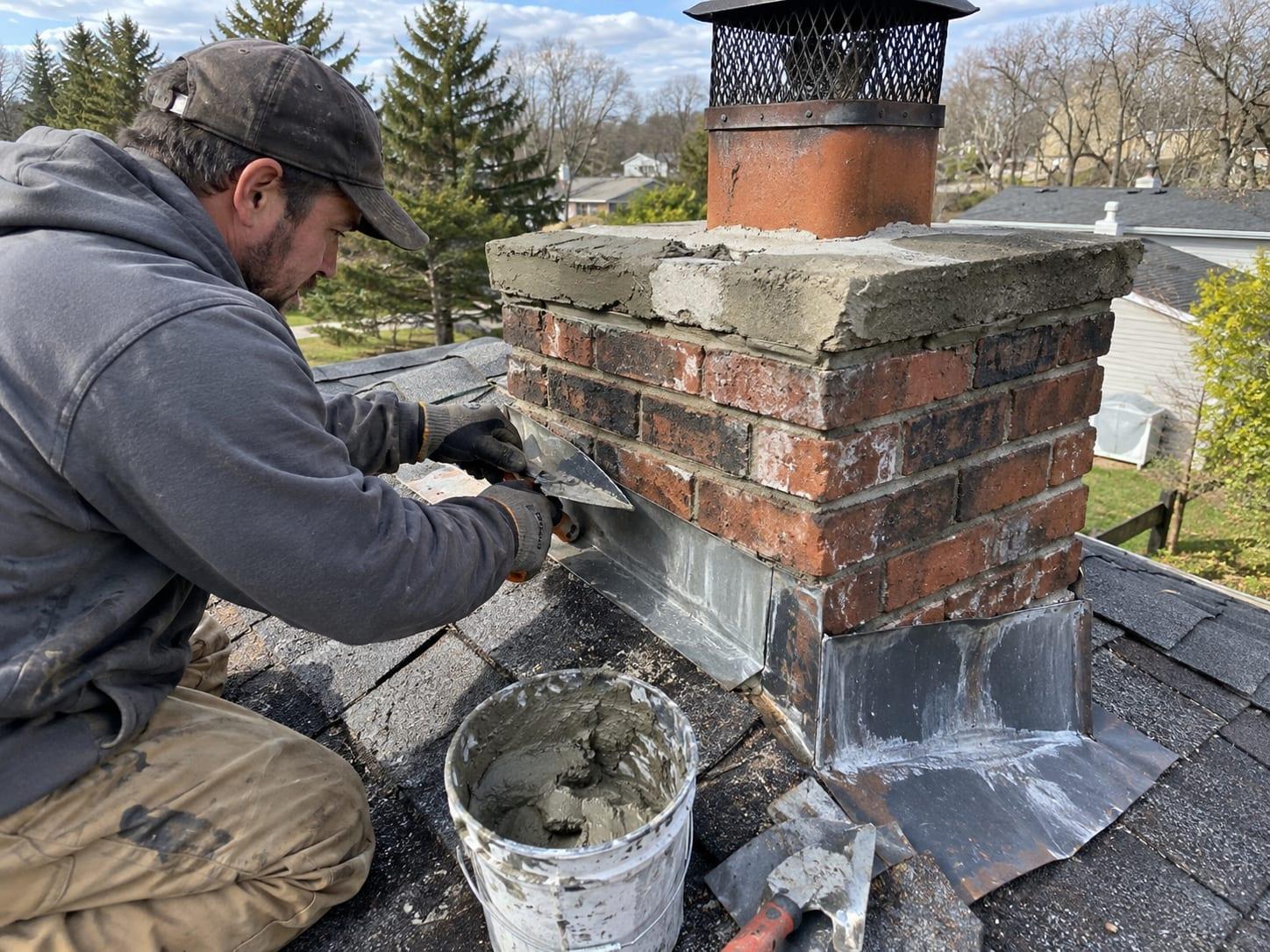
- Roof flashing and a storm collar to keep water out at the roof line
- Chase framing and a chase cover where the chimney runs up an outside wall
- A termination cap that keeps out rain, debris and animals
The cap is part of the listed system, not an afterthought. Our guide to the benefits of chimney caps and dampers explains why. If you need a cap on an existing chimney, that falls under chimney cap installation.
Signs it's time for prefab chimney installation
- Doors or glass that don't seal
- Cracked or crumbling refractory panels
- Smoke spilling from the opening
- Water stains or rust from a leaking chase cover
- Gaps or loose sections in the metal chimney
How to prepare
- Write down what you've noticed — smoke at the door, a hard-to-control fire, noises or smells.
- Let the fireplace go out and cool completely — ideally no fire for a full day before the visit.
- Make sure the roof or the attic access can be reached if the flue needs to be checked from above.
- Have the make and model handy; it's usually on a plate on the back or under the ash lip.
What the technician checks
- Framing and clearances
- Chase and chase cover
- Gas supply or hearth requirements by fuel
- Listed chimney or vent route
- Permit requirements
Carbon monoxide
A stove or insert that vents poorly can push carbon monoxide into the home. If an alarm sounds or anyone feels dizzy or sick near it, get everyone outside and call 911.
When a home needs a prefab chimney installed
- You're adding a new factory-built fireplace, wood stove or insert where there's no chimney.
- You're replacing a prefab fireplace, and the new unit is listed with a different chimney than the old one.
- The existing metal pipe is rusted, dented, separated at a joint or missing its firestops.
- An earlier repair mixed pipe from different brands, which the listing doesn't allow.
- The chimney is too short to draw well. A general rule is at least 3 feet above where it passes through the roof and 2 feet higher than anything within 10 feet.
- You're switching fuels, and the new appliance calls for a different type of venting.
If your home already has a sound brick chimney, the answer is often a liner rather than a new metal chimney. Our guide on why every chimney needs a liner explains the reasons, and our chimney liner installation service handles the work. For a brand-new masonry chimney, our chimney installation work is the place to start.
What the visit involves, step by step
How a prefab chimney goes in
Identify the unit and its listing
We read the fireplace or stove data plate and instructions to find the exact chimney system, diameter and height it requires.
Plan the route
We map the path through each floor, the attic and the roof, keeping offsets within what the listing allows.
Prepare the openings
We frame ceiling and roof openings to the required clearances and set the firestops and attic shield.
Stack the pipe
We lock the sections together, add supports and run the chimney to the height the instructions and roof layout call for.
Seal the roof and finish
We install the flashing, storm collar, chase and chase cover where needed, then the cap, and check the draft with a test fire.
Don't mix brands
Pipe from one manufacturer may look like it fits another's, but the locking bands, air gaps and clearances are not interchangeable. Mixing them voids the system's listing and can put heat where the framing can't take it.
Getting started
We work with all major fireplace and stove brands, including gas units, and take on commercial and property-manager projects as well as single homes. Have the model number from your fireplace or stove handy when you call, and we'll build the estimate around its listed chimney.