On this page
What storm damage chimney inspection is and what it involves
It is a targeted inspection after severe weather, aimed at the parts a storm tends to break or shift: the chimney cap and any spark arrestor or animal screen, the crown on top of a masonry chimney, the flashing where the chimney meets the roof, the brick and mortar, the chase cover on a factory-built chimney, and the flue liner inside. It also checks for blockages, since wind can drive leaves, branches and broken masonry down the flue.
It builds on a standard chimney inspection, with closer attention to impact, movement and water entry. Findings are explained in plain terms so you know what is cosmetic, what can wait and what makes the fireplace unsafe to use.
Getting ready for the visit
- Note the make and model of any insert, stove or gas unit if you have it.
- Make sure the technician can reach the roof or attic access if it's needed.
- Move rugs, photos and anything fragile away from the work area.
- Clear a few feet of space in front of the hearth or appliance.
What we look at
- Cap, screen and spark arrestor
- Damper operation and seal
- Smoke chamber and smoke shelf
- Firebox walls, floor and joints
- Clearances to framing and combustibles, where visible
- Flue liner for cracks, gaps and missing mortar
- Flashing where the chimney meets the roof
Carbon monoxide
A blocked or damaged flue can push carbon monoxide into the home. If an alarm sounds or anyone feels dizzy or sick near the fireplace, get everyone outside and call 911.
Signs your chimney may have storm damage
- The cap is missing, bent or sitting crooked.
- Bricks, mortar chunks or crown pieces are on the roof or in the yard.
- The chimney looks like it is leaning or has pulled away from the house.
- New water stains appear on the ceiling or wall near the chimney.
- Debris, water or a rattling sound comes from the firebox.
- A tree or large limb struck the roof near the chimney.
- Lightning hit the house or something close to it.
Even without any of these signs, a check is worth considering after a strong storm, because a cracked liner or loosened flashing often shows no outward symptom until the next fire or the next heavy rain.
What the visit involves, step by step
How the inspection is done
Exterior survey
The chimney is checked from the ground and the roof for leaning, missing pieces, cap damage and loose flashing.
Top of the chimney
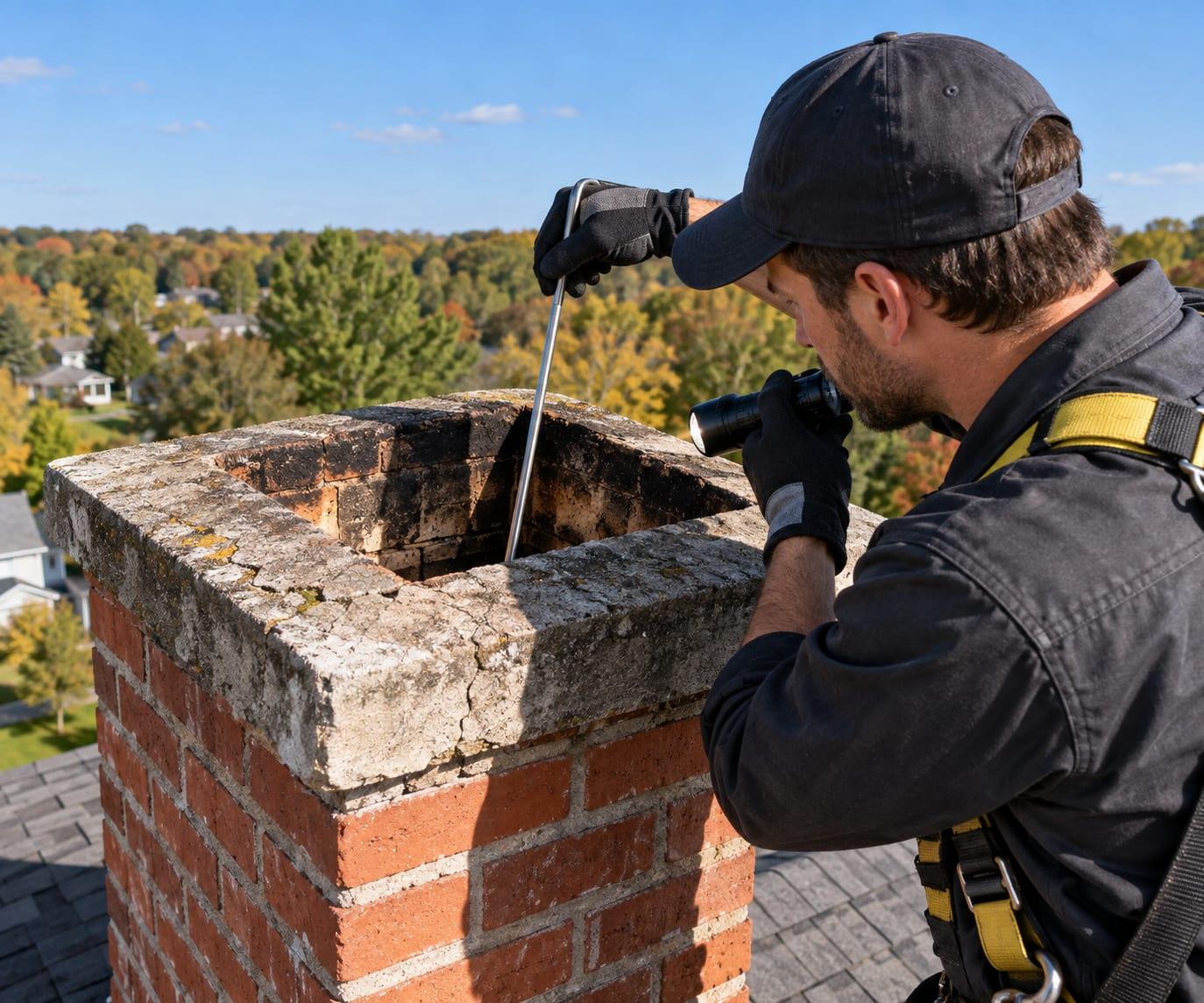
The crown, cap, screen and chase cover are examined for cracks, dents and gaps that let water in.
Firebox and damper
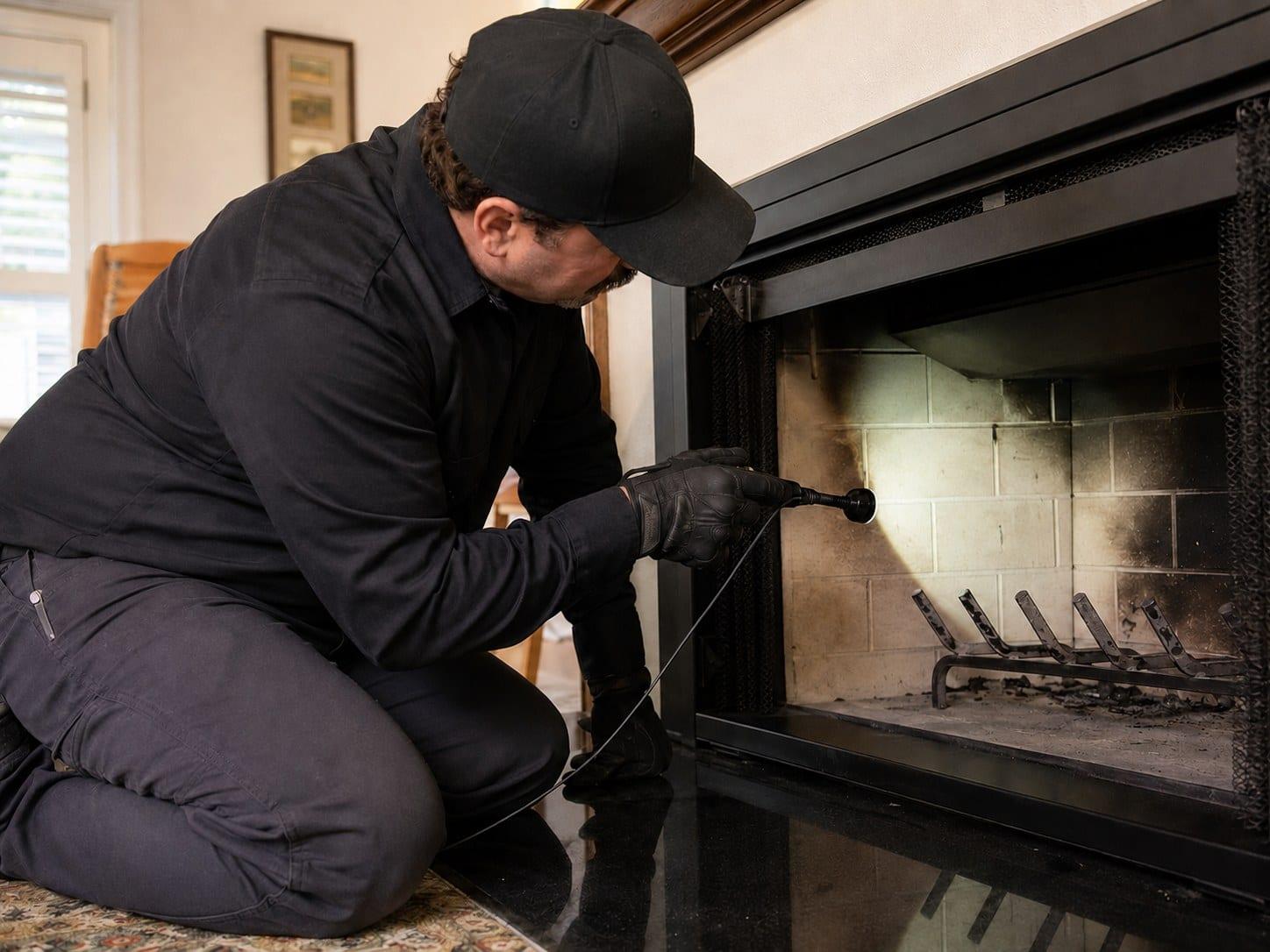
Inside, the technician looks for fallen debris, water and damper damage.
Inside the flue
Where a storm could have cracked or shifted the liner, a camera is run through the flue. That is the core of a chimney inspection level 2.
Findings and next steps
You get a clear explanation of the results and a free estimate for any repairs. If damage appears to run behind walls or framing, a Level 3 chimney inspection may be recommended to reach it.
Safety and maintenance context
Don't light a fire, or run a gas fireplace or gas appliance vented through the chimney, until it has been checked. A blocked or cracked flue can push smoke and carbon monoxide into the house, and loose masonry can fall. If bricks are falling or it looks like it could come down, keep everyone away from the area below it and call 911. Gas units bring their own concerns, which our guide to gas fireplace safety inspections walks through.
Many storm repairs come down to keeping water out: a new cap, a repaired crown or resealed flashing. Masonry that has taken a beating can also benefit from a water-repellent treatment afterward; the benefits of chimney waterproofing explain why. For routine upkeep between storms, our chimney cleaning and safety guide covers the basics.
Booking a storm damage chimney inspection
Emergency calls are accepted, which matters when a chimney is leaning, leaking or partly collapsed. Same-day visits are available where the schedule allows, and estimates for repair work are free. Call or request an estimate to get on the schedule.