On this page
What firebox repair is and what it involves
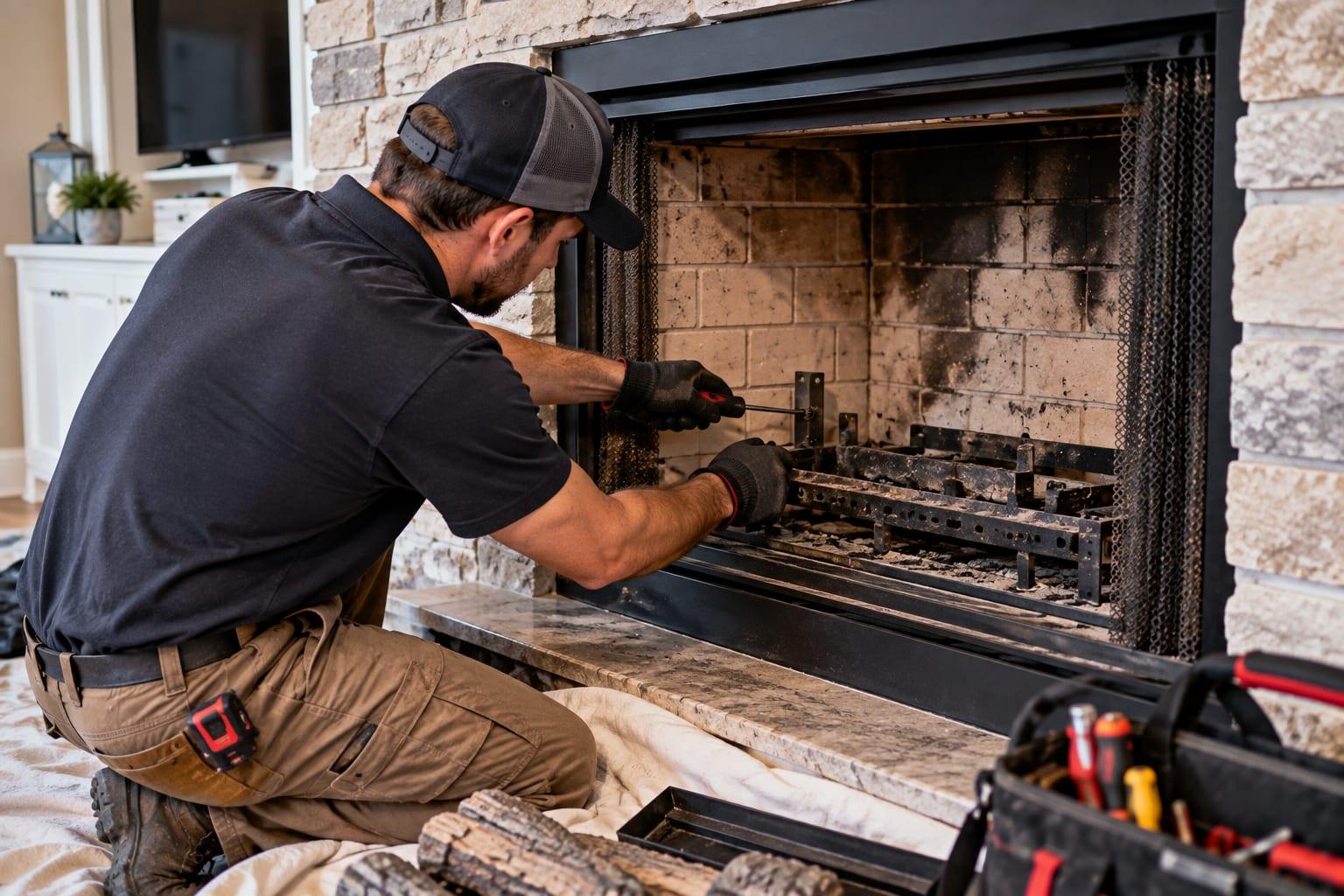
The firebox is the chamber where the fire actually burns. In a masonry fireplace, it's lined with firebrick laid in refractory mortar, a heat-resistant material that ordinary mortar can't stand in for. In a factory-built fireplace, molded refractory panels line it instead. Firebox repair can mean repointing worn joints, replacing cracked or flaking bricks, or replacing panels. It's one part of our wider fireplace repair service.
How to prepare
- Clear the hearth and nearby furniture.
- Clean out loose ash if you can do it safely when cold.
- Let the fireplace cool completely — no fire the day before.
Have cracks checked before more fires
Hairline cracks in firebrick are common, but any crack should be looked at before you keep burning. Missing mortar, loose brick or a crack you can see through means no fires until it's repaired.
Checked on every visit
- Damper above the firebox
- Mortar joints between firebricks
- Back and side walls for movement
- Refractory panels on factory-built units
- Cracked, loose or spalled firebrick
- Hearth and smoke chamber transitions
Signs your firebox needs repair
Look for these with the fireplace cold
- Mortar joints that are recessed, crumbling or sandy to the touch.
- Bricks with cracks wider than a hairline, or bricks that are flaking or spalling.
- Loose or missing firebricks.
- Gaps between the firebox and the hearth or surround.
- Refractory panels cracked all the way through, crumbling, or showing metal behind them.
- Smoke or soot stains escaping at the edges of the opening.
Small hairline cracks in refractory panels are common, and many manufacturers' manuals say how wide a crack can be before the panel needs replacing. Have any firebox crack checked before you keep burning. Open joints and missing brick are more serious, because they let heat reach framing and other combustible materials.
Masonry firebrick vs. refractory panels
| Feature | Masonry fireplace | Factory-built fireplace |
|---|---|---|
| Lining | Firebrick set in refractory mortar | Molded refractory panels |
| Typical wear | Eroded joints, spalled or cracked brick | Cracked, crumbling or shifted panels |
| Usual fix | Repoint joints, replace individual bricks | Replace panels made for that model |
Lining
- Masonry fireplace
- Firebrick set in refractory mortar
- Factory-built fireplace
- Molded refractory panels
Typical wear
- Masonry fireplace
- Eroded joints, spalled or cracked brick
- Factory-built fireplace
- Cracked, crumbling or shifted panels
Usual fix
- Masonry fireplace
- Repoint joints, replace individual bricks
- Factory-built fireplace
- Replace panels made for that model
If a factory-built unit is badly worn throughout, replacing it through our fireplace installation service can make more sense than replacing panels.
What the visit involves, step by step
A typical firebox repair
Inspect cold
Check every wall, the floor and the joints, and tap for loose brick.
Judge the extent
Decide whether the damage stops at the lining or continues into the smoke chamber or chimney.
Explain the options
You hear what needs repair now and what can wait before any work starts.
Protect the room
Cover the hearth and floor around the work area.
Remove and rebuild
Grind out failed mortar, take out damaged brick or panels, and set the new material.
Cure and first fires
Get guidance on curing time and starting with small fires, as the mortar product calls for.
Booking firebox repair
Same-day visits are available where the schedule allows, though they're never guaranteed, and emergency calls are accepted. Commercial and property-manager fireplaces are covered too. If the firebox is sound but the face looks dated, the benefits of fireplace refacing may interest you as well. Call or request an estimate to get started.