On this page
What pellet fireplace installation involves
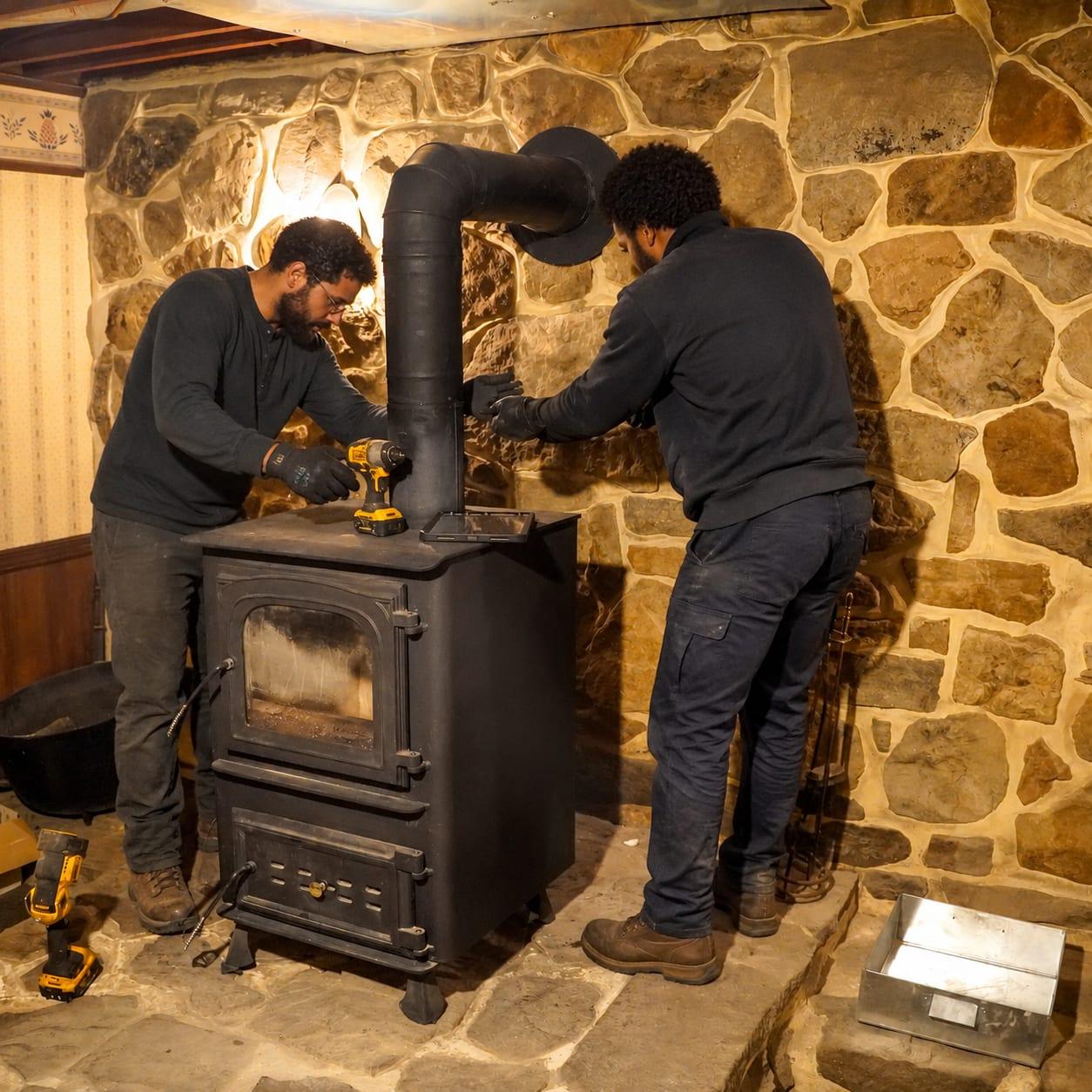
Pellet fireplace installation comes in two main forms. An insert slides into an existing masonry fireplace and vents through a liner that runs up the chimney. A freestanding unit sits on a protective hearth pad and vents through a wall or roof with pellet vent pipe. Both need a standard electrical outlet nearby, because the auger, blowers and controls run on power. The repair side of the service covers units that already exist: ignition failures, feed problems, worn blowers and venting issues. For the bigger picture, the general fireplace installation process explains the planning stage.
Parts that make a pellet unit work
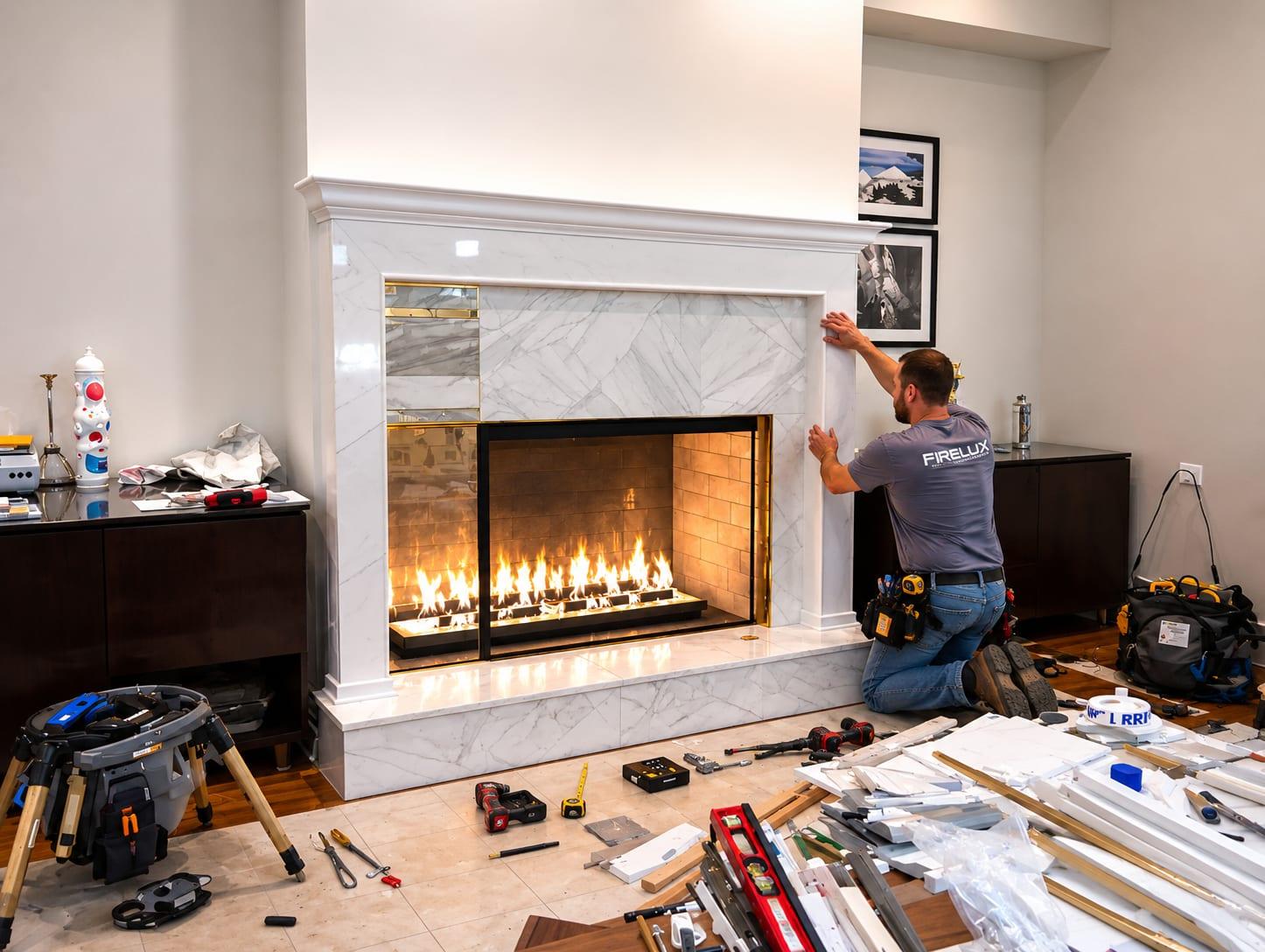
- Hopper: stores the pellets, often enough for many hours of burning.
- Auger: a motor-driven screw that feeds pellets into the burn pot.
- Burn pot and igniter: where the pellets light and burn.
- Combustion blower: pulls air through the fire and pushes exhaust out the vent.
- Convection blower: moves heated air into the room.
- Control board and sensors: run the feed rate, temperature and safety shutdowns.
Checked on every visit
- Liner connection if an existing chimney is used
- Clearances and floor protection
- Permit requirements
- Outlet and power supply
- Vent route and termination location
Exhaust in the room
If you smell exhaust or smoke from the stove or vent, shut the stove down. If a carbon monoxide alarm sounds or anyone feels unwell, get everyone outside and call 911.
When to book pellet fireplace installation and repair
- Grinding, squealing or rattling from a fan or the auger
- Lazy, dark or sooty flames
- Ash or a smoky smell around the vent pipe
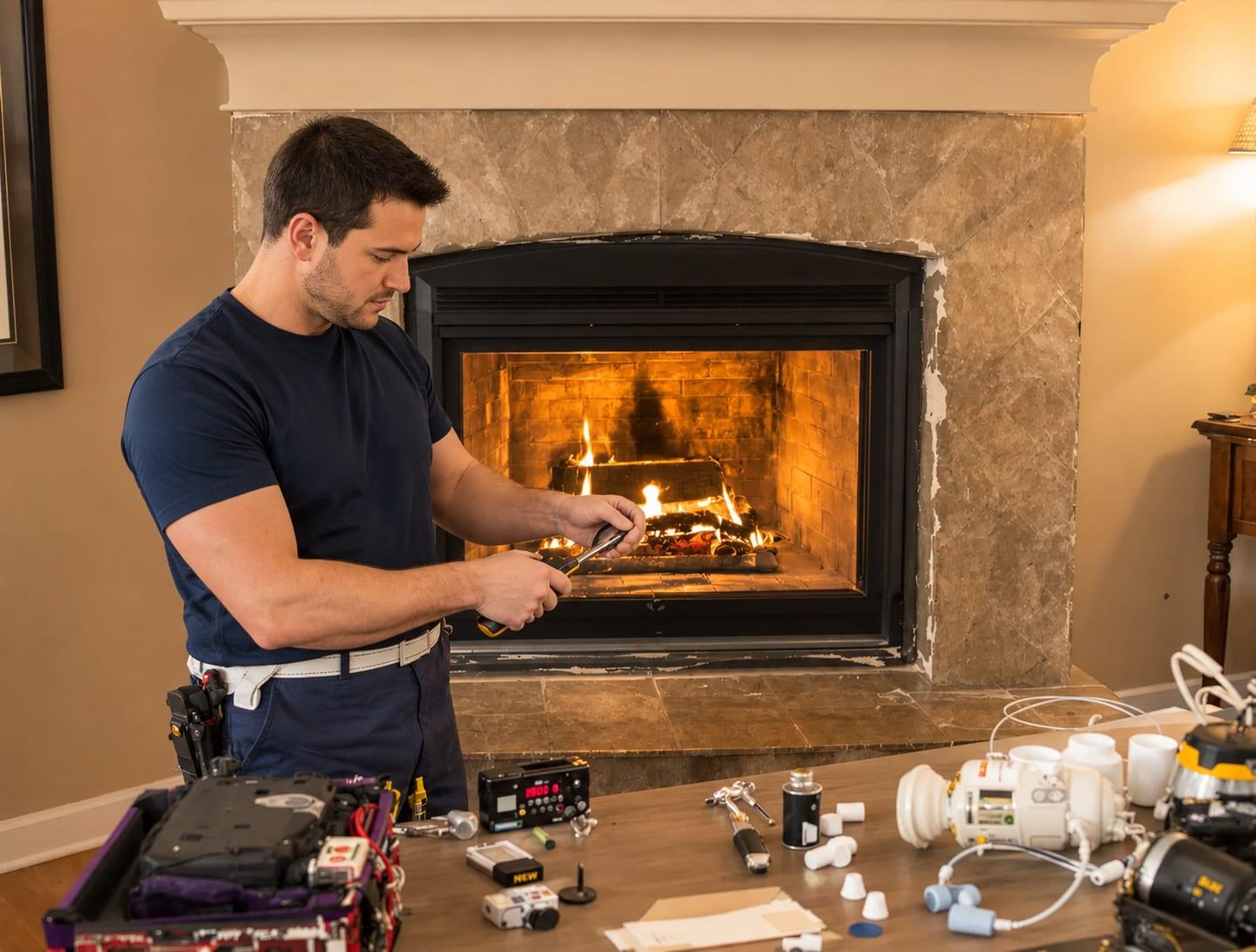
- The stove won't light or keeps shutting down
Getting ready for the visit
- Let the stove burn out, then switch it off and unplug it once it is cold.
- Clear space around the stove and the outside vent termination.
- Run the hopper low if you can, so the feed system can be reached.
- Note any error codes and when the problem happens.
When pellet installation or repair is the right call
- Your open fireplace sends most of its heat up the chimney, and you want a fire that actually warms the room.
- You like burning wood but are tired of hauling, stacking and drying it.
- An existing pellet unit won't ignite, shows error codes or shuts down mid-burn.
- The auger jams, pellets pile up unburned, or you smell smoke near the unit.
If heat isn't the goal and you only want the look of a fire, installing an electric fireplace or a decorative fireplace may suit you better. Our guide to choosing a type of fireplace compares all the fuels.
What the visit involves, step by step
Installing or repairing a pellet unit
Look at the space or the problem
For a new unit, we review the room, the existing fireplace and the venting route. For a repair, we start with what the unit is doing.
Check the venting and power
We confirm a vent path that meets the manufacturer's requirements and an outlet within reach.
Recommend and estimate
You get options sized to the space, or a repair plan, with a free estimate.
Install or repair
We set the unit, install the liner or vent pipe and hearth protection, or replace the failing parts.
Test burn and walkthrough
We run the unit through startup and shutdown and show you the routine cleaning.
Most pellet units need electricity
Without power, the auger and blowers stop, so the fire goes out unless the unit has a battery backup. Our tips on enhancing fireplace safety cover safe habits around any heating appliance.
Getting started
We work on all major pellet brands. Request an estimate for a new installation or call about a unit that isn't running right.