On this page
What refractory panel replacement is
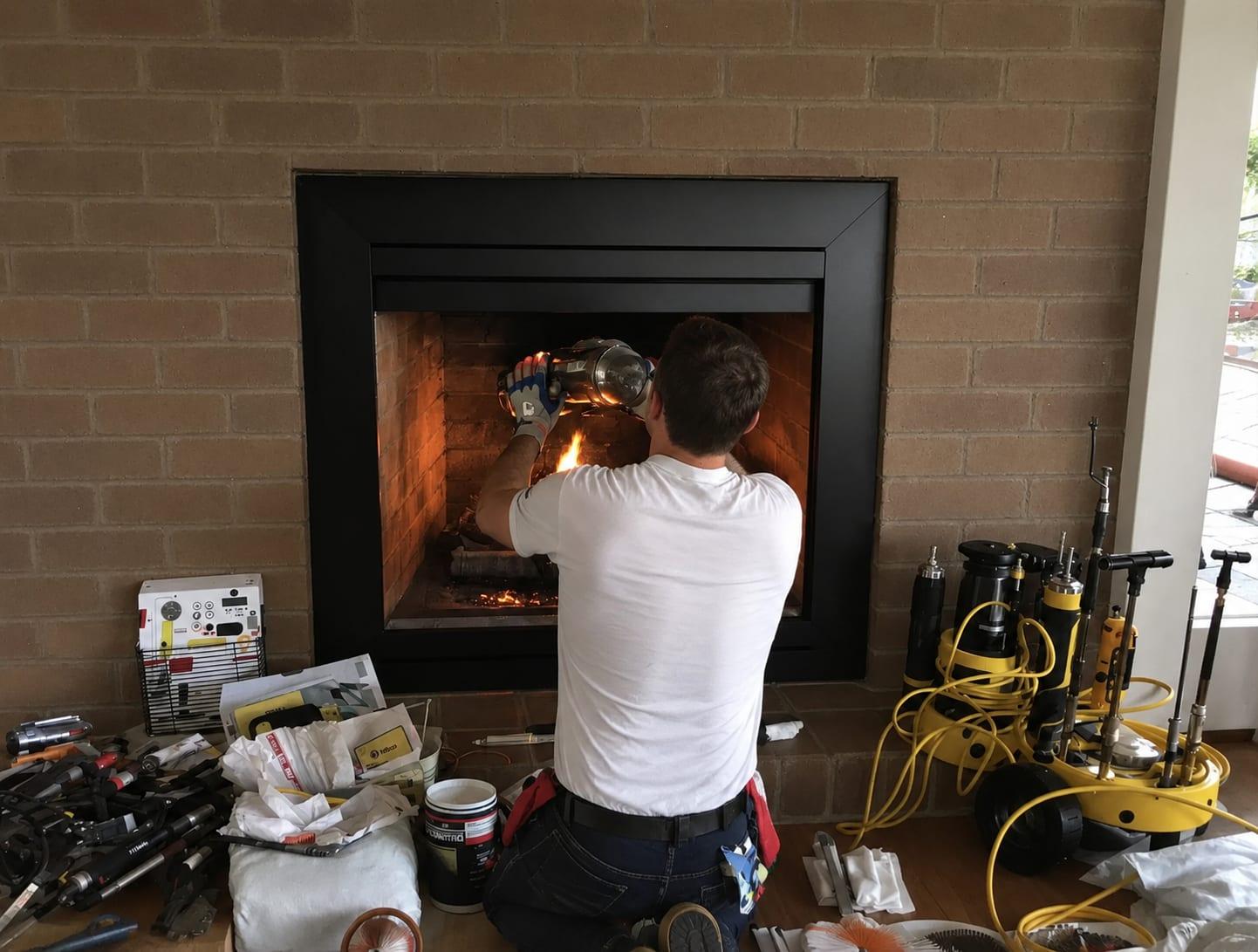
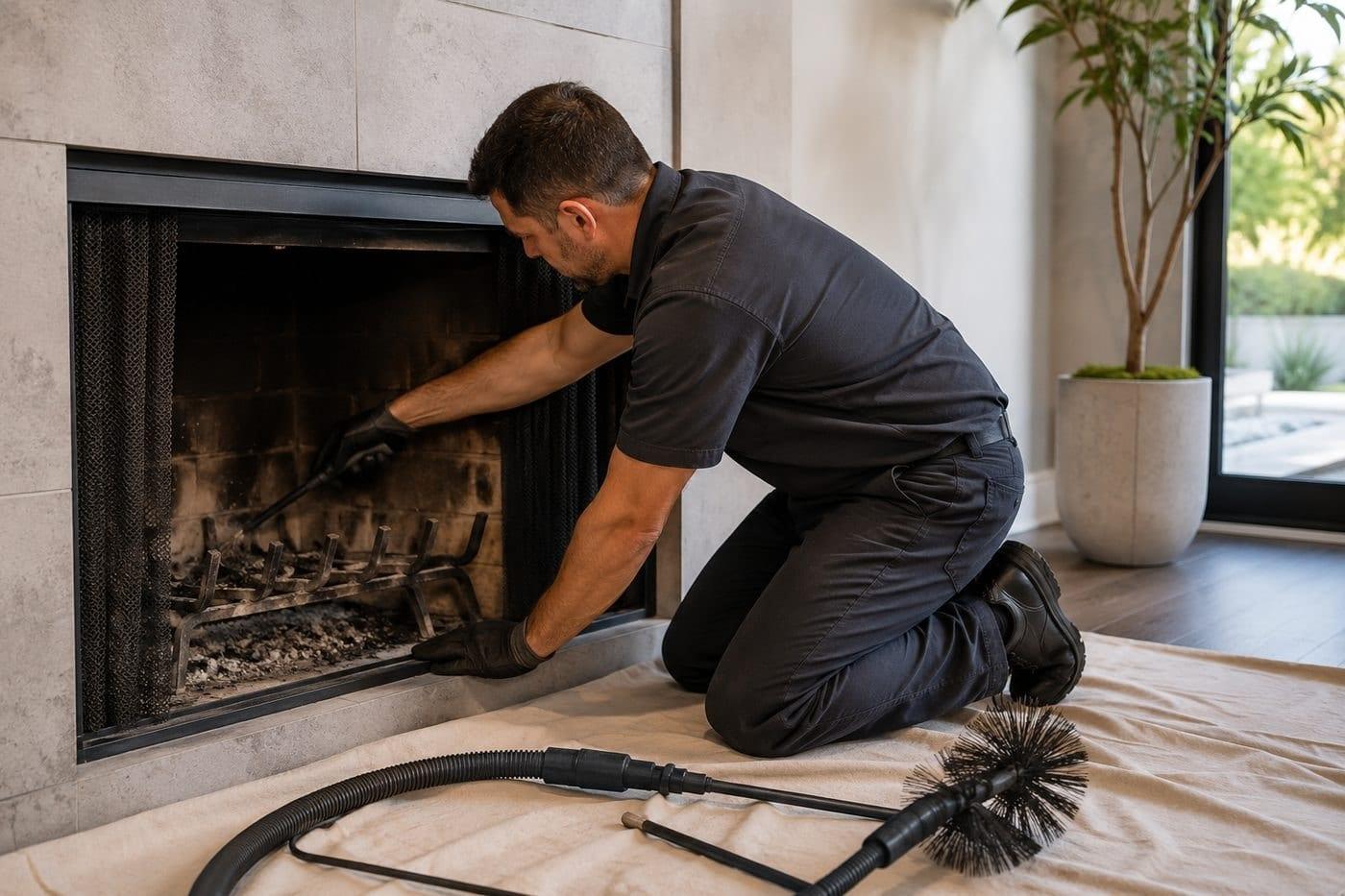
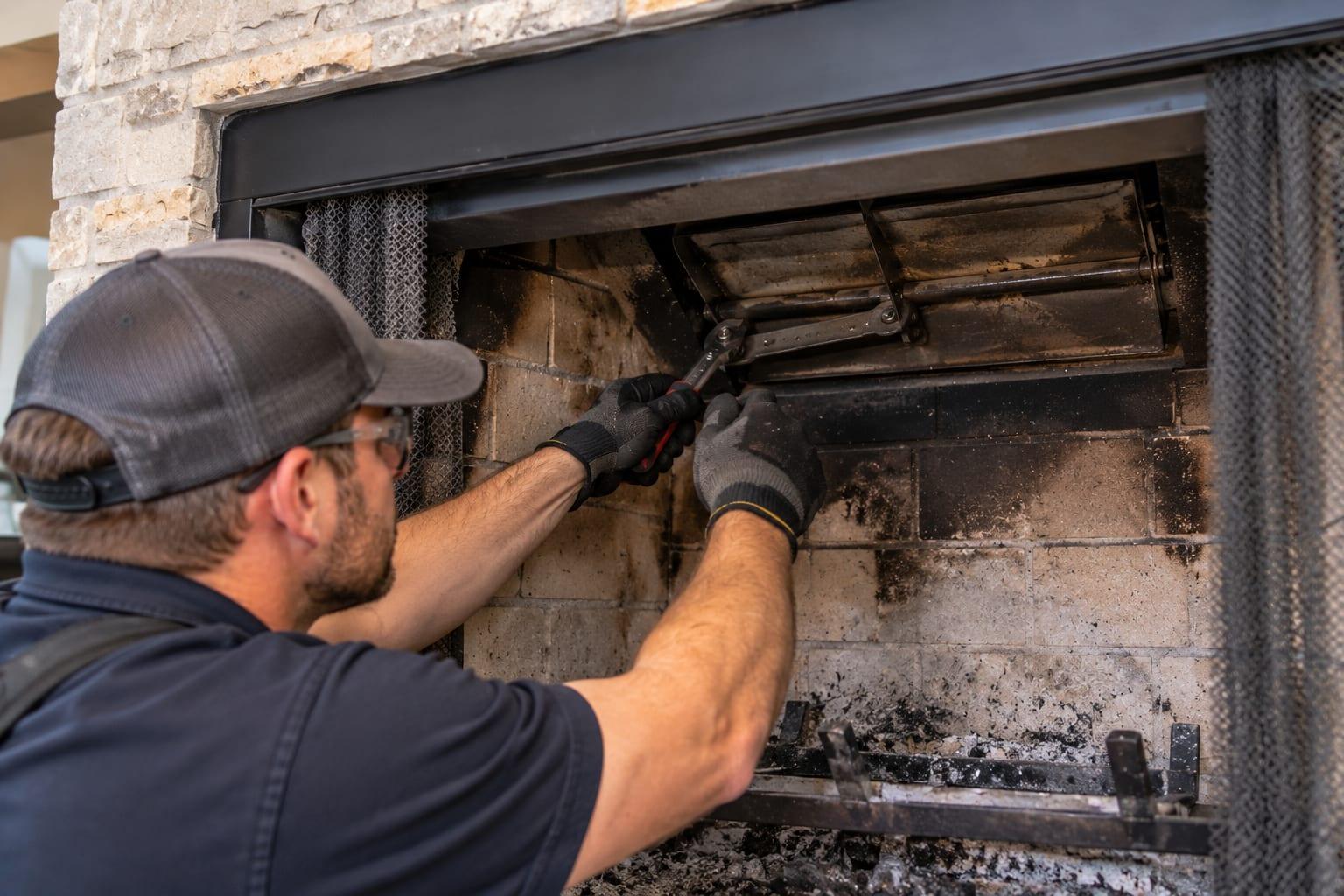
Prefab wood-burning fireplaces, many gas fireplaces and most inserts have a firebox lined with refractory panels. These are heat-resistant boards, often molded and scored to look like brick, that sit between the flames and the steel firebox. They're made for a specific model, held in by brackets or clips, and designed to wear out eventually. Refractory panel replacement means taking out the damaged set and installing panels that fit that unit.
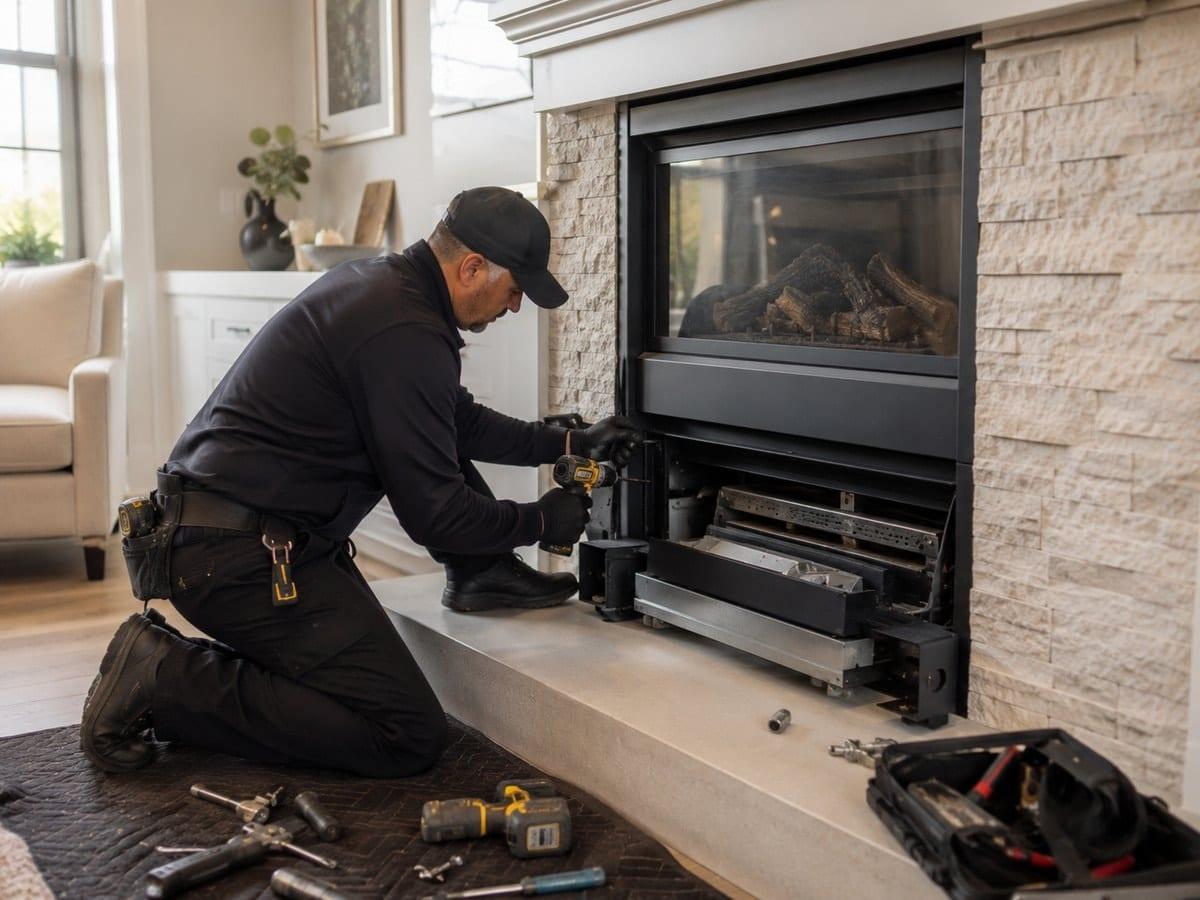
Masonry fireplaces built on site use firebrick and mortar instead of panels, and damage there is handled as firebox repair. If you aren't sure which kind of fireplace you have, our guide to type of fireplace explains how to tell them apart.
What gets checked
- Refractory panels on factory-built units
- Hearth and smoke chamber transitions
- Back and side walls for movement
- Damper above the firebox
Before the technician arrives
- Clear the hearth and nearby furniture.
- Clean out loose ash if you can do it safely when cold.
- Let the fireplace cool completely — no fire the day before.
Signs your panels need replacing
- Cracks wide enough to see the metal behind them
- Chunks missing, especially along the bottom panel or the corners
- Panels that crumble or leave sandy grit on the firebox floor
- Panels leaning forward, loose in their brackets or separated at the seams
- Discoloration or warping on the metal visible behind a gap
| Feature | Usually fine to monitor | Time to replace |
|---|---|---|
| Cracks | Fine hairline surface cracks | Cracks that go all the way through or keep widening |
| Panel surface | Darkening or staining from use | Flaking, crumbling or thinning areas |
| Fit | Panels seated snugly in their brackets | Panels loose, tilted or with gaps showing metal |
Cracks
- Usually fine to monitor
- Fine hairline surface cracks
- Time to replace
- Cracks that go all the way through or keep widening
Panel surface
- Usually fine to monitor
- Darkening or staining from use
- Time to replace
- Flaking, crumbling or thinning areas
Fit
- Usually fine to monitor
- Panels seated snugly in their brackets
- Time to replace
- Panels loose, tilted or with gaps showing metal
Many manufacturers say hairline cracks are normal, and your owner's manual will tell you what's acceptable for your model. Have any firebox crack checked before you keep burning. If you can see steel through the panel, stop using the fireplace until it's fixed.
What the visit involves, step by step
Replacing refractory panels
Identify the model
We find the rating plate to confirm the make and model so the panels fit.
Make it safe
The firebox must be cold, and on gas units the gas is shut off before anything is removed.
Clear the firebox
Logs, grate, screen or glass are removed. If the glass or door has its own problems, they can be handled through fireplace glass replacement and door repair.
Remove and inspect
The old panels come out, and we check the firebox steel behind them for heat damage.
Fit the new set
New panels go in, in the right order, secured with their brackets or clips.
Reassemble and test
Everything is put back, logs are placed correctly on gas units, and the fireplace is tested.
Safety and maintenance context
Panels last longer when you burn moderate fires, use only the grate the manufacturer specifies, and avoid throwing logs against the back wall. Steel that has been exposed without panel protection may also need work, which falls under fireplace repair. On older units where panels have been discontinued, old fireplace repair and replacement may be the more practical route. If the outside of the fireplace looks dated too, the benefits of fireplace refacing are worth reading.
Booking refractory panel replacement
Same-day visits are available when the schedule allows, though they're never guaranteed, and emergency calls are accepted. We work on all major fireplace brands, including gas units, and take commercial and property-manager jobs. Call or request an estimate, and have the model number handy if you can find it.