On this page
What smoke chamber repair is and what it involves
The smoke chamber is the transition between the wide firebox opening and the narrow flue. In many older masonry fireplaces it was built by stepping bricks inward, a method called corbeling, which leaves a staircase of ledges. Those ledges catch soot and creosote and disturb the flow of rising smoke. Over years of heating and cooling, mortar joints also crack and bricks loosen.
Smoke chamber repair usually means one or more of the following: sealing cracks and open joints, resetting or replacing loose brick, and parging, which is coating the chamber walls with a heat-resistant mortar to create a smooth, sloped surface. The goal is a tight, even chamber that sends smoke straight up and keeps heat away from the framing around the chimney.
Only masonry fireplaces have this kind of chamber. Factory-built units handle the same job with metal components, which is one of the differences explained in our guide to the type of fireplace you may have.
Carbon monoxide
A blocked or damaged flue can push carbon monoxide into the home. If an alarm sounds or anyone feels dizzy or sick near the fireplace, get everyone outside and call 911.
What gets checked
- Smoke chamber and smoke shelf
- Doors, glass and gaskets
- Mortar joints inside the firebox
- Draft from the opening
- Firebrick or refractory panels
- Hearth and surround
- Damper operation
How to prepare
- Keep pets in another room while the work area is open.
- Let the fireplace or stove cool completely — ideally no fire for 24 hours before the visit.
- Write down what you've noticed and when it happens — smells, smoke, sounds or stains.
- Clear a few feet of space in front of the hearth or appliance.
Signs the smoke chamber needs attention
- Smoke spills into the room even with the damper fully open and a clean flue.
- Pieces of mortar or brick land on the damper or the smoke shelf behind it.
- A flashlight shows stair-stepped brick crusted with heavy, shiny creosote.
- A sweep or inspection notes gaps, cracks or missing mortar above the damper.
- A strong smoky odor lingers long after fires, especially in humid weather.
Some of these overlap with other fireplace problems, such as a damaged damper or firebox. If you aren't sure where the trouble starts, our broader fireplace repair service covers the whole unit, and the inspection will show which part actually needs the work.
What the visit involves, step by step
How a smoke chamber repair visit runs
Look inside
The technician checks the chamber from the firebox and the flue, using a light or camera to see the brick surfaces, joints and smoke shelf.
Clean first
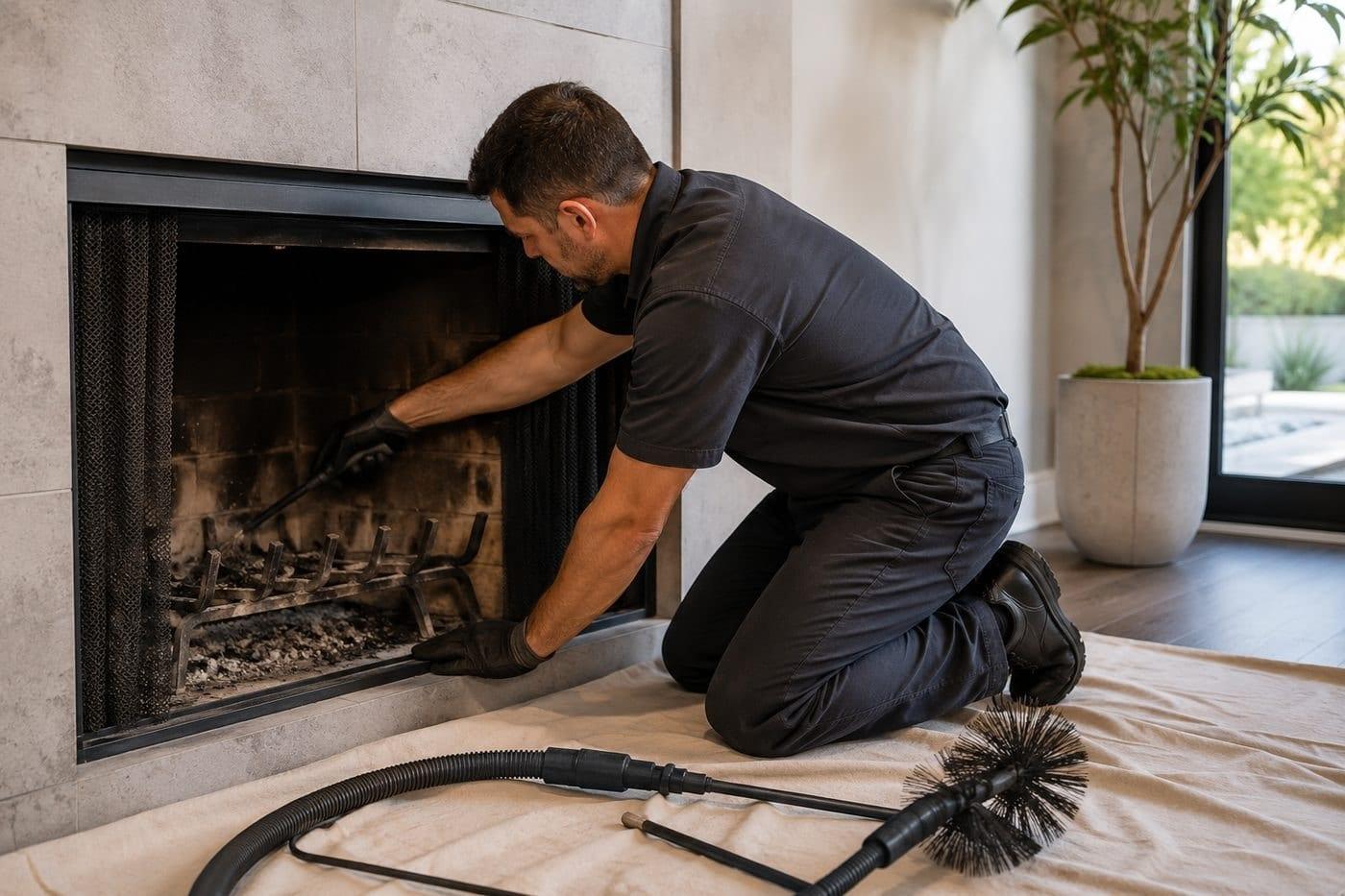
Soot and creosote are removed so the masonry can be judged and so new material bonds properly. This is the same groundwork as a standard fireplace cleaning.
Explain and estimate
You hear what was found, what the repair would involve and get a free estimate before any work starts.
Repair
Cracks are sealed, loose brick is reset and the walls are parged smooth where that is the right fix.
Cure and advise
You are told how long the new mortar needs before the first fire and what to watch for afterward.
Safety and maintenance context
A cracked chamber can let heat and hot gases reach wood framing beside the chimney, and the ledges of a corbeled chamber hold creosote, which is the fuel behind chimney fires. Keeping the chamber smooth, sealed and swept each season removes both risks.
If you are also planning a new look for the fireplace, keep in mind that refacing changes only the visible surround; the chamber stays hidden behind it. The benefits of fireplace refacing are real, but they don't replace sound masonry inside.
Booking smoke chamber repair
Estimates are free, and same-day visits are available where the schedule allows. If smoke is filling the room or debris is falling into the firebox, emergency calls are accepted. Homeowners, landlords and property managers across Greater Atlanta can call or request an estimate to get started.