On this page
What chimney tuckpointing is and what it involves
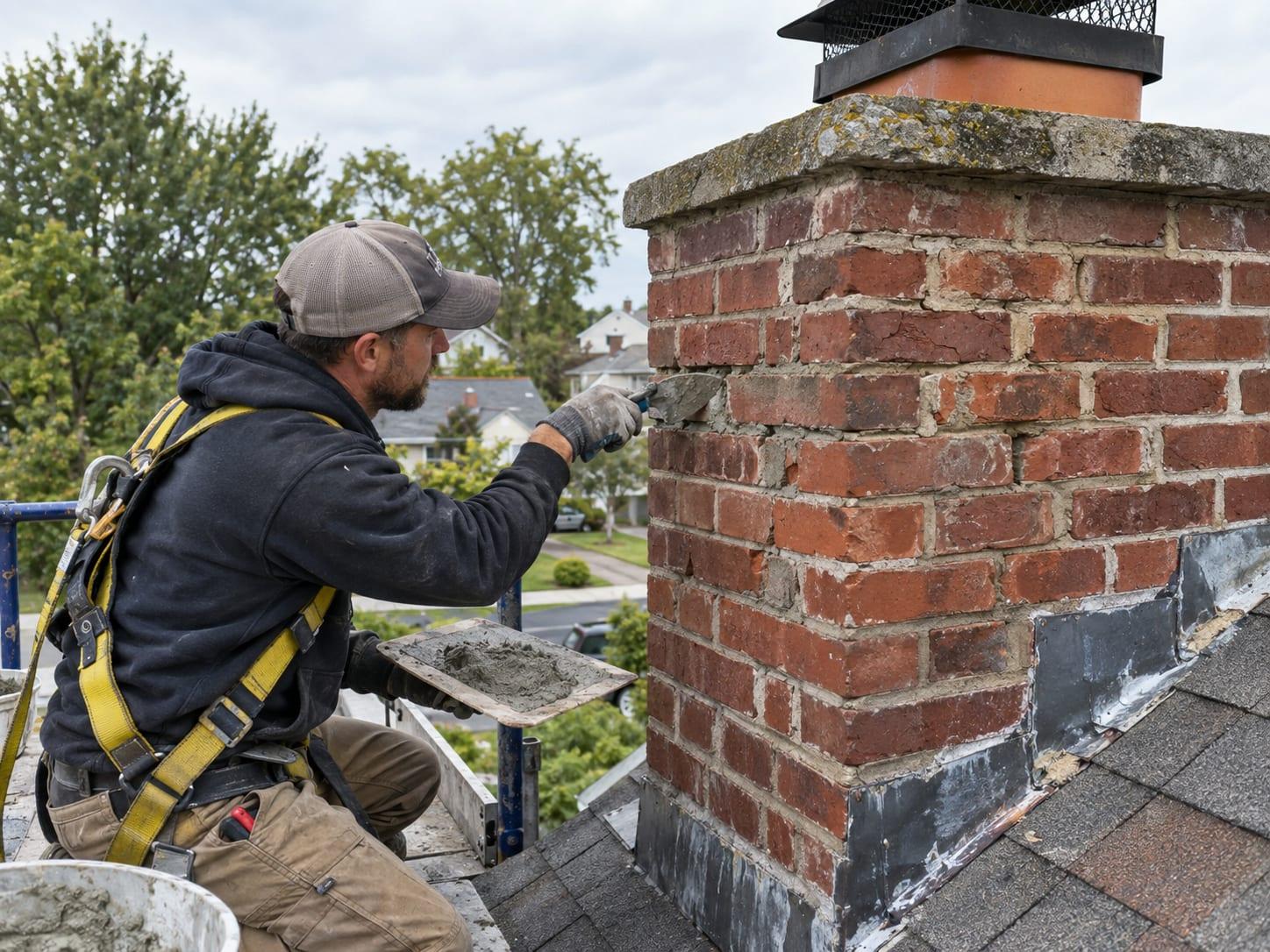
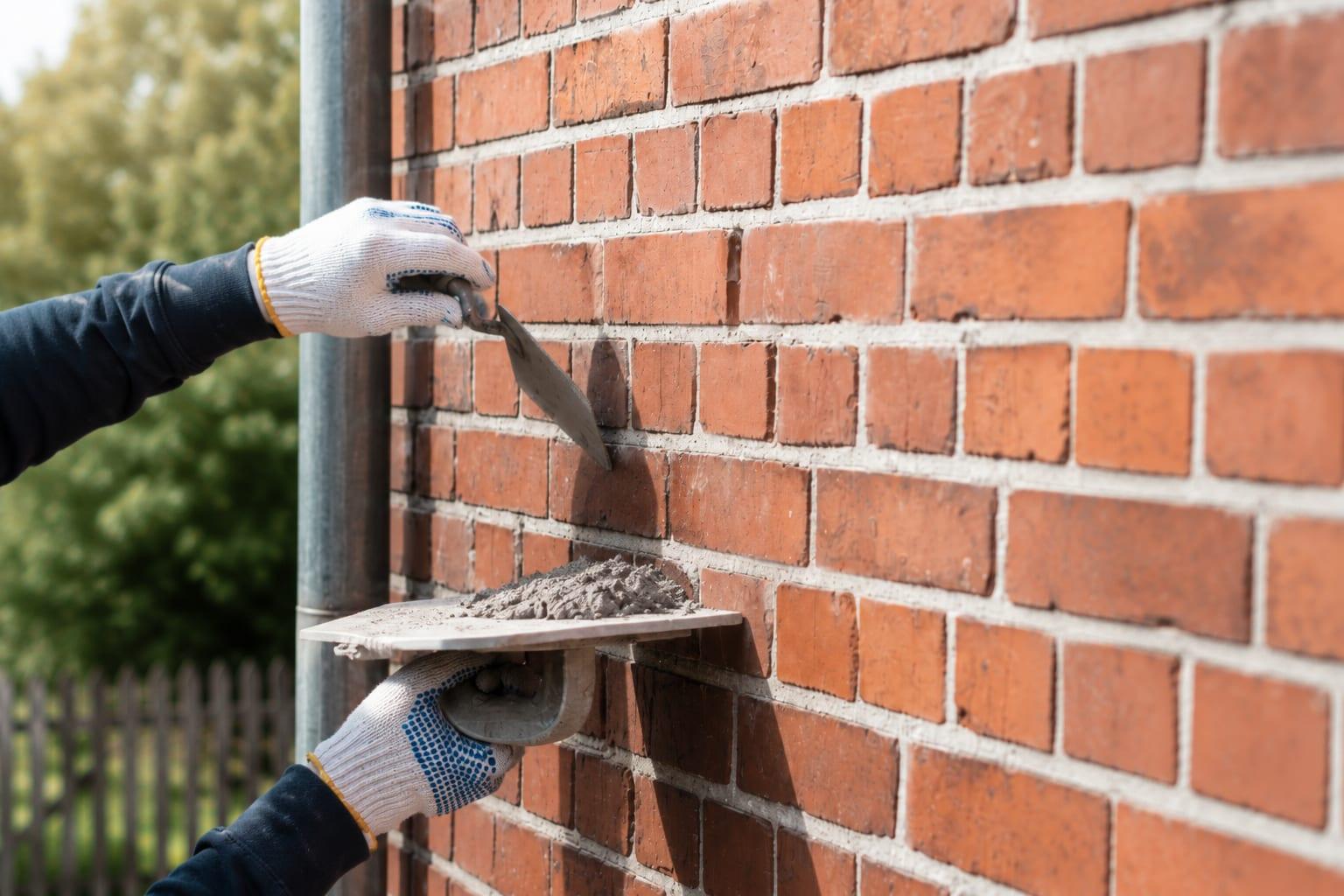
Chimney tuckpointing means cutting out weathered mortar between the bricks to an even depth and packing fresh mortar back into the joints. The new mortar is pressed in layers so it bonds to the brick and fills the joint completely, then shaped to match the joints around it. Done before the damage spreads, it restores the chimney's ability to shed water without replacing any brick.
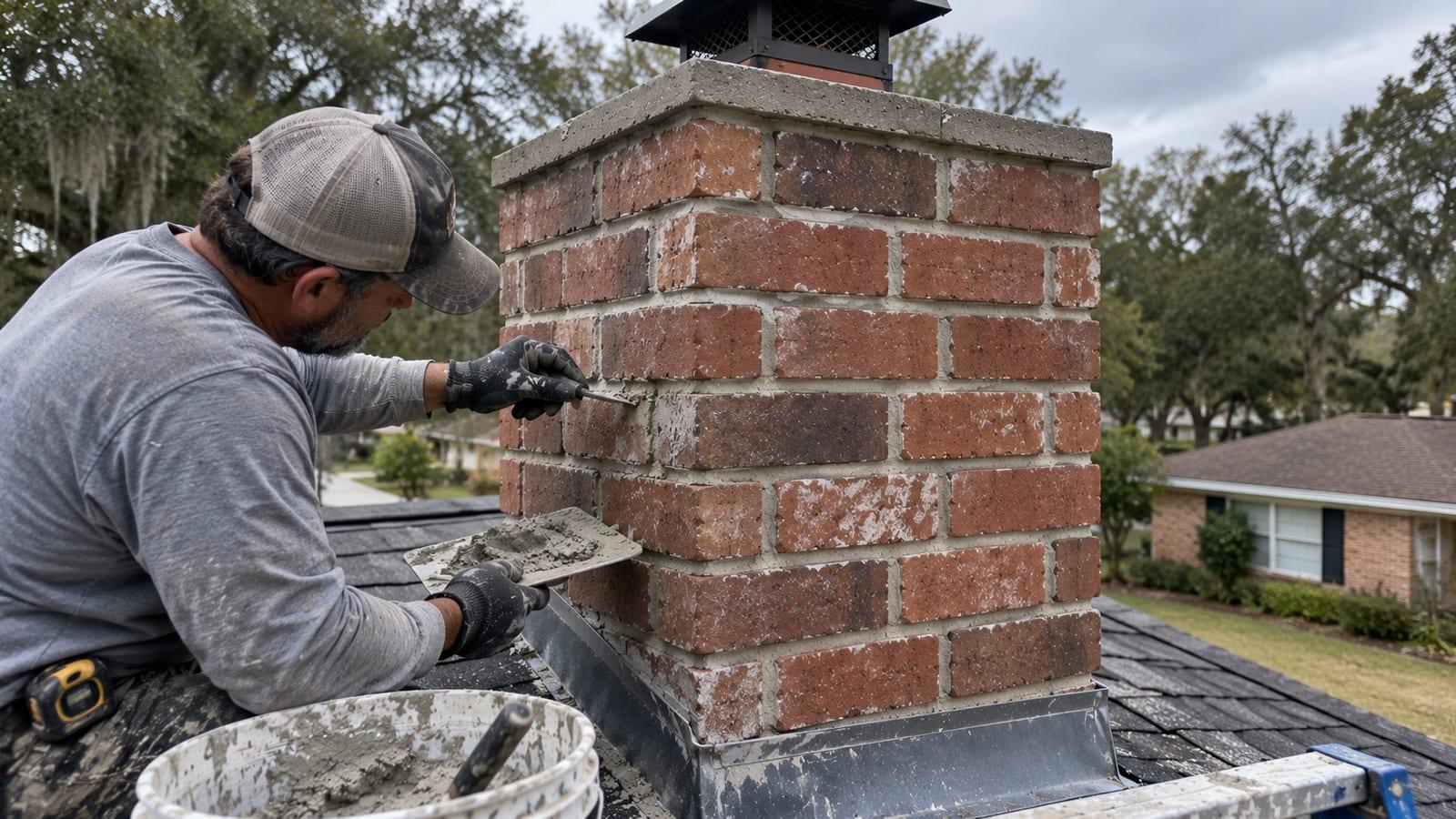
Repointing brick masonry vs tuckpointing
Strictly speaking, repointing is replacing mortar to match the existing joints, while tuckpointing originally meant adding a thin contrasting line to make the joints look crisp. In everyday use, most people and most contractors use the two words for the same repair: removing old mortar and putting in new.
When homeowners need chimney tuckpointing
- The mortar sits noticeably deeper than the face of the bricks.
- Sand and mortar grit collect on the roof or at the base of the chimney.
- You can scrape mortar out of a joint with a key or screwdriver.
- White, chalky staining shows up on the brick.
- Water stains appear on a ceiling or wall next to the chimney.
- Moss or small plants grow in the joints.
- Bricks near the top feel loose.
If the bricks themselves are cracked, crumbling or flaking apart, chimney masonry repair that replaces damaged units is the bigger job, and tuckpointing alone won't be enough.
What the visit involves, step by step
How the joints get restored
Check the masonry
We look at how far the mortar damage runs, the condition of the bricks, the crown and the flashing, since water often enters from above.
Free estimate
You hear whether the chimney needs spot repointing or full tuckpointing, and anything else contributing to the damage.
Cut out the old mortar
Damaged mortar is ground or chiseled out to an even depth without harming the brick edges.
Clean and dampen the joints
Dust is cleared and the brick is lightly wetted so it doesn't pull water out of the new mortar too fast.
Pack and tool the joints
Fresh mortar goes in layers and is shaped to the joint profile of the rest of the chimney.
Clean up
Mortar smears are brushed off the brick face once the joints have firmed.
Mortar, brick and the parts around them
The most important choice is the mortar. It should be slightly softer than the brick so that, over decades, the joints wear instead of the bricks; mortar that's too hard on older, softer brick can cause the brick faces to crack and flake. Sand and color are matched as closely as possible to what's there, and the joint shape, whether concave, flush or another profile, is matched too.
Tuckpointing deals with the outside joints. The joints between flue tiles inside the chimney are a liner matter, explained in every chimney needs a liner. An open flue lets rain pour into the masonry from the top, which is one reason chimney cap installation often goes with joint repair; the benefits of chimney caps and dampers covers why.
After the work
Fresh mortar needs time to cure before it's fully hard, so hold off on any washing of the chimney until it has. Avoid pressure washing brick and mortar at any point, since it can blast out joints. Once the mortar has cured, a breathable chimney waterproofing treatment can help the masonry shed water while still letting moisture escape.
The next step
Estimates are free, and same-day visits are available when the schedule allows. Emergency calls are accepted, such as when bricks are coming loose near the top. We also take on commercial and property-manager masonry work. Call or request an estimate to have your chimney's joints looked at.
What we look at
- Stack alignment and loose courses
- Brick faces for spalling
- Flashing where masonry meets the roof
- Crown cracks and overhang
- Mortar joint depth and condition
- Efflorescence and water staining
Getting ready for the visit
- Keep pets in another room while the work area is open.
- Let the fireplace or stove cool completely — ideally no fire for 24 hours before the visit.
- Write down what you've noticed and when it happens — smells, smoke, sounds or stains.
- Clear a few feet of space in front of the hearth or appliance.
When to book chimney tuckpointing
- A crown with cracks or missing pieces
- Mortar that is sandy, recessed or falling out of the joints
- White efflorescence staining on the chimney
- Loose bricks at the top of the chimney
- A leaning or cracked stack
Stay off the roof
Looking from the ground or with binoculars is safe. Climbing a steep or wet roof to inspect a chimney is not — leave that to someone with the right equipment.