On this page
What clogged air duct cleaning is and what it involves
Clogged air duct cleaning targets the specific runs where something is choking the airflow: packed dust, drywall and sawdust from a renovation, pet hair, fallen toys or debris, old nesting material, or a crushed section of flexible duct filled with buildup. It's focused on restoring airflow where it's restricted, while whole-system air duct cleaning treats every run as routine maintenance.
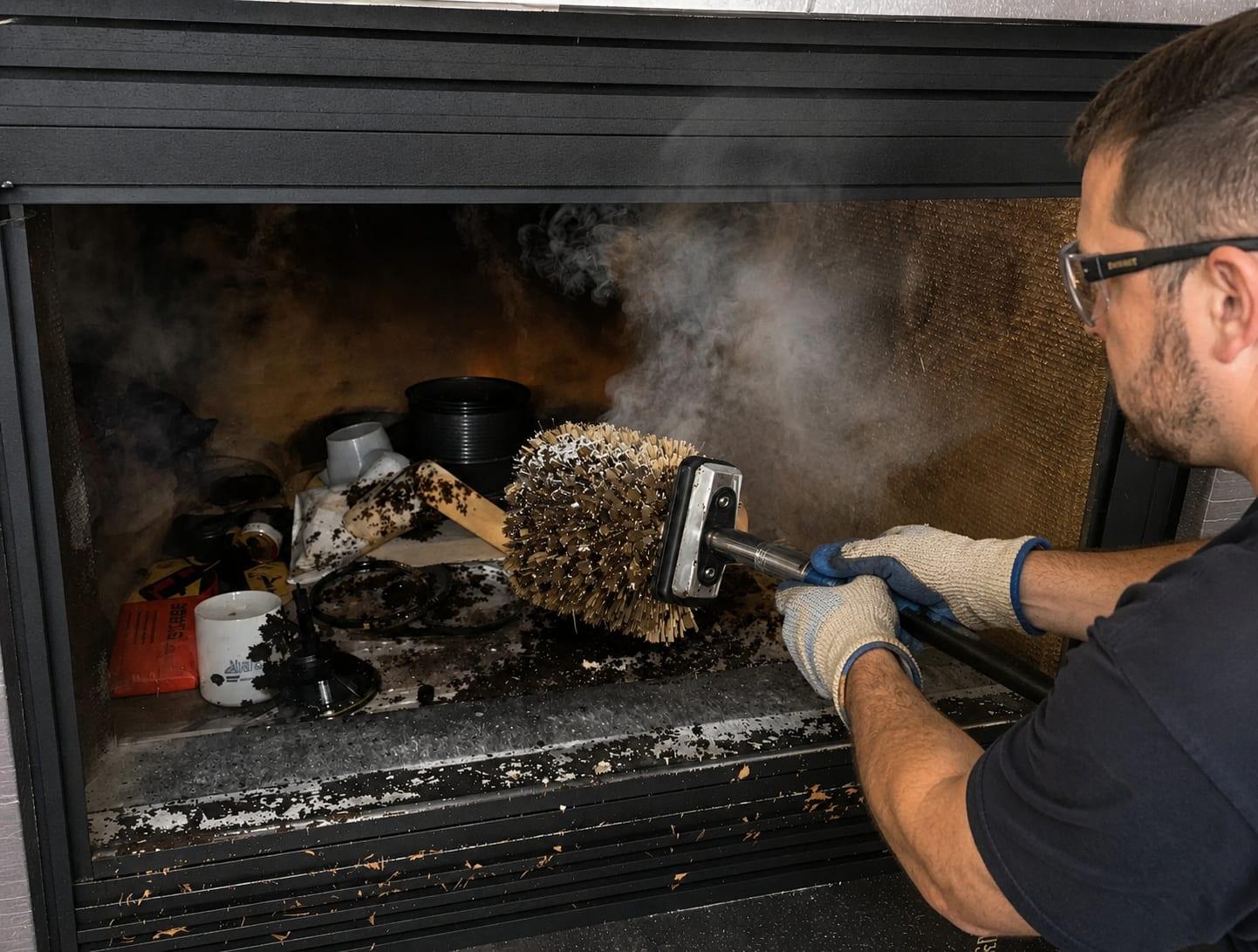
Soot is its own case. In homes where a fireplace has smoked back into the room, soot, and sometimes sticky creosote residue, gets drawn into the return vents and coats the grilles and duct walls. That buildup gets cleaned out, and the fireplace draft problem behind it needs fixing too, or the ducts will collect it again.
When homeowners need clogged air duct cleaning
- One or two rooms get weak airflow while others are fine.
- Dust puffs out of a register when the system kicks on.
- A room stays noticeably hotter or colder than the rest of the house.
- You can see debris, lint or clumps just inside a grille.
- Black or gray film builds up around vents.
- A renovation finished recently, and the vents weren't covered during the work.
- You hear rattling or something moving in a duct when air runs.
What the visit involves, step by step
Tracking down and clearing the clog
Check the simple causes first
We look at the filter, the register dampers and furniture blocking returns, since these mimic a clogged duct.
Find the blocked run
Airflow at each register and a look inside the ducts show where the restriction sits.
Free estimate
You get the scope, whether that's one run, several, or a case for broader cleaning, before work starts.
Loosen and remove the blockage
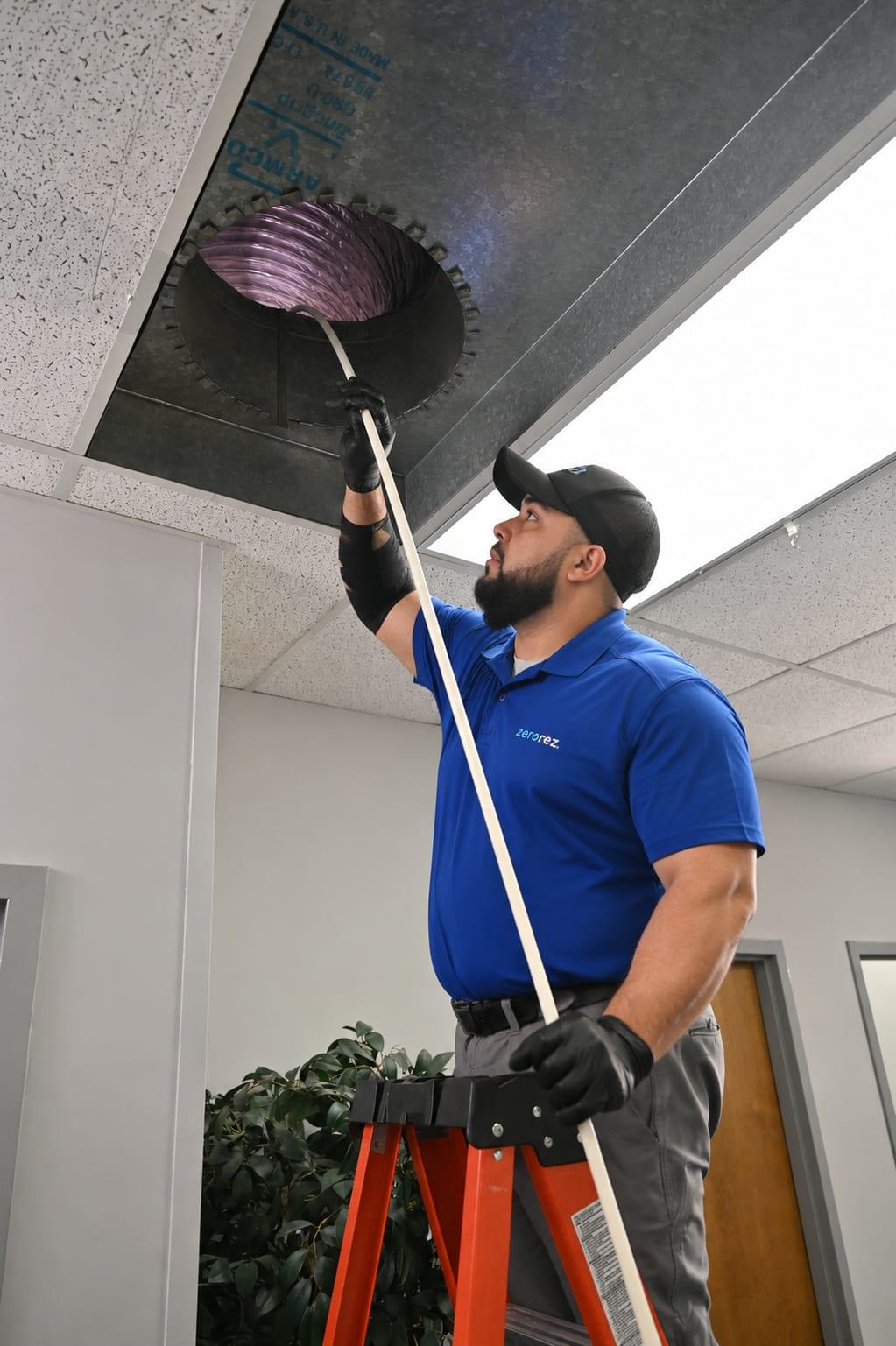
Debris is broken loose with brushes and air tools and pulled out with vacuum equipment rather than pushed deeper into the system.
Clean grilles and registers
Covers are removed, cleaned and refitted.
Confirm airflow
We recheck the registers to make sure air is moving where it was blocked.
Safety and maintenance
If you want to look into a vent yourself, turn the system off at the thermostat before removing a grille. Don't push a shop vacuum hose or a stick deep into a duct; flexible duct tears and joints pull apart easily, and that turns a clog into a leak inside a wall or attic. If you see what looks like mold, or droppings from rodents, leave it alone and mention it when you call, so it's handled with care rather than stirred into the air.
Black dust around vents deserves attention. Candles and a smoky fireplace are common sources, and if a fuel-burning appliance is producing soot, that needs to be sorted out before the ducts are cleaned. For fireplace-related soot, our guide to chimney cleaning and safety explains the basics.
- Change the HVAC filter on the schedule its maker recommends.
- Cover registers and turn the system off during sanding, drywall or demolition work.
- Keep returns clear of furniture, rugs and curtains.
- Avoid closing many registers at once, which strains the system and stirs up dust.
For grimy grilles without a real blockage, vent dust cleaning may be all you need. Broader work on the whole system falls under ductwork cleaning or the ventilation cleaning service.
The next step
We also work with property managers and commercial buildings. Call or request an estimate to get the air moving again.
What gets checked
- Crown and cap
- Damper
- Flashing
- Firebox
- Flue and liner
Carbon monoxide
A blocked or damaged flue can push carbon monoxide into the home. If an alarm sounds or anyone feels dizzy or sick near the fireplace, get everyone outside and call 911.
How to prepare
- Keep pets in another room while the work area is open.
- Make sure the technician can reach the roof or attic access if it's needed.
- Note the make and model of any insert, stove or gas unit if you have it.
- Move rugs, photos and anything fragile away from the work area.
Signs to watch for
- Visible damage to the chimney
- Smoke, smells or stains near the fireplace
- A fireplace that's hard to use