On this page
What ductwork cleaning is and what it involves
Your ductwork is two networks working together. Supply runs deliver heated or cooled air to each room, and return runs pull that air back to the air handler. Both collect household dust, pet hair and leftover construction debris over time. In homes that burn wood, fine soot can also be pulled into the return grilles. Ductwork cleaning loosens that buildup from the duct walls and collects it, instead of pushing it out into the living space.
The work covers the duct runs, the registers and grilles, and the boots where each duct meets a ceiling, wall or floor. If your concern is mostly the grilles and openings you can see, vent dust cleaning may be the narrower job. If you want the full picture of the system, read how air duct cleaning works.
Checked on every visit
- Crown and cap
- Firebox
- Flashing
- Flue and liner
- Damper
Signs to watch for
- Smoke, smells or stains near the fireplace
- Visible damage to the chimney
- A fireplace that's hard to use
Carbon monoxide
A blocked or damaged flue can push carbon monoxide into the home. If an alarm sounds or anyone feels dizzy or sick near the fireplace, get everyone outside and call 911.
Getting ready for the visit
- Make sure the technician can reach the roof or attic access if it's needed.
- Note the make and model of any insert, stove or gas unit if you have it.
- Write down what you've noticed and when it happens — smells, smoke, sounds or stains.
- Keep pets in another room while the work area is open.
When homeowners need ductwork cleaning
- Dust puffs out of the registers when the system starts, or a gray film builds up on the grille slats.
- Fine dust keeps settling for weeks after drywall work, sanding or another renovation.
- Rodents, insects or nesting material have been in the duct runs.
- One room gets noticeably weaker airflow than it used to. Debris or a crushed run can cause this, and clogged air duct cleaning targets that kind of obstruction.
- A stale or musty smell comes from the vents only while the system runs.
- You've moved into a house and have no record of when the ducts were last cleaned.
None of these signs proves on its own that the ducts are dirty. That's why the visit starts with a look inside before any cleaning is recommended.
What the visit involves, step by step
A typical ductwork cleaning visit
Talk through what you've noticed
Where dust shows up, whether you have pets, any recent renovation, and which rooms feel weak or smell off.
Look before cleaning
Registers come off and accessible runs are checked to judge the buildup and spot disconnected, crushed or damaged sections.
Protect the house
The system is switched off, and floors and furniture near the work areas are covered.
Clean the runs
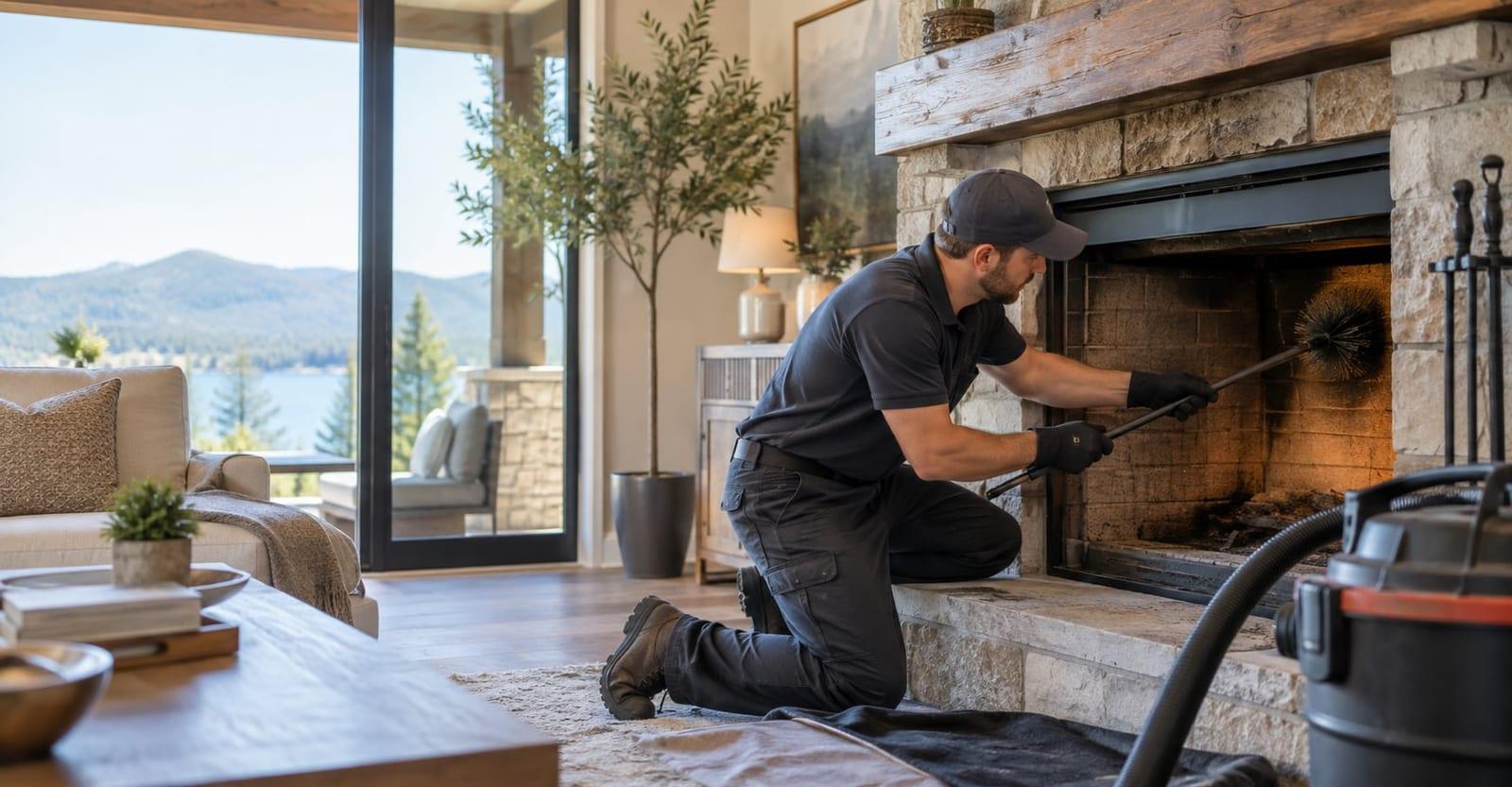
Agitation tools loosen debris while a vacuum collects it. The method suits the duct type: rigid sheet metal can take firmer brushing than flexible duct or duct board.
Clean and refit registers
Grilles and registers are cleaned and put back in place.
Review what was found
You hear what came out and about any gaps, crushed flex or damaged insulation found along the way.
Safety and maintenance between cleanings
The air filter is your first defense. Check it monthly and replace it on the schedule your system's manufacturer recommends. A clogged filter strains the blower and lets more dust past. Keep rugs and furniture off the registers. During renovation, cover the vents and shut the system off while sanding. If you burn wood, a clean flue and a damper that closes tightly cut down on soot drifting indoors, and our guide to chimney cleaning and safety covers that side of the house.
Burning or electrical smell from the vents
Turn the system off at the thermostat and keep it off until the cause is found. Don't spray cleaners or foggers into the ducts yourself.
Booking ductwork cleaning
Same-day visits are available where the schedule allows, though they're never guaranteed, and emergency calls are accepted. If exhaust or ventilation runs beyond the heating and cooling ducts need attention, ask about our ventilation cleaning service when you call or request an estimate.