On this page
What fireplace vent cleaning is and what it involves
The vent is everything between the fireplace and the outdoor air: the pipe or flue, its connections and the cap or termination at the end. On wood-burning fireplaces, it collects creosote and soot. On gas units it stays cleaner, but soot from an out-of-tune burner, dust, insect nests and bird nesting material can still narrow it. Direct-vent gas fireplaces add a second passage that brings combustion air in, and that one needs to stay clear too. Which parts apply depends on your type of fireplace.
Vent cleaning focuses on the exhaust path. The firebox and hearth are handled by fireplace cleaning, and a sealed wood or gas insert is covered by fireplace insert cleaning.
When a fireplace vent needs cleaning
Signs of a dirty or blocked vent
- Black soot on the outside wall or roof around the vent cap
- Glass on a gas fireplace that clouds or darkens quickly
- Gas flames that burn tall, lazy and yellow instead of crisp
- A pilot that keeps going out, or a unit that shuts itself off after a few minutes
- Smoke or exhaust smell in the room while the fireplace runs
- Birds, wasps or nesting material at the vent cap
- Creosote flakes falling into a wood-burning firebox
Glass that stays hazy after the vent has been cleared can be handled with a fireplace glass cleaning service.
What the visit involves, step by step
A typical vent cleaning
Shut down and cool
The fireplace is turned off. On gas units, the gas is shut off at the appliance before work begins.
Access the vent
Panels, logs or the firebox top are removed as needed to reach the vent connection.
Clear the termination
The cap or exterior termination is checked and cleared of nests, debris and soot.
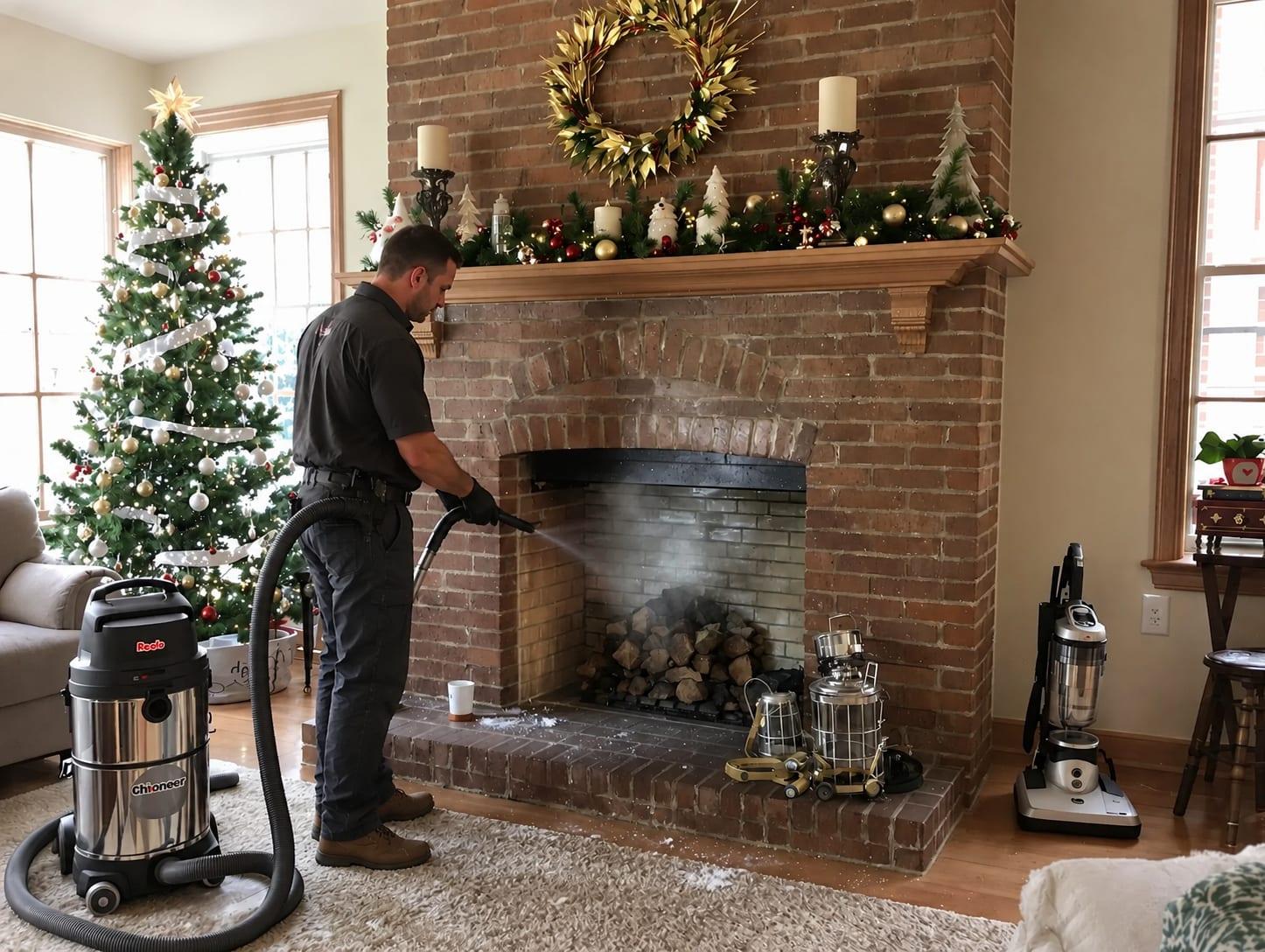
Brush and vacuum the run
The pipe or flue is cleaned with tools sized to it, including the air intake passage on direct-vent units.
Check connections
Joints and seals along the visible run are looked over for gaps or damage.
Reassemble and test
The fireplace is put back together and run to confirm a clean flame and steady draft.
Safety and maintenance
A blocked vent can push carbon monoxide back into the home, so a working CO alarm near the fireplace and on each sleeping level is worth having no matter what you burn. If the fireplace shuts itself off or the exhaust smell is strong, stop using it until the vent has been checked. Gas fireplace and gas appliance work is part of what we do. A screen or cap at the termination helps keep nests out between cleanings, and enhancing fireplace safety has more habits worth adopting.
Scheduling a fireplace vent cleaning
Get in touch for a free estimate. Tell us what kind of fireplace you have and what you've noticed, whether that's soot on the siding or a pilot that won't stay lit. We'll fit you in the same day when the schedule allows, and emergency calls are accepted. We service vents on all major brands of gas and wood fireplaces, for homeowners and for commercial and property-manager clients.
What gets checked
- Crown and cap
- Firebox
- Damper
- Flashing
- Flue and liner
How to prepare
- Let the fireplace or stove cool completely — ideally no fire for 24 hours before the visit.
- Note the make and model of any insert, stove or gas unit if you have it.
- Make sure the technician can reach the roof or attic access if it's needed.
- Keep pets in another room while the work area is open.
Carbon monoxide
A blocked or damaged flue can push carbon monoxide into the home. If an alarm sounds or anyone feels dizzy or sick near the fireplace, get everyone outside and call 911.
Signs to watch for
- Smoke, smells or stains near the fireplace
- Visible damage to the chimney
- A fireplace that's hard to use