On this page
What wood-burning fireplace repair involves
A wood fire puts more heat and stress on a fireplace than any other fuel. Over many seasons, that heat cracks firebrick, erodes mortar joints, warps metal parts and wears out the seals that keep smoke moving up the flue. Wood-burning fireplace repair fixes the parts that live inside that heat, and it stops small faults from becoming bigger ones. If your fireplace burns gas or is electric, start with our general fireplace repair service instead.
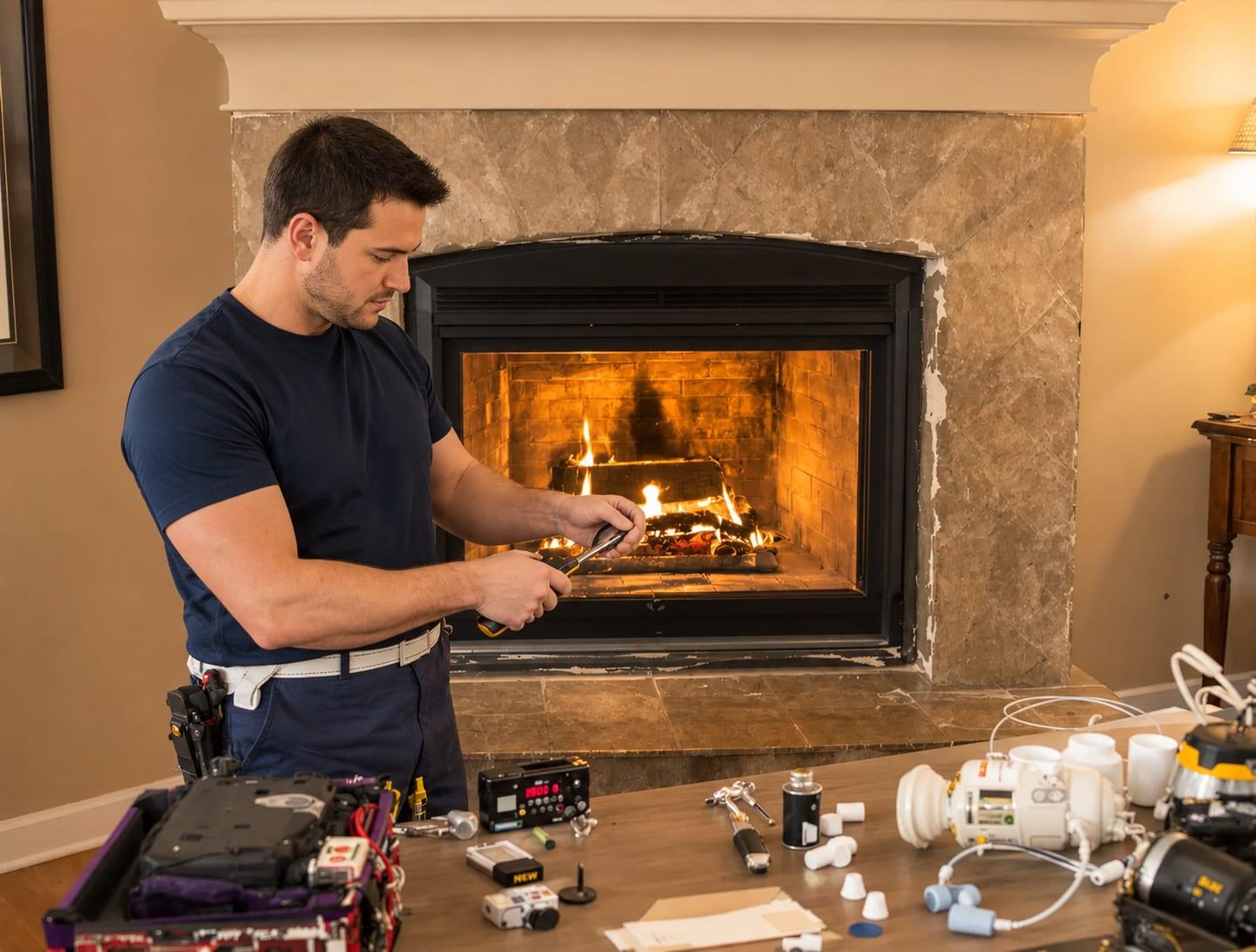
The work depends on how the fireplace was built. A site-built masonry fireplace has a brick firebox, a cast or steel damper and a smoke chamber above it. A factory-built (prefab) unit uses refractory panels inside a metal box and is listed to work with its own chimney pipe. If you aren't sure which one you have, our guide to type of fireplace explains how to tell them apart.
- Firebox repair: replacing cracked or spalled firebrick and repointing failed mortar joints with heat-rated mortar
- Refractory panel replacement in prefab wood-burning units
- Damper repair, including stuck, rusted or warped plates and broken handles
- Smoke chamber repair when the walls above the damper are rough, cracked or deteriorating
- Draft problems that send smoke into the room
- Fireplace door and glass repair or replacement
- Hearth and surround repairs where heat or age has loosened the brick or stone
Signs your wood fireplace needs repair
Most fireplace damage shows up gradually. A fireplace can still light and burn while it has a fault that lets heat or embers reach materials they shouldn't. Look for these signs:
Worth a closer look
- Cracks running through firebrick, or bricks that have shifted or flaked
- Gaps where the mortar between bricks has crumbled away
- Cracked, broken or crumbling refractory panels in a prefab unit
- A damper that sticks, won't seal, or won't open fully
- Smoke rolling out of the opening, especially early in a fire
- Rust flakes or debris falling into the firebox
- Glass doors that are cracked, cloudy or no longer close tightly
- A strong smoky smell in the room on days when there's no fire
Hold off on the next fire
A crack that goes through the firebox wall or a broken prefab panel can let heat reach framing behind it. Until it has been looked at, it's safer not to light the fireplace.
What a repair visit involves
From first look to finished repair
Talk through the symptoms
You describe what you've noticed, such as smoke, a stuck damper or visible cracks, and how often you burn.
Examine the firebox and damper
The technician checks the brick or panels, mortar joints, damper, smoke chamber and doors, and identifies the type of fireplace.
Explain the findings and the options
You hear what is damaged, what can be repaired and what should be replaced, along with a free estimate before any work begins.
Make the repair
Damaged firebrick, mortar, panels or damper parts are repaired or replaced with materials meant for wood-fire temperatures.
Check it works
The damper is operated, doors are tested, and the area is cleaned up before the technician leaves.
When repair isn't the right answer
Some fireplaces have more wrong with them than a repair makes sense for, such as a prefab unit near the end of its life or a firebox that needs full rebuilding. In that case, new wood fireplace installation may be the better path. A broader fireplace installation may also suit you if you're open to another fuel. Homeowners who mainly want more heat often weigh a free-standing wood stove vs a fireplace insert. If the firebox is sound but the surround looks tired, the benefits of fireplace refacing may be worth reading.
Booking a wood-burning fireplace repair
Call or request an estimate. Same-day visits are available where the schedule allows, though they can't be promised, and emergency calls are accepted. Property managers and commercial clients can book the same way. The work covers all major fireplace brands, along with older site-built masonry fireplaces.
Checked on every visit
- Damper operation
- Draft from the opening
- Firebrick or refractory panels
- Smoke chamber and smoke shelf
- Doors, glass and gaskets
- Hearth and surround
If smoke comes into the room
Stop adding fuel, open a window and don't relight the fire until the chimney has been checked. If the smoke is heavy, an alarm sounds or you suspect a chimney fire, get everyone outside and call 911.
How to prepare
- Make sure the technician can reach the roof or attic access if it's needed.
- Write down what you've noticed and when it happens — smells, smoke, sounds or stains.
- Let the fireplace or stove cool completely — ideally no fire for 24 hours before the visit.
- Clear a few feet of space in front of the hearth or appliance.