On this page
What chimney animal screen installation is and what it involves
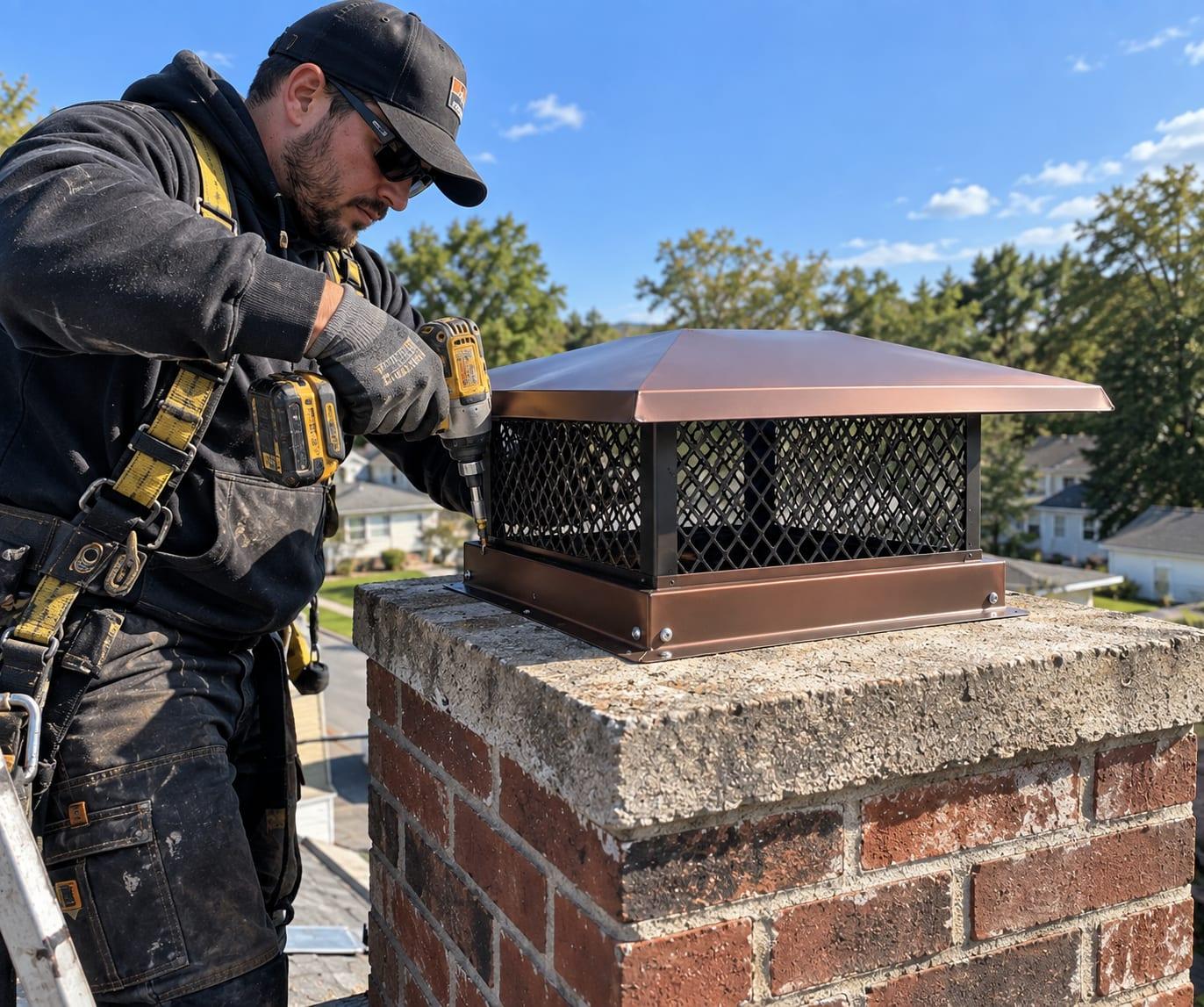
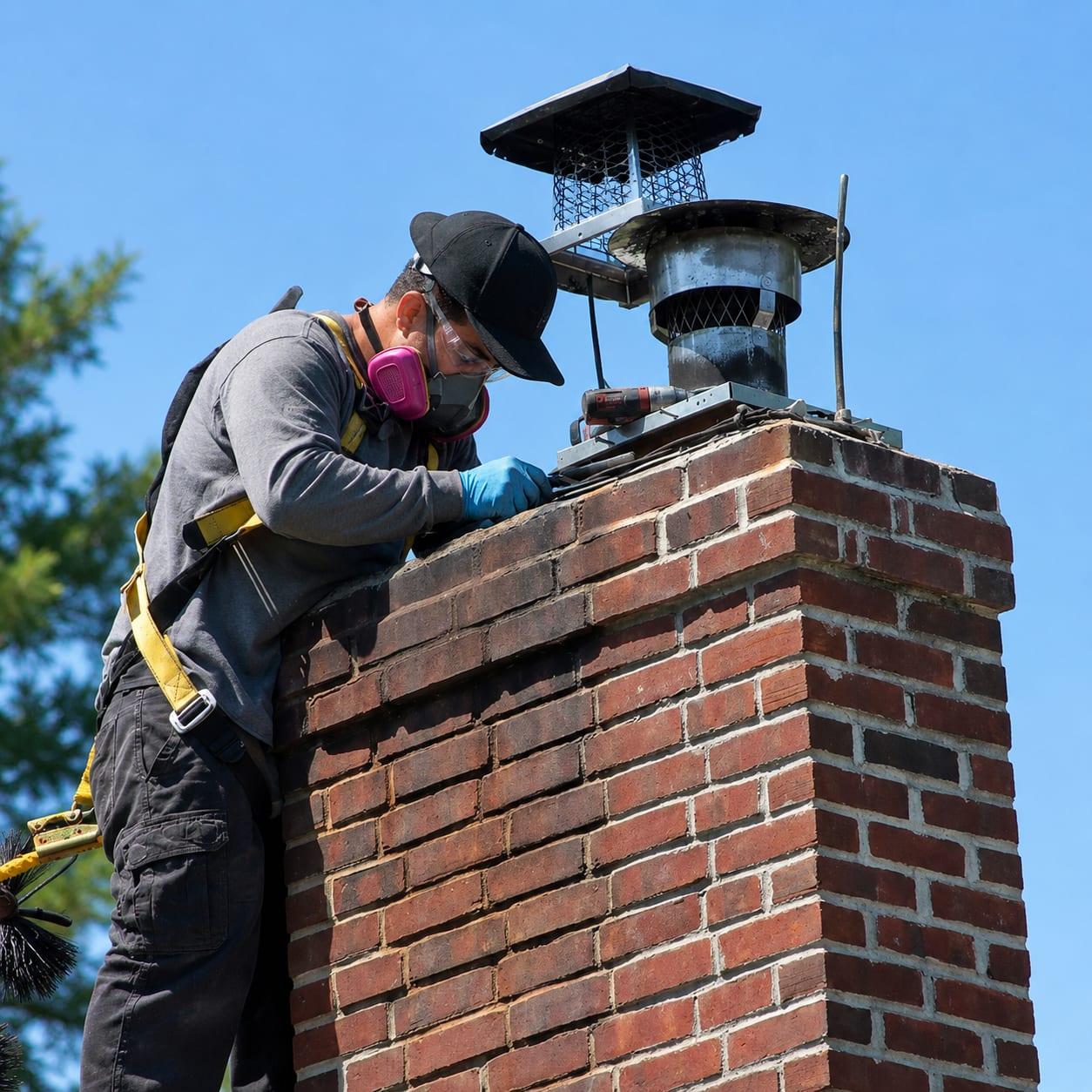
An animal screen is a cage of metal mesh over the flue opening, usually under a solid lid that also sheds rain. It can be part of a chimney cap installation on a single flue, or an outside-mount unit that covers the whole crown when several flues share one chimney. The right choice depends on the flue's size and shape, how many flues there are, and whether the crown is solid enough to anchor to.
| Feature | Single-flue screened cap | Outside-mount multi-flue screen |
|---|---|---|
| Covers | One flue tile | The whole crown and every flue on it |
| Attaches to | The flue tile itself | The outside of the chimney or the crown |
| Good fit for | Chimneys with one exposed flue in good shape | Chimneys with several flues, or tiles too short to clamp |
| Watch for | A cracked tile can't hold a clamp | Needs a sound crown or brick to fasten into |
Covers
- Single-flue screened cap
- One flue tile
- Outside-mount multi-flue screen
- The whole crown and every flue on it
Attaches to
- Single-flue screened cap
- The flue tile itself
- Outside-mount multi-flue screen
- The outside of the chimney or the crown
Good fit for
- Single-flue screened cap
- Chimneys with one exposed flue in good shape
- Outside-mount multi-flue screen
- Chimneys with several flues, or tiles too short to clamp
Watch for
- Single-flue screened cap
- A cracked tile can't hold a clamp
- Outside-mount multi-flue screen
- Needs a sound crown or brick to fasten into
Materials and fuel type
Stainless steel mesh lasts longest. Galvanized steel costs less but rusts sooner, and copper is mostly chosen for looks. On a factory-built chimney, or a vent serving a gas appliance, the screen should be one made for that system, because adding mesh a vent wasn't designed for can affect how it exhausts. The comparison of chimney caps and chase covers explains how these parts differ.
When homeowners need chimney animal screen installation
- The flue has no screen at all
- The mesh is torn, rusted through or bent away from the frame
- The screen came loose or blew off in a storm
- Birds or squirrels have been getting in despite an existing cap
- You're adding a fireplace and want the flue protected from day one, as part of building a new chimney
If the top flue tile is cracked or missing, a clamp-on screen has nothing to grip. Either the screen mounts to the crown instead, or the flue needs attention first. The case for a sound flue liner explains why, and relining the chimney is part of the work offered.
What the visit involves, step by step
Fitting a new animal screen
Measure
Each flue is measured, and the tile and crown are checked for cracks.
Confirm the flue is empty
Nothing should be sealed in. Any animal or nest comes out first.
Pick the style
You get a free estimate for the screen type and material that fit your chimney.
Install
The screen is set in place and fastened to the tile, crown or chimney.
Check
The fit is tested by hand, and the flue is confirmed open to draft.
Getting a screen installed in Atlanta
Request a free estimate to get started. If an animal has already gotten into the flue, emergency calls are accepted. Rental and commercial properties are welcome.
When to book chimney animal screen installation
- A strong smell from the fireplace
- A missing or damaged chimney cap
- Nesting material, leaves or droppings in the firebox
- Smoke that won't go up the flue
Don't smoke it out
Never light a fire to drive an animal out — it can trap the animal, block the flue and start a fire in the nest.
How to prepare
- Note when you hear the animal and where.
- Keep the fireplace cold — don't light a fire to drive an animal out.
- Keep the glass doors or screen closed and pets out of the room.
What gets checked
- Odor and debris
- Cap and screen
- Damper condition
- What animal and where
- Nest material in the flue and smoke chamber
- Gaps around the crown and chase