On this page
What wood furnace repair involves
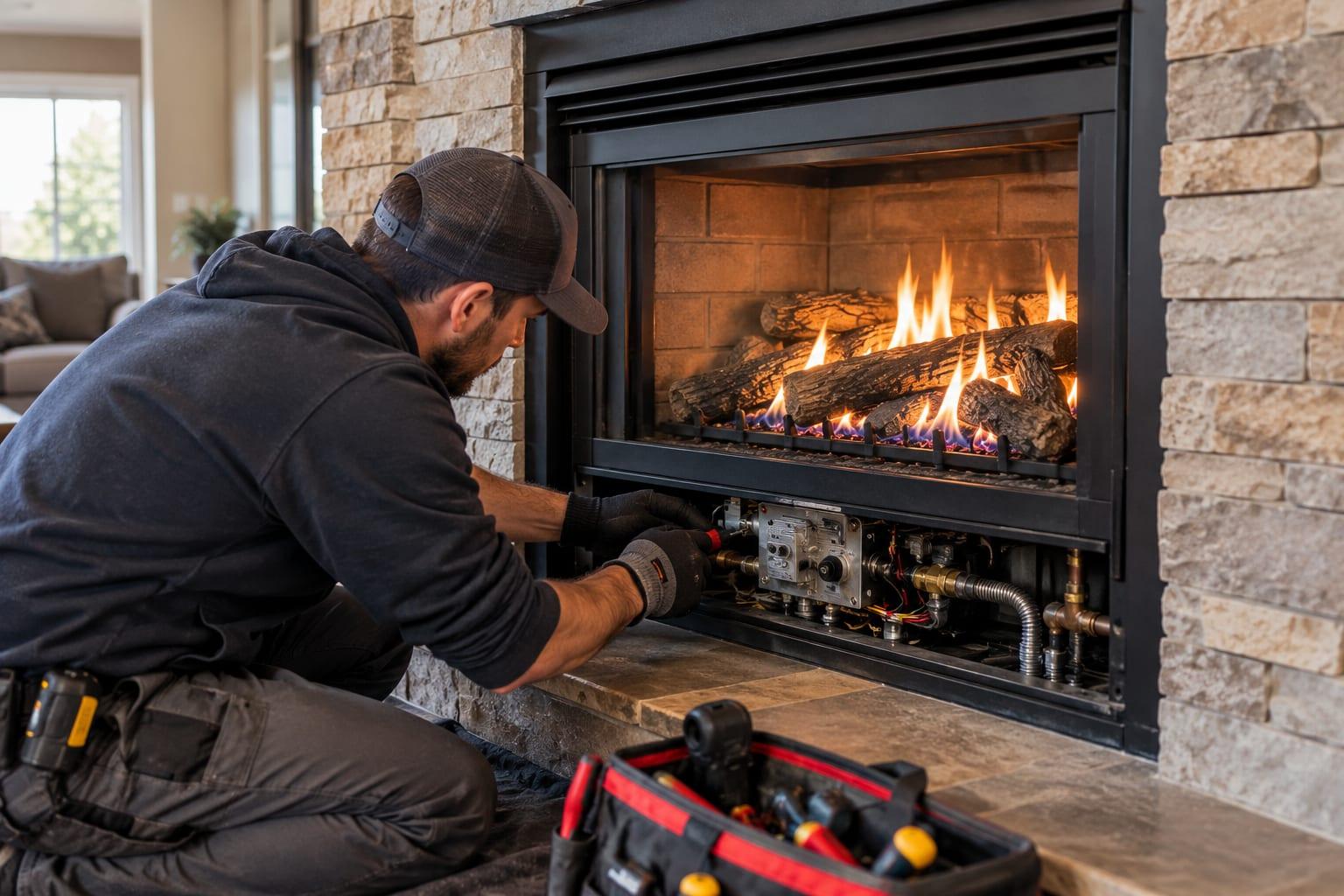
A wood furnace burns wood in a sealed firebox. It warms air across a heat exchanger and uses a blower to send that air through the home's ducts. That makes it part fireplace and part central heating system. Wood furnace repair can mean fixing the combustion side, the air-handling side, or the venting that carries smoke out of the house.
- Firebox and heat exchanger: cracks, burned-through steel, failed firebrick or baffles
- Doors and gaskets: worn rope gaskets and loose latches that let air leak in and make the burn hard to control
- Draft controls and thermostats that open and close combustion air
- Blowers, fan limit switches and wiring that move heated air into the ducts
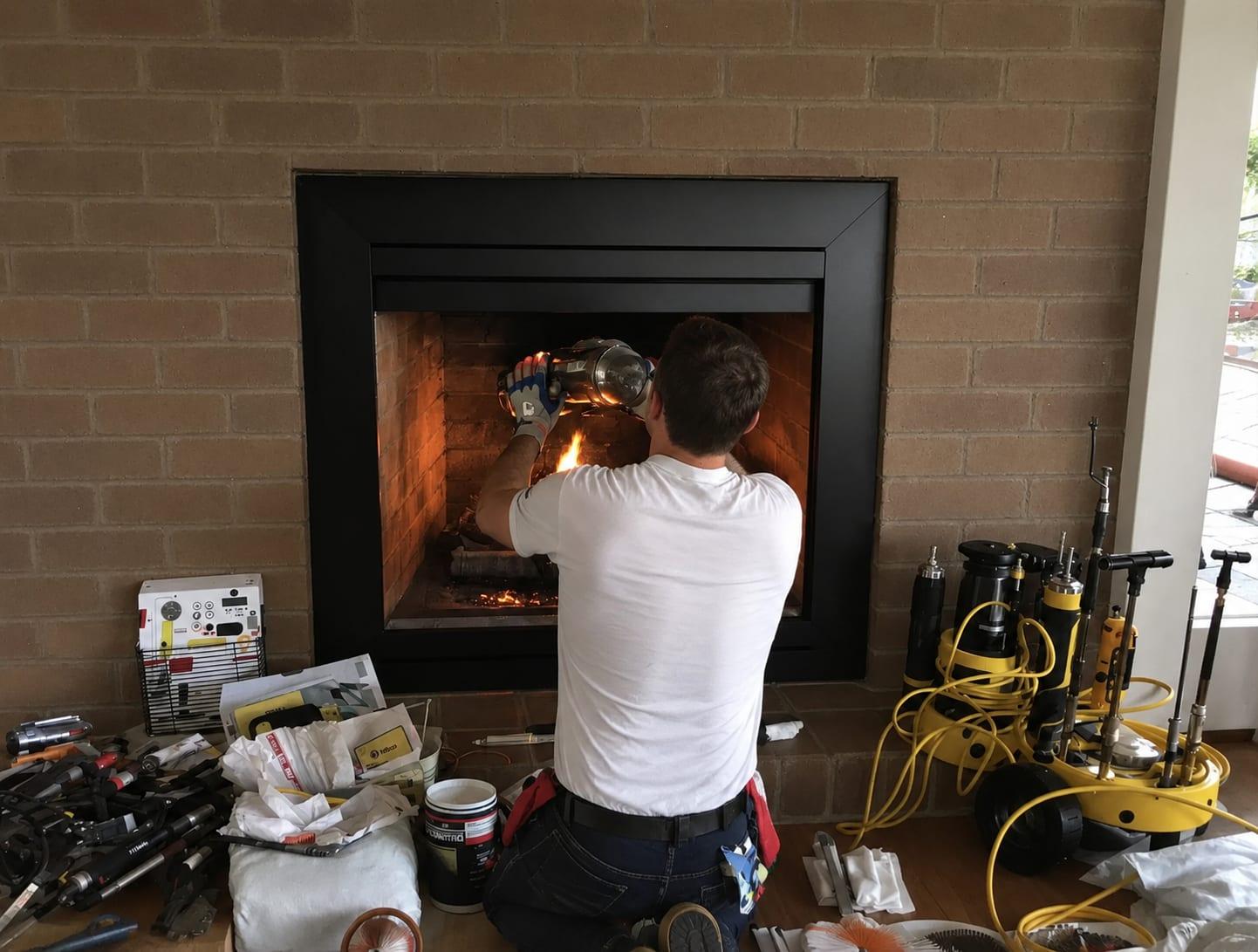
- Flue connector, chimney and liner that carry exhaust safely outside
What we look at
- Firebox
- Crown and cap
- Damper
- Flashing
- Flue and liner
Before the technician arrives
- Let the fireplace or stove cool completely — ideally no fire for 24 hours before the visit.
- Make sure the technician can reach the roof or attic access if it's needed.
- Write down what you've noticed and when it happens — smells, smoke, sounds or stains.
- Clear a few feet of space in front of the hearth or appliance.
Carbon monoxide
A blocked or damaged flue can push carbon monoxide into the home. If an alarm sounds or anyone feels dizzy or sick near the fireplace, get everyone outside and call 911.
Signs a wood furnace needs attention
Common reasons homeowners call
- Smoke or a burning smell coming from the heat registers
- The blower doesn't come on, cycles constantly, or runs noisily
- The fire is hot but the house stays cold
- Fires burn too fast and can't be turned down, often from leaking door gaskets
- Smoke escapes when the loading door is opened
- Visible cracks, warping or heavy rust on the firebox or cabinet
- Heavy creosote in the flue connector, or a chimney that hasn't been cleaned in a season or more
Smoke at the registers
Smoke coming through the ductwork can mean a cracked heat exchanger is letting combustion gases into the air you breathe. Let the fire burn out, ventilate the house, make sure your carbon monoxide alarms work, and don't use the furnace again until it has been checked.
What the visit involves
How a wood furnace call goes
Describe what's happening
Tell us what you're seeing, smelling or hearing and when it started.
Inspect the furnace
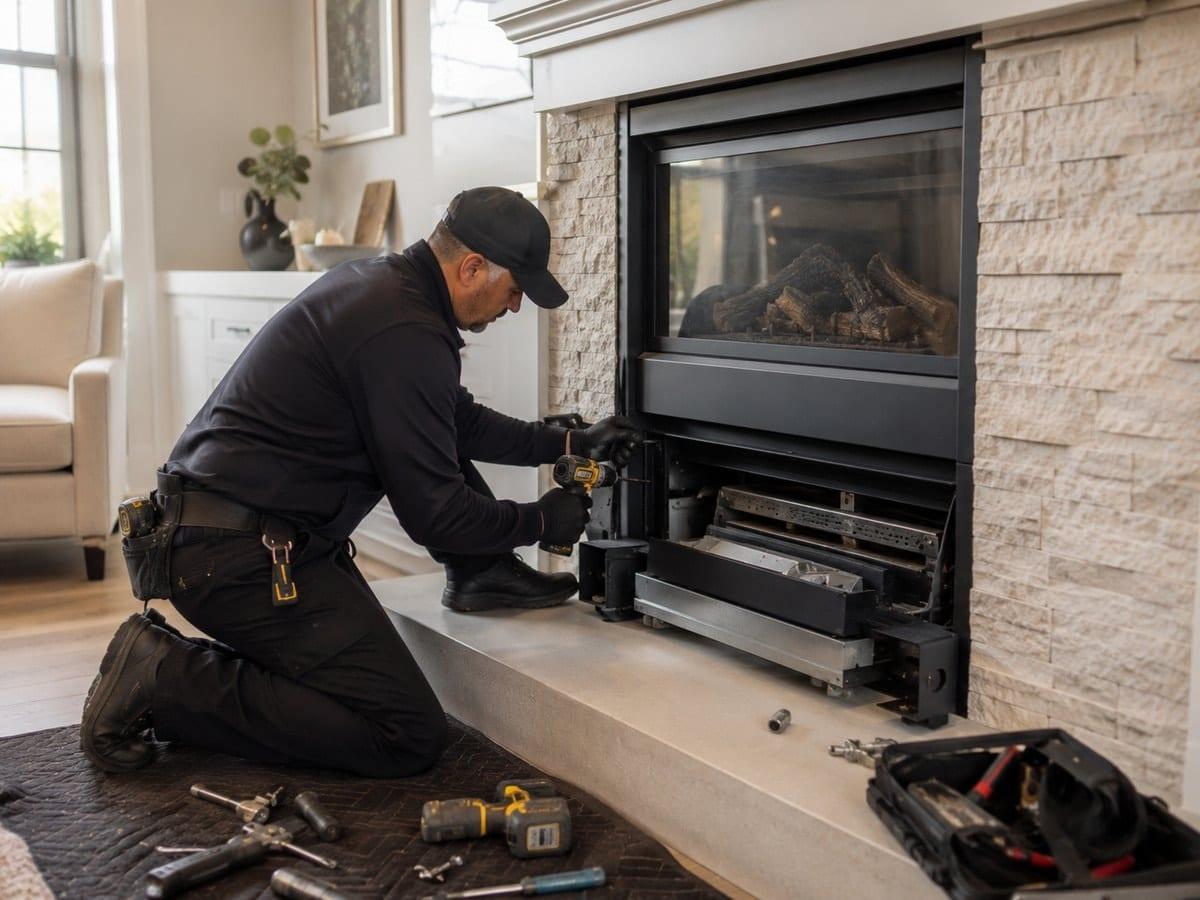
The technician checks the firebox, heat exchanger, gaskets, controls and blower, with the unit cool.
Check the venting
The flue connector and chimney are examined for creosote, damage and a proper connection.
Review findings and estimate
You get a clear explanation and a free estimate, including whether repair or replacement makes more sense.
Repair and test
Parts are replaced or repaired, and the blower and controls are tested before the job is closed out.
Wood furnace installation and the chimney behind it
When a firebox or heat exchanger has failed beyond repair, a replacement wood furnace is installed and connected to your existing ductwork where possible. The venting matters as much as the furnace. Many older masonry chimneys need chimney liner installation sized to the new appliance. The reasons are covered in our guide to why every chimney needs a liner. Homes with no usable chimney may need a new chimney installation. Finishing with chimney cap installation keeps rain and animals out of the flue, and the benefits of chimney caps and dampers explain why. If you're still deciding on fuel, read gas vs wood fireplace installation for the general trade-offs.
Getting started
Call or request an estimate. Same-day visits are available where the schedule allows, though they aren't guaranteed, and emergency calls are accepted. The work covers all major wood furnace brands, and commercial and property-manager jobs are welcome.